
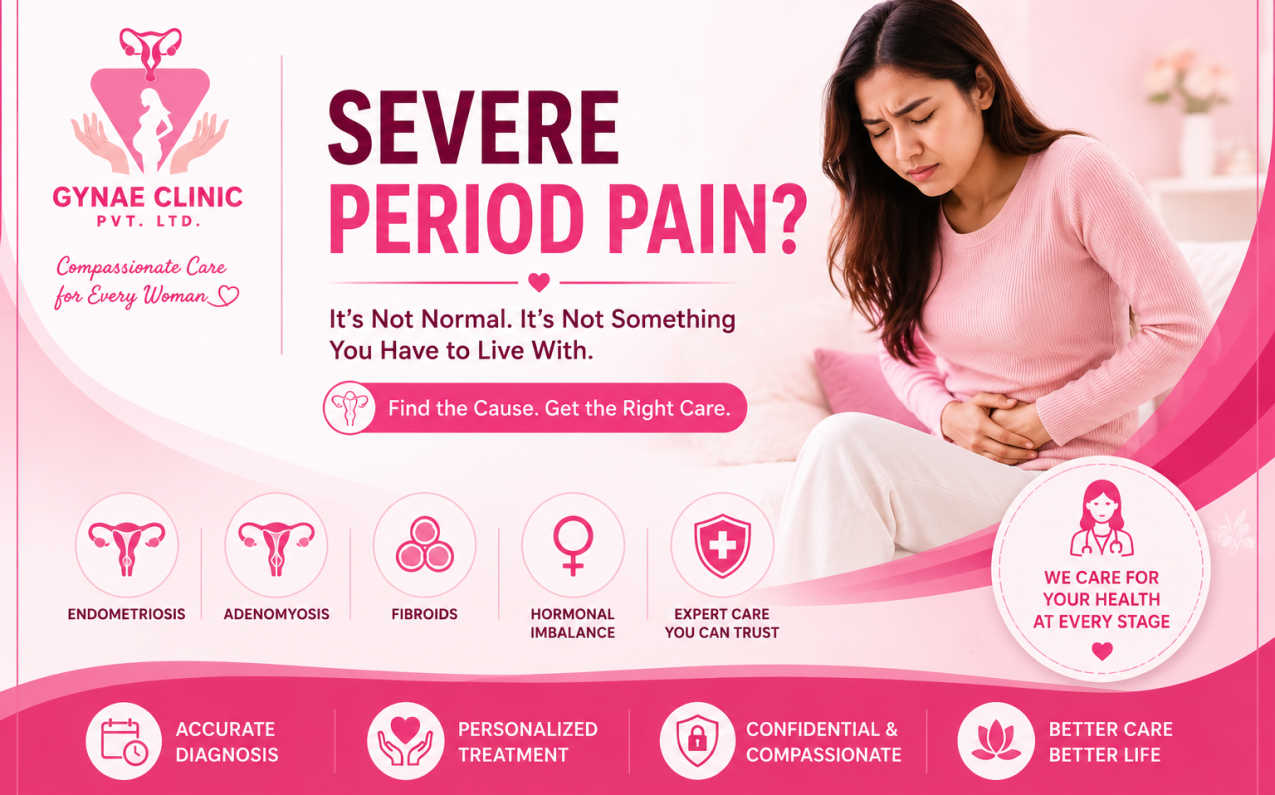
Severe period pain is not something you simply have to live with. Mild cramping around menstruation is common, but pain that stops you from working, studying, sleeping or carrying out normal activities may need medical evaluation. Severe or worsening menstrual pain can sometimes be associated with conditions such as endometriosis, adenomyosis, fibroids or pelvic inflammatory disease.
If you are looking for severe period pain treatment in Bhaktapur, Madhyapur Thimi, Bode, Thimi or nearby areas, understanding the possible cause is the first step toward appropriate care.
What Is Severe Period Pain?
Medical professionals often call painful periods dysmenorrhea.
Period pain usually occurs shortly before or around the beginning of menstruation. It can feel like:
- Cramping in the lower abdomen
- Throbbing or aching pelvic pain
- Pain spreading to the lower back
- Pain spreading to the thighs
- Pressure or heaviness in the pelvis
- Nausea
- Headache
- Fatigue
Typical period pain may last for a few days. However, pain that is severe, worsening, persistent or interfering with everyday life should not simply be dismissed as “normal period pain.”
Normal Period Cramps vs Severe Period Pain
Some menstrual cramping is common because the uterus contracts during menstruation.
But severe period pain may be a concern when:
- You cannot attend work or school
- You have to stay in bed
- Pain interferes with sleep
- Normal activities become difficult
- You regularly need pain medicine to function
- The pain is becoming worse month after month
- Your periods have become significantly heavier
- You experience pain during sex
- You have pain while passing urine or stool
- You have pelvic pain outside your period
When period pain affects your daily life, it deserves medical attention.
What Causes Severe Period Pain?
Severe menstrual pain can have different causes.
1. Primary Dysmenorrhea
Primary dysmenorrhea means painful periods without another underlying pelvic condition.
It is related to substances called prostaglandins, which contribute to uterine contractions during menstruation.
Pain commonly begins around the start of the period and may improve after the first few days.
2. Endometriosis
Endometriosis is an important cause of severe period pain.
It occurs when tissue similar to the lining of the uterus grows outside the uterus, including around the ovaries, fallopian tubes and pelvic tissues.
Symptoms can include:
- Severe period pain
- Pelvic pain
- Heavy periods
- Pain during or after sex
- Pain when passing stool
- Pain when urinating, particularly around menstruation
- Fatigue
- Difficulty becoming pregnant
A particularly important warning sign is period pain that prevents normal daily activities.
If your menstrual pain is repeatedly severe, endometriosis should be considered as one possible cause.
3. Adenomyosis
Adenomyosis occurs when tissue similar to the uterine lining grows into the muscular wall of the uterus.
It can cause:
- Painful periods
- Heavy menstrual bleeding
- Pelvic pressure
- Enlarged or tender uterus
- Pain during sex
Adenomyosis becomes particularly important to consider when periods become increasingly painful and heavier.
4. Uterine Fibroids
Fibroids are non-cancerous growths that develop in or around the uterus.
Depending on their size and location, they can cause:
- Heavy periods
- Painful periods
- Pelvic pressure
- Lower abdominal discomfort
- Back pain
- Frequent urination
- Abdominal enlargement
Not every woman with fibroids experiences pain, and symptoms depend on the individual situation.
5. Pelvic Inflammatory Disease
Pelvic inflammatory disease (PID) is an infection involving the upper female reproductive organs.
It may cause:
- Lower abdominal or pelvic pain
- Abnormal vaginal discharge
- Pain during sex
- Fever
- Bleeding between periods
- Pain during urination
PID requires appropriate medical evaluation and treatment.
6. Ovarian Cysts
Some ovarian cysts can cause pelvic pain.
Pain may become more noticeable around menstruation or may occur suddenly depending on the type of cyst and what happens to it.
Severe, sudden pelvic pain—particularly with vomiting, dizziness or faintness—needs urgent assessment because complications such as ovarian torsion or cyst rupture can occur.
7. Copper IUD
A copper intrauterine device (IUD) can increase menstrual bleeding and cramping, particularly during the first few months after insertion.
If severe pain begins after an IUD is inserted, speak with your healthcare professional rather than assuming that the pain is something you simply need to tolerate.
Severe Period Pain With Heavy Bleeding
Severe cramps combined with heavy menstrual bleeding may need further evaluation.
Consider seeing a gynecologist if you:
- Need to change your pad very frequently
- Bleed through clothing or bedding
- Pass unusually large clots
- Have periods lasting longer than usual
- Feel unusually tired or weak
- Have severe pain with increasingly heavy periods
Conditions such as fibroids, adenomyosis and endometriosis can be associated with painful or heavy periods.
Severe Period Pain and Endometriosis
Many women with endometriosis are told that severe period pain is simply part of being a woman.
It is important to recognize the difference.
Consider discussing endometriosis with a gynecologist if your period pain:
- Stops your normal activities
- Requires repeated medication
- Is getting worse
- Occurs with pain during sex
- Causes pain when passing stool
- Causes pain while urinating during your period
- Is associated with difficulty becoming pregnant
Endometriosis can take time to diagnose because its symptoms can overlap with other pelvic conditions. Evaluation may include a detailed medical history, examination and imaging such as ultrasound or MRI depending on the situation.
Can PCOS Cause Severe Period Pain?
PCOS is not usually the main explanation for severe menstrual cramps.
PCOS more commonly causes irregular or infrequent periods, ovulation problems and hormonal symptoms.
If someone with PCOS develops new or severe pelvic pain, another cause should be considered rather than automatically blaming the pain on PCOS.
How Is Severe Period Pain Diagnosed?
A gynecologist may ask about:
- Age when painful periods began
- When the pain starts in relation to menstruation
- How long the pain lasts
- Severity of the pain
- Amount of menstrual bleeding
- Presence of clots
- Pain during sex
- Pain during urination or bowel movements
- Vaginal discharge
- Previous pregnancies
- Fertility concerns
- Previous pelvic infections
- Previous surgeries
- Medications and contraceptive use
Keeping a menstrual and symptom diary can be very useful because it shows how pain and other symptoms change throughout the menstrual cycle.
Tests for Severe Period Pain
The tests you need depend on your symptoms and examination.
Pelvic Ultrasound
An ultrasound may help identify conditions such as:
- Fibroids
- Ovarian cysts
- Adenomyosis-related changes
- Other structural abnormalities
For suspected endometriosis, ultrasound can also be useful, although a normal ultrasound does not necessarily exclude every type of endometriosis.
Blood Tests
Blood tests may sometimes be recommended depending on symptoms, particularly when heavy bleeding or another underlying problem is suspected.
Pregnancy Test
If there is any possibility of pregnancy and pelvic pain or unusual bleeding is present, pregnancy testing may be important because some pregnancy-related conditions can cause pelvic pain.
Additional Evaluation
Depending on the findings, your gynecologist may recommend further investigations or specialized assessment.
Treatment for Severe Period Pain
Treatment depends on why you have the pain.
Possible approaches include:
Pain-relieving medicines
Anti-inflammatory medicines can be effective for many women with menstrual cramps. However, they are not suitable for everyone.
Your healthcare professional should consider your medical history, other medicines and conditions before recommending them.
Heat
A heating pad or hot-water bottle wrapped appropriately can help relieve menstrual cramps. Warm baths may also provide comfort.
Gentle physical activity
Walking, swimming, cycling or gentle exercise may help some women manage period pain.
Hormonal treatment
Depending on your age, symptoms, medical history and pregnancy plans, hormonal contraception or other hormonal treatment may reduce menstrual pain.
Treatment of the underlying condition
If pain is caused by endometriosis, adenomyosis, fibroids, infection or another condition, treatment is directed toward that cause.
When Should You See a Gynecologist for Period Pain?
You should consider a gynecological consultation if:
- Your period pain is severe
- Pain is getting worse over time
- Pain prevents normal activities
- Painkillers are no longer helping
- Periods have become heavier
- Periods have become irregular
- You have pain during sex
- You have pain when passing stool or urine
- You bleed between periods
- You have persistent pelvic pain
- You are having difficulty becoming pregnant
These symptoms can occur with conditions such as endometriosis, adenomyosis, fibroids or pelvic inflammatory disease and should be evaluated appropriately.
When Is Severe Period Pain an Emergency?
Seek urgent medical care if pelvic or period pain is:
- Sudden and extremely severe
- Rapidly getting worse
- Associated with fainting or severe dizziness
- Associated with heavy vaginal bleeding
- Associated with fever and feeling very unwell
- Associated with repeated vomiting
- Associated with a possibility of pregnancy
- Accompanied by severe one-sided pelvic pain
Severe pelvic pain with faintness, heavy bleeding or pregnancy can sometimes indicate a condition requiring urgent treatment.
Severe Period Pain and Fertility
Severe menstrual pain does not automatically mean infertility.
However, conditions associated with severe period pain—particularly endometriosis—can sometimes be associated with difficulty becoming pregnant.
If you have severe period pain and are also trying to conceive, discuss both concerns with a gynecologist rather than treating the pain separately.
What Can You Track Before Your Appointment?
For at least a few menstrual cycles, consider recording:
- First day of your period
- Number of bleeding days
- Pain severity
- Location of pain
- Pain before vs during your period
- Number of pads used
- Presence of clots
- Pain during sex
- Pain while urinating
- Pain while passing stool
- Medicines taken and whether they helped
This information can make it easier for your doctor to recognize patterns and decide whether further evaluation is needed.
Severe Period Pain Treatment in Bhaktapur
If you are searching for severe period pain treatment in Bhaktapur, painful periods treatment in Madhyapur Thimi, or a gynecologist for severe menstrual pain near Bode, Thimi, Lokanthali or Gatthaghar, Gynae Clinic Pvt. Ltd. provides women’s gynecological care.
Gynae Clinic Pvt. Ltd.
Address: Bode Planning, Madhyapur Thimi-9, Pani Tanki, Bhaktapur, Nepal
The clinic is conveniently located for women from:
- Bode
- Madhyapur Thimi
- Thimi
- Lokanthali
- Gatthaghar
- Kaushaltar
- Kausaltar
- Jadibuti
- Suryabinayak
- Sallaghari
- Other surrounding areas of Bhaktapur and Kathmandu Valley
Phone: 9703940944, 9703940945, 9763615835
Website: www.gynaeclinic.com.np
Compassionate Care for Every Woman.
Frequently Asked Questions About Severe Period Pain
Is severe period pain normal?
Mild to moderate menstrual cramping is common, but pain that significantly disrupts daily life should not simply be accepted as normal.
Why are my periods suddenly much more painful?
New or worsening period pain can have several causes, including endometriosis, adenomyosis, fibroids, pelvic infection or other pelvic conditions. A new change deserves evaluation.
Can endometriosis cause severe period pain?
Yes. Severe period pain that interferes with normal activities is a common symptom of endometriosis.
Can fibroids cause painful periods?
Yes. Fibroids can cause heavy bleeding and, in some women, pelvic pain or painful periods.
Can adenomyosis cause severe cramps?
Yes. Adenomyosis can cause painful and sometimes heavy periods.
Can severe period pain affect fertility?
The pain itself does not necessarily cause infertility, but underlying conditions such as endometriosis can sometimes be associated with difficulty becoming pregnant.
Should I get an ultrasound for severe period pain?
An ultrasound may be recommended depending on your symptoms and examination. It can help identify several pelvic conditions, although not every cause of pain is visible on ultrasound.
What if painkillers no longer work?
If severe period pain is not improving with appropriate pain relief, particularly if it is worsening or affecting daily activities, consult a gynecologist for further evaluation.
Final Takeaway
Severe period pain is more than just an uncomfortable period when it repeatedly interferes with your life.
While ordinary menstrual cramps are common, severe or worsening pain can sometimes point to endometriosis, adenomyosis, fibroids, pelvic inflammatory disease or another pelvic condition.
You do not have to simply tolerate severe menstrual pain every month. A proper gynecological assessment can help identify possible causes and guide appropriate treatment.
If your pain is sudden, extremely severe, associated with heavy bleeding, fainting, severe dizziness, fever, vomiting or possible pregnancy, seek urgent medical care.
Medical Disclaimer
This article is for general educational purposes and does not replace an individual medical consultation, examination, diagnosis or treatment. Severe period pain can have different causes, and the appropriate investigation and treatment depend on your symptoms and individual medical history. Do not repeatedly self-medicate for severe menstrual pain without medical advice. Complex cases may require specialized care
Author: Gynae Clinic Pvt. Ltd. Medical Content Team