
Sex should not have to hurt.
Yet many women experience pain during sex, discomfort with penetration, burning, soreness or deep pelvic pain and may feel too embarrassed to talk about it.
If this is happening to you, you are not alone.
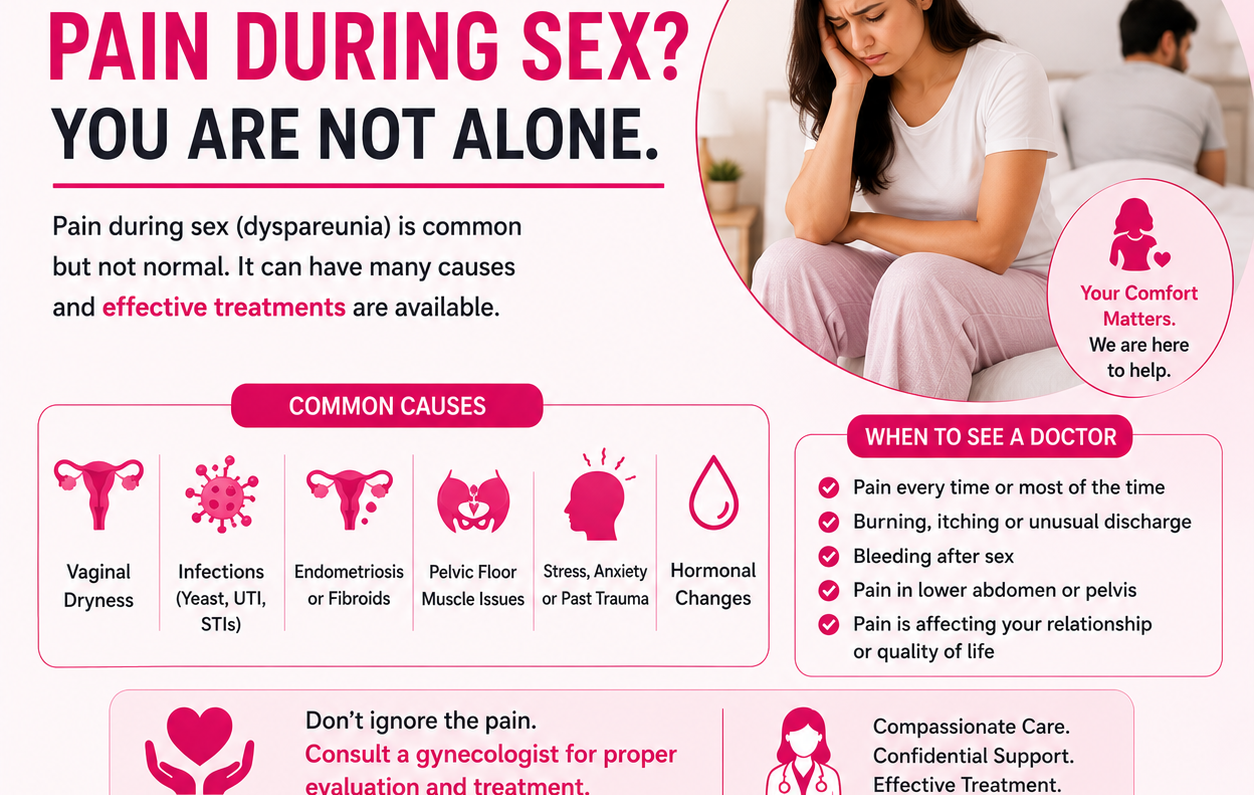
Pain during sexual intercourse is medically known as dyspareunia. It can happen at the entrance of the vagina, deeper inside the pelvis, during penetration, throughout intercourse or even afterward. There can be many possible causes, including vaginal dryness, infections, hormonal changes, pelvic floor problems, endometriosis and other gynecological conditions.
Most importantly, repeated or persistent pain during sex should not simply be tolerated.
Understanding why the pain is happening is the first step toward getting appropriate care.
What Does Pain During Sex Feel Like?
Pain during sex can feel different from one woman to another.
You may experience:
- Burning or stinging
- Sharp pain
- Aching or pressure
- Vaginal soreness
- Pain at the vaginal opening
- Pain with penetration
- Deep pelvic pain
- Cramping
- Tightness around the vagina
- Pain that continues after sex
- Pain associated with certain sexual positions
- Bleeding or spotting after intercourse
Some women experience pain only occasionally, while others may experience it almost every time they have intercourse.
The location and timing of the pain can provide important clues about its possible cause.
Is Pain During Sex Normal?
Occasional mild discomfort can happen, particularly when there is inadequate lubrication or significant friction.
However, regular, persistent or significant pain during sex is not something you should simply accept as normal.
Pain can be associated with a wide range of physical, hormonal and pelvic conditions. Some women may also develop fear or anxiety around intercourse after experiencing repeated pain, which can make the problem even more difficult.
If sex regularly hurts, it is worth discussing the problem with a gynecologist.
Common Causes of Pain During Sex
1. Vaginal Dryness
One of the most common contributors to painful penetration is insufficient vaginal lubrication.
When there is not enough natural lubrication, friction can increase and cause irritation or small areas of tissue discomfort.
Vaginal dryness may occur because of:
- Hormonal changes
- Menopause or perimenopause
- Breastfeeding
- The postpartum period
- Certain medications
- Insufficient sexual arousal
- Vaginal irritation or other conditions
You may experience burning, soreness or pain during and after intercourse.
If dryness is persistent, identifying the reason is more useful than simply assuming that pain is unavoidable.
2. Vaginal Infections
Infections and inflammation of the vagina can make sexual activity uncomfortable.
Vaginitis, for example, may cause vaginal soreness, itching, dryness, unusual discharge and pain during sex.
You may also notice:
- Abnormal vaginal discharge
- Unusual odor
- Itching
- Redness
- Burning
- Swelling
- Pain while urinating
- Soreness after sex
Different conditions can cause similar symptoms, so repeatedly treating yourself without knowing the cause may not solve the problem.
3. Sexually Transmitted Infections
Some sexually transmitted infections can cause genital discomfort, pain during sex, abnormal discharge, painful urination, sores or pelvic symptoms.
However, there is an important point every sexually active woman should know:
Many STIs have no symptoms.
This means a woman can have an STI without realizing it. Testing is therefore important when there has been a possible exposure or when symptoms suggest an infection.
STIs that may be associated with genital or pelvic symptoms include:
- Chlamydia
- Gonorrhea
- Trichomoniasis
- Genital herpes
- Syphilis
- Other sexually transmitted infections
If you are concerned about an STI, confidential testing can help determine whether an infection is present.
You can learn more about [STI testing for women] through Gynae Clinic’s women’s health information. STI Testing for Women
4. Pelvic Floor Muscle Tightness
Sometimes the muscles surrounding the vagina and pelvis become overly tight when penetration is attempted.
This can make intercourse painful or, in some cases, make penetration extremely difficult.
One condition associated with involuntary tightening of the vaginal muscles is vaginismus. It can cause burning or stinging pain when penetration is attempted.
Pelvic floor muscle problems may develop for different reasons, and repeated painful experiences can contribute to a cycle of tension and pain.
This is a genuine physical problem and is not something you should blame yourself for.
5. Endometriosis
Endometriosis is another possible cause of painful sex.
It occurs when tissue similar to the lining of the uterus grows outside the uterus and can cause pelvic symptoms.
Women with endometriosis may experience:
- Painful periods
- Heavy or irregular periods
- Pelvic pain
- Pain during or after sex
- Pain during bowel movements
- Pain with urination in some cases
- Difficulty becoming pregnant
Pain during or after sex is a recognized symptom of endometriosis.
If painful sex occurs together with severe menstrual pain or chronic pelvic pain, a gynecological evaluation may be appropriate.
6. Fibroids and Other Gynecological Conditions
Uterine fibroids can sometimes contribute to pelvic symptoms, including pain during sex.
Other pelvic conditions may also cause deep pain during intercourse.
This is why the location of your pain matters.
Pain at the vaginal entrance may have a different cause from pain felt deep in the lower abdomen.
7. Hormonal Changes
Hormonal changes can affect vaginal tissues, lubrication and sexual comfort.
Painful sex may occur during:
- Perimenopause
- Menopause
- Breastfeeding
- After childbirth
- Certain hormonal treatments
Reduced estrogen can contribute to vaginal dryness and changes in vaginal tissues, which may make penetration uncomfortable.
If painful intercourse begins during a period of hormonal change, mention this during your consultation.
8. Skin Irritation or Sensitivity
The skin around the vulva can become irritated by:
- Fragranced soaps
- Intimate washes
- Certain detergents
- Lubricants
- Condoms or other products
- Excessive washing
- Skin conditions
Irritated skin may burn or become painful when touched during intercourse.
If symptoms began after using a new product, tell your gynecologist.
9. Urinary Problems
Pain during sex can sometimes occur alongside urinary symptoms.
You may notice:
- Burning when urinating
- Frequent urination
- Urgency
- Lower abdominal discomfort
- Pain around the bladder
Urinary infections and other urinary or pelvic conditions can overlap with gynecological symptoms, so persistent symptoms should be evaluated rather than self-diagnosed.
10. Emotional and Psychological Factors
Pain during sex is not always caused by one physical condition.
Stress, anxiety, fear of pain, previous painful experiences and relationship difficulties can influence sexual response and pelvic muscle tension.
This does not mean that the pain is imaginary.
The pain is real.
Physical and emotional factors can sometimes interact, creating a cycle in which fear of pain leads to muscle tightening, which can make penetration more painful.
A compassionate healthcare assessment should consider the whole person rather than dismissing the symptoms.
Pain at the Beginning vs Deep Pain During Sex
The location of pain can provide useful information.
Pain at the vaginal opening
Pain that occurs when penetration begins may be associated with:
- Vaginal dryness
- Infection or inflammation
- Skin irritation
- Pelvic floor muscle tightness
- Vaginismus
- Vulvar pain conditions
Deep pelvic pain
Pain that occurs deeper during intercourse may be associated with:
- Endometriosis
- Pelvic infection
- Ovarian conditions
- Fibroids
- Other pelvic conditions
These are possibilities, not diagnoses. A proper evaluation is needed to determine the actual cause.
Why Do I Still Hurt After Sex?
Pain does not necessarily stop when intercourse ends.
Some women experience:
- Burning
- Soreness
- Pelvic aching
- Cramping
- Irritation
- Pain while urinating
- Vaginal tenderness
after sex.
This can occur with dryness, friction, infection, pelvic floor tension and several gynecological conditions.
If discomfort repeatedly continues for hours after intercourse, it is worth discussing with a gynecologist.
For more information, read our guide on [post-sex discomfort and why recurring symptoms should not be ignored].
What About Bleeding After Sex?
Bleeding after intercourse can have many possible causes.
It may occur because of irritation or minor trauma, but it can also be associated with infections, cervical conditions or other gynecological problems.
Repeated or unexplained bleeding after sex should be checked by a healthcare professional.
If bleeding occurs together with pelvic pain and pregnancy is possible, prompt medical assessment is especially important.
When Should You See a Gynecologist for Painful Sex?
You should consider a gynecological consultation if:
- Sex is painful repeatedly
- Pain is becoming worse
- Penetration is difficult
- You experience burning or stinging
- You have vaginal dryness
- You have itching or unusual discharge
- There is an unusual vaginal odor
- You experience bleeding after sex
- You have pelvic or lower abdominal pain
- You have painful urination
- You are concerned about an STI
- You have severe menstrual pain
- Pain is affecting your relationship or quality of life
- You have started avoiding intimacy because you are afraid of pain
You do not need to wait until the pain becomes severe before seeking help.
When Is Pain During Sex an Emergency?
Seek urgent medical care if pelvic or abdominal pain is:
- Severe or rapidly worsening
- Associated with fainting or significant dizziness
- Associated with heavy vaginal bleeding
- Associated with high fever or chills
- Associated with repeated vomiting
- Occurring with severe weakness
- Occurring when you are pregnant or may be pregnant
Severe pelvic pain can have causes that require prompt assessment.
How Is Pain During Sex Diagnosed?
There is no single test for painful sex.
Your gynecologist may first ask detailed questions about your symptoms.
You may be asked:
- Where exactly is the pain?
- Does it occur when penetration begins or deeper inside?
- Does it happen every time?
- How long has it been happening?
- Does the pain continue afterward?
- Do you experience dryness?
- Is there itching or discharge?
- Do you have urinary symptoms?
- Are your periods painful?
- Have you experienced abnormal bleeding?
- Could pregnancy be possible?
- Is there any concern about an STI?
- Have you recently given birth or started breastfeeding?
- Are you taking any medications?
Depending on your symptoms, your healthcare professional may recommend a physical examination or appropriate tests.
These may include infection or STI testing, urine testing, pregnancy testing or pelvic imaging when clinically indicated.
The purpose is to understand why the pain is happening.
Can Pain During Sex Be Treated?
In many cases, painful sex can be managed once the underlying cause is identified.
Treatment depends entirely on the reason for the pain.
For example, management may involve addressing:
- Vaginal dryness
- Infection
- STI
- Hormonal changes
- Pelvic floor dysfunction
- Endometriosis
- Other gynecological conditions
- Irritation or skin problems
There is no single treatment that is appropriate for every woman.
That is why getting the correct assessment matters.
What Can You Do Right Now?
If sex is painful:
Do not force yourself to continue through significant pain.
You can also:
- Communicate openly with your partner.
- Allow adequate time for arousal.
- Pay attention to whether dryness contributes to discomfort.
- Avoid fragranced products that irritate the genital area.
- Notice when and where the pain occurs.
- Record associated symptoms such as discharge, bleeding or urinary discomfort.
- Seek medical evaluation if symptoms continue or recur.
If there is a possibility of an STI, seek appropriate testing rather than trying to determine the diagnosis yourself. Many STIs can be present without obvious symptoms.
Pain During Sex Does Not Mean Something Is Wrong With You
Perhaps the most important message is this:
Pain during sex does not make you abnormal.
You are not less feminine.
You are not failing as a partner.
You are not alone.
Painful intercourse is a genuine women’s health concern with many possible causes. Some women wait months or years before talking to a doctor because they feel embarrassed or believe they should simply tolerate it.
You don’t have to.
Your comfort and sexual wellbeing are part of your overall health.
Pain During Sex: You Are Not Alone
If sex hurts, listen to your body.
Sometimes the cause may be simple, such as dryness or irritation. In other cases, pain may be related to infection, an STI, pelvic floor problems, endometriosis, hormonal changes or another gynecological condition.
The important thing is not to guess.
Find the cause. Get appropriate care. Take your comfort seriously.
At Gynae Clinic Pvt. Ltd., women can discuss sensitive gynecological and sexual-health concerns in a private, respectful and compassionate environment.
Looking for a Gynecologist in Bhaktapur?
If you are experiencing painful sex, vaginal discomfort, pelvic pain, dryness, unusual discharge or other intimate health concerns, a gynecological consultation can help determine what may be causing your symptoms.
Gynae Clinic Pvt. Ltd.
Bode Planning, Madhyapur Thimi-9, Pani Tanki, Bhaktapur, Nepal
Appointments:
9703940944
9703940945
9763615835
Email: gynaeclinic1@gmail.com
Compassionate care for every women’s health.
Frequently Asked Questions
Is pain during sex normal?
Occasional mild discomfort can happen, particularly with friction or inadequate lubrication. However, repeated, persistent or significant pain should be evaluated rather than accepted as normal.
Why does sex hurt when I first get penetrated?
Pain at the vaginal opening can be associated with dryness, irritation, infection, pelvic floor muscle tightness, vaginismus or vulvar pain conditions.
Why does sex hurt deep inside?
Deep pain during sex can have several possible causes, including endometriosis, pelvic infections, ovarian conditions, fibroids and other pelvic problems.
Can vaginal dryness cause painful sex?
Yes. Reduced lubrication can increase friction and make penetration painful or irritating.
Can an STI cause painful sex?
Some STIs can contribute to genital or pelvic symptoms, but many STIs cause no symptoms. Testing may therefore be important when there has been a possible exposure or symptoms suggest infection.
Can endometriosis cause pain during sex?
Yes. Pain during or after sex is one possible symptom of endometriosis, particularly when it occurs alongside painful periods or chronic pelvic pain.
Can stress cause painful sex?
Stress and anxiety can contribute to muscle tension and changes in sexual response. However, painful sex should not automatically be attributed to stress without considering possible physical causes.
What if I am embarrassed to tell my gynecologist about painful sex?
You should not feel embarrassed. Sexual pain is a medical concern, and healthcare professionals are accustomed to discussing sensitive symptoms. Giving accurate information helps your doctor understand the possible cause.
Should I stop having sex if it hurts?
You should not force sexual activity through significant pain. If you have persistent pain, particularly with unusual discharge, bleeding, pelvic pain or possible STI exposure, seek medical advice.
Medical Disclaimer
This article is intended for general educational purposes and does not replace an individual medical consultation, examination or diagnosis. Pain during sex can have many different causes, and appropriate testing or examination may be necessary. Do not self-diagnose or start prescription treatment based solely on this information. Certain complex conditions may benefit from advanced specialist care.
Author: Gynae Clinic Pvt. Ltd. — Women’s Health & Gynecology Care, Bhaktapur, Nepal