

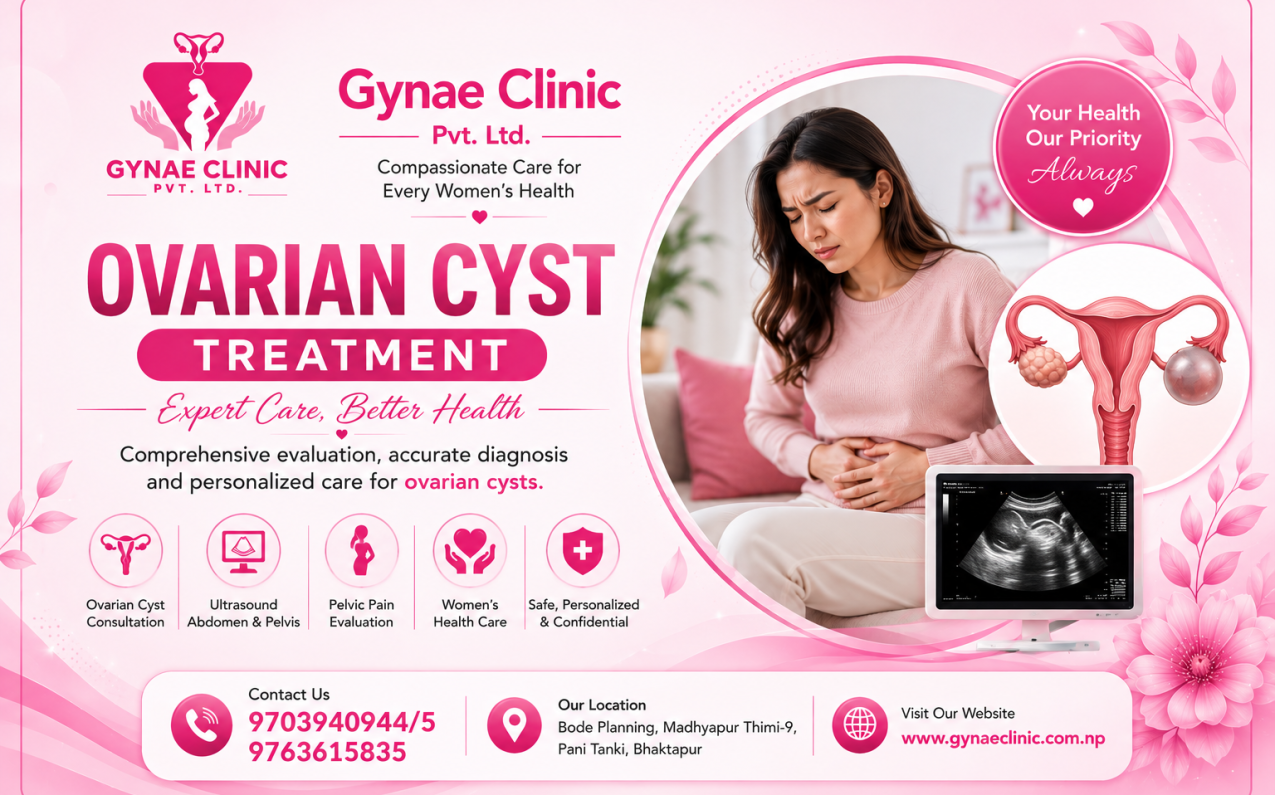
Looking for ovarian cyst treatment in Bhaktapur? Learn about ovarian cyst symptoms, causes, ultrasound diagnosis, treatment options and when to see a gynecologist at Gynae Clinic.
An ovarian cyst can sound frightening when you first hear the word “cyst.” However, many ovarian cysts are common, non-cancerous and may disappear naturally without treatment.
Some women have no symptoms and discover an ovarian cyst during an ultrasound examination. Others may experience pelvic pain, lower abdominal discomfort, irregular periods, painful menstruation or pressure in the abdomen.
Understanding the type and characteristics of an ovarian cyst is important because treatment is not the same for every woman.
If you are searching for ovarian cyst treatment in Bhaktapur, an ovarian cyst doctor near me, ovarian cyst ultrasound, or a female gynecologist in Bhaktapur, appropriate evaluation can help determine what care may be needed.
Gynae Clinic Pvt. Ltd.
Bode Planning, Madhyapur Thimi-9, Pani Tanki, Bhaktapur, Nepal
provides women’s health and gynecology consultations, including evaluation of pelvic and abdominal symptoms and ultrasound of the abdomen and pelvis when clinically indicated.
What Is an Ovarian Cyst?
An ovarian cyst is a fluid-filled sac or other cystic structure that develops in or around an ovary.
Ovarian cysts can occur at different stages of a woman’s reproductive life. Many are related to the normal menstrual cycle and may resolve on their own.
Other cysts may require follow-up depending on factors such as:
- Size
- Appearance
- Symptoms
- Age
- Menstrual status
- Pregnancy plans
- Changes seen during follow-up
Therefore, finding an ovarian cyst does not automatically mean that surgery or serious treatment is required.
Common Ovarian Cyst Symptoms
Some women with ovarian cysts have no symptoms at all.
When symptoms occur, they can include:
1. Pelvic or Lower Abdominal Pain
Pain may be felt in the lower abdomen or pelvic area. It can sometimes be more noticeable on one side.
2. Pressure or Fullness
A larger cyst may cause a feeling of:
- Abdominal fullness
- Pelvic pressure
- Bloating or discomfort
3. Painful Periods
Some women may experience increased pelvic discomfort during menstruation.
4. Irregular Periods
Changes in menstrual bleeding or cycle timing may occur depending on the underlying hormonal or ovarian condition.
5. Pain During Sexual Intercourse
Pelvic conditions, including some ovarian cysts, may cause discomfort during or after intercourse.
6. Frequent Urination
A larger pelvic cyst may sometimes put pressure on the bladder and contribute to urinary frequency.
7. Difficulty Becoming Pregnant
Most ovarian cysts do not cause infertility. However, certain conditions associated with ovarian cysts, such as endometriosis or PCOS, can affect fertility.
What Causes Ovarian Cysts?
There are several possible types and causes of ovarian cysts.
Functional Ovarian Cysts
Functional cysts are associated with the normal process of ovulation. Many resolve naturally within one or more menstrual cycles.
PCOS and Ovarian Changes
Women with polycystic ovary syndrome (PCOS) may have multiple small follicles in the ovaries along with hormonal and ovulatory abnormalities.
PCOS is different from having one simple ovarian cyst.
Endometriosis-Related Cysts
Endometriosis can sometimes cause an ovarian cyst called an endometrioma.
Women may also experience painful periods, chronic pelvic pain or fertility concerns.
Other Ovarian Cysts
Other benign ovarian cysts can occur and may require monitoring or further evaluation depending on their ultrasound appearance and clinical features.
How Is an Ovarian Cyst Diagnosed?
A gynecologist generally considers your symptoms, medical history and examination findings together with imaging.
1. Medical History
Your doctor may ask about:
- Menstrual cycle pattern
- Pelvic or abdominal pain
- Previous ovarian cysts
- Pregnancy history
- Fertility concerns
- Previous gynecological conditions
- Other symptoms
2. Physical Examination
When appropriate, a clinical examination may help identify abdominal or pelvic tenderness and other findings.
3. Ultrasound Examination
Ultrasound is commonly used to evaluate ovarian and pelvic conditions.
Depending on the clinical situation, ultrasound can provide information about:
- Ovarian size
- Location of a cyst
- Cystic or solid features
- Internal appearance
- Approximate size
- Associated pelvic findings
- Changes during follow-up
At Gynae Clinic Pvt. Ltd., ultrasound services are available for abdomen and pelvis when indicated by the clinical evaluation.
An ultrasound finding should always be interpreted together with the patient’s symptoms and medical history.
Does Every Ovarian Cyst Need Treatment?
No.
Many ovarian cysts do not require immediate treatment.
The appropriate approach depends on factors such as:
- Type of cyst
- Size
- Ultrasound appearance
- Symptoms
- Age
- Menstrual status
- Pregnancy plans
- Whether the cyst changes over time
A doctor may recommend observation and follow-up rather than immediate treatment.
Ovarian Cyst Treatment Options
Treatment is individualized for every patient.
Depending on the situation, management may include:
Observation and Follow-Up
Some cysts can be monitored because they may resolve naturally.
Your doctor may recommend a repeat evaluation or ultrasound when appropriate.
Pain Management
If an ovarian cyst is associated with discomfort, appropriate pain management may be advised based on your individual health situation.
Hormonal Management
In selected situations, hormonal treatment may be considered for menstrual or ovarian-related symptoms.
Hormonal medicines should only be used according to appropriate medical advice.
Further Gynecological Evaluation
If a cyst has concerning features, persists, grows, or causes significant symptoms, further assessment or specialist referral may be recommended.
Surgical Evaluation
Some ovarian cysts may require surgical assessment, particularly when there are concerning imaging features, persistent symptoms, complications or other clinical reasons.
Not every ovarian cyst requires surgery.
Ovarian Cyst and Pregnancy
Having an ovarian cyst does not automatically mean that you cannot become pregnant.
Many women with ovarian cysts conceive normally.
However, fertility can sometimes be affected by the underlying condition rather than the cyst itself. For example, endometriosis and PCOS can be associated with fertility difficulties.
If you are planning pregnancy and have been diagnosed with an ovarian cyst, discuss your individual situation with a gynecologist.
Can an Ovarian Cyst Cause Irregular Periods?
It can, depending on the underlying ovarian or hormonal condition.
However, irregular periods have many possible causes, including:
- PCOS
- Hormonal changes
- Thyroid disorders
- Stress
- Significant weight changes
- Pregnancy
- Perimenopause
- Other gynecological conditions
Therefore, irregular periods should not automatically be attributed to an ovarian cyst.
A proper medical evaluation can help identify the underlying cause.
When Should You See a Gynecologist for an Ovarian Cyst?
Consider seeing a gynecologist if you have:
- Persistent pelvic pain
- Recurrent lower abdominal pain
- Painful periods
- Irregular menstrual cycles
- Abdominal fullness or pressure
- Pain during intercourse
- Difficulty becoming pregnant
- A previously diagnosed ovarian cyst
- An ovarian cyst found during ultrasound
Early evaluation can help determine whether monitoring, further investigation or treatment is appropriate.
When Is Ovarian Cyst Pain an Emergency?
Seek urgent medical attention if you develop sudden or severe pelvic or abdominal pain, particularly when accompanied by:
- Vomiting
- Fainting or severe dizziness
- Weakness
- Heavy vaginal bleeding
- Severe worsening pain
Sudden severe symptoms can sometimes occur with complications such as ovarian torsion or cyst rupture and should not be ignored.
Ovarian Cyst Ultrasound in Bhaktapur
If your doctor recommends imaging for pelvic or abdominal symptoms, an ultrasound of the abdomen and pelvis can help evaluate the ovaries and surrounding structures.
At Gynae Clinic Pvt. Ltd., Bhaktapur, ultrasound abdomen and pelvis is available when clinically indicated as part of women’s health and gynecology evaluation.
Ultrasound findings should be interpreted by a qualified healthcare professional in the context of your symptoms and medical history.
Ovarian Cyst Treatment in Bhaktapur
If you are searching online for:
“ovarian cyst treatment in Bhaktapur”
“ovarian cyst doctor near me”
“female gynecologist Bhaktapur”
“ultrasound for ovarian cyst”
“pelvic pain treatment Bhaktapur”
you can consult Gynae Clinic Pvt. Ltd. for women’s health and gynecology evaluation.
Women’s Health Services Include:
✓ Gynecology consultation
✓ Ovarian and pelvic symptom evaluation
✓ Ultrasound abdomen and pelvis when indicated
✓ PCOS and hormonal health evaluation
✓ Irregular period consultation
✓ Fertility counselling
✓ Reproductive health care
✓ Follow-up guidance
Gynae Clinic Pvt. Ltd.
Address:
Bode Planning, Madhyapur Thimi-9, Pani Tanki, Bhaktapur, Nepal
Contact:
9703940944/5
9763615835
Website:
www.gynaeclinic.com.np
Frequently Asked Questions About Ovarian Cysts
Are all ovarian cysts dangerous?
No. Many ovarian cysts are benign and may resolve naturally. However, some cysts require monitoring or further evaluation depending on their size, appearance, symptoms and other clinical factors.
Can an ovarian cyst go away on its own?
Some functional ovarian cysts can resolve without treatment. Your doctor may recommend observation and follow-up depending on the findings.
Does every ovarian cyst need surgery?
No. Surgery is not necessary for every ovarian cyst. Management depends on the cyst’s characteristics, symptoms and the overall clinical situation.
Can ovarian cysts cause pelvic pain?
Yes. Some ovarian cysts can cause pelvic or lower abdominal pain, pressure or discomfort. However, pelvic pain has many possible causes and requires proper evaluation.
Can ovarian cysts cause irregular periods?
Some ovarian or hormonal conditions may be associated with menstrual irregularities. However, irregular periods can have many causes, so medical evaluation is important.
Can I get pregnant if I have an ovarian cyst?
Many women with ovarian cysts can become pregnant. Fertility depends on the type of cyst and any underlying condition affecting reproductive health.
Is ultrasound useful for ovarian cysts?
Yes. Ultrasound is commonly used to evaluate ovarian and pelvic structures and can provide information about the size and appearance of a cyst.
Where can I get ovarian cyst evaluation in Bhaktapur?
You can visit Gynae Clinic Pvt. Ltd., Bode Planning, Madhyapur Thimi-9, Pani Tanki, Bhaktapur, for gynecology consultation and, when clinically indicated, ultrasound abdomen and pelvis.
Conclusion
An ovarian cyst does not always mean a serious health problem. Many cysts are benign and may disappear naturally, while others require monitoring, medical management or further evaluation.
The most important step is understanding what type of cyst is present and whether it is causing symptoms or changing over time.
If you are experiencing persistent pelvic pain, painful periods, irregular periods, fertility concerns or have been told that you have an ovarian cyst, consider consulting a gynecologist for an individualized evaluation.
For women searching for ovarian cyst treatment in Bhaktapur, ovarian cyst evaluation, pelvic pain consultation, ultrasound for ovarian cyst, or a female gynecologist in Bhaktapur, contact:
Gynae Clinic Pvt. Ltd.
Bode Planning, Madhyapur Thimi-9, Pani Tanki, Bhaktapur, Nepal
9703940944/5 | 9763615835
Women’s Health | Gynecology | Ovarian Health | Ultrasound Abdomen & Pelvis
NOTE: This article intentionally avoids claiming that every ovarian cyst needs treatment or that Gynae Clinic provides surgery. Current clinical references support observation for many uncomplicated cysts, while management depends on the cyst’s characteristics, symptoms and the patient’s circumstances.
Author: Gynae Clinic Pvt. Ltd.