
Human papillomavirus (HPV) is a very common viral infection. Certain high-risk HPV types can cause persistent changes in cervical cells that may eventually lead to cervical cancer. The good news is that regular cervical cancer screening can detect HPV or precancerous changes early, when they can be managed effectively.
World Health Organization+1
If you are searching for an HPV test in Bhaktapur or wondering who needs HPV screening, this guide explains when screening may be recommended and why regular cervical health checks are important.
What Is an HPV Test?
An HPV test looks for high-risk types of human papillomavirus that can cause cervical cell changes.
Unlike a Pap test, which looks for abnormal cervical cells, an HPV test looks for the virus itself. HPV testing can be used as a primary cervical cancer screening test in appropriate age groups, or together with cervical cytology depending on the screening programme and individual circumstances.
CDC+1
A positive HPV test does not mean that you have cervical cancer. It means that high-risk HPV has been detected and that appropriate follow-up may be needed.
Who Needs HPV Screening?
The appropriate screening schedule depends on your age, risk factors, previous screening results, and the guidelines used by your healthcare provider.
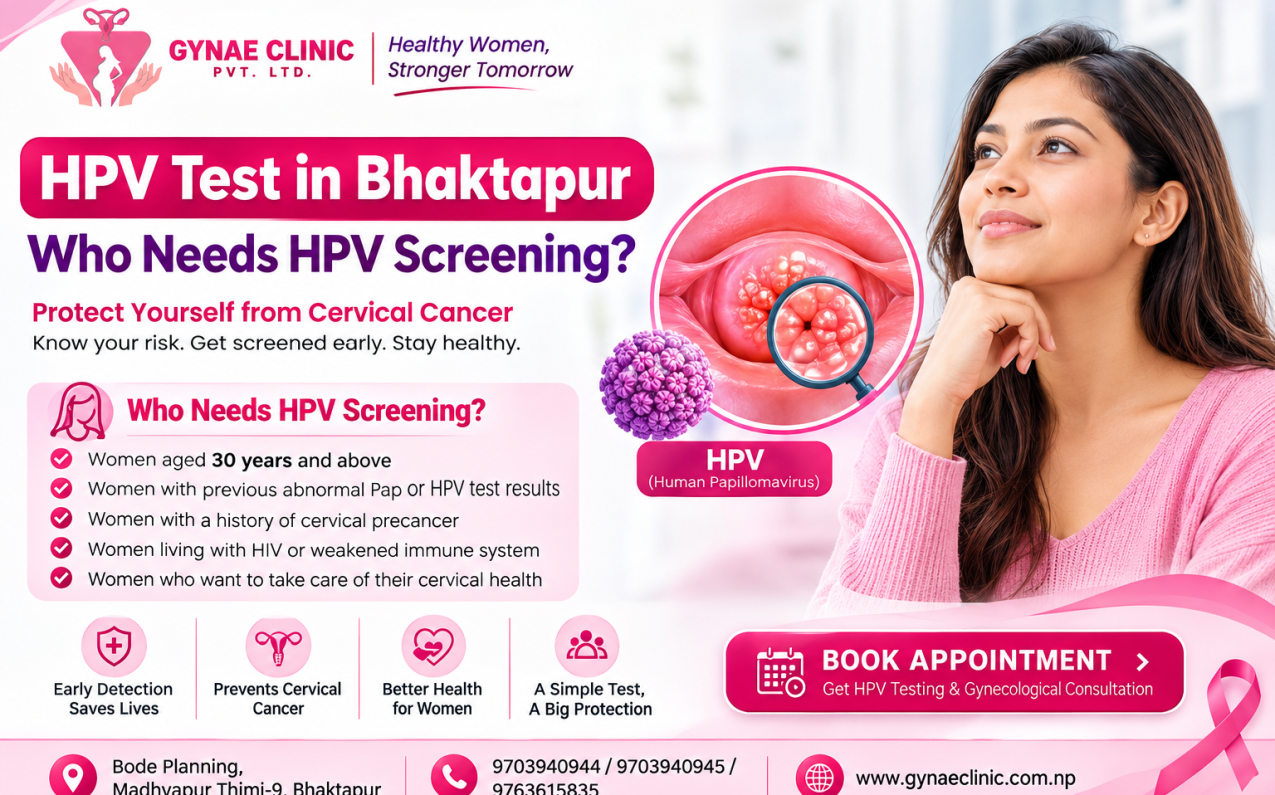
Women Around 30 Years and Older
WHO recommends HPV DNA testing as a primary cervical cancer screening approach for the general population starting at age 30, with repeat screening intervals depending on the screening strategy and local programme.
World Health Organization+1
In Nepal, HPV DNA-based cervical cancer screening has also been incorporated into national screening activities. Nepal’s health-sector documents describe HPV DNA screening programmes and cervical cancer screening among women in specified age groups.
Ministry of Health and Food Safety Nepal+1
Women Younger Than 30
For younger women, HPV infection is common and often clears naturally. Therefore, an HPV test is not automatically recommended as a routine stand-alone screening test for every woman under 30.
For example, CDC guidance recommends cervical cytology (Pap testing) rather than HPV testing alone for average-risk women aged 21–29.
CDC+1
Your gynecologist can recommend the appropriate screening method based on your age and medical history.
Women With Previous Abnormal Cervical Screening Results
If you have previously had:
- An abnormal Pap test
- A positive high-risk HPV test
- Cervical precancer
- Treatment for abnormal cervical cells
- An abnormal colposcopy or biopsy
you may need closer follow-up than routine screening. Your follow-up schedule should be determined by your healthcare provider.
Women With a Weakened Immune System
Women living with HIV or with certain other conditions that weaken the immune system may need earlier or more frequent cervical cancer screening.
WHO recommends HPV-based screening beginning at age 25 for women living with HIV, with repeat screening at shorter intervals than for the general population.
World Health Organization+1
Women Who Have Received the HPV Vaccine
HPV vaccination significantly helps prevent infection with important cancer-causing HPV types, but vaccination does not eliminate the need for cervical cancer screening. Vaccinated women should continue screening according to applicable recommendations.
CDC
Does Every Woman Need an HPV Test?
No. HPV testing is primarily used as part of cervical cancer screening and follow-up, and the appropriate test depends on age and individual risk.
For average-risk women, CDC guidance describes:
- Age 21–29: Pap testing every 3 years
- Age 30–65: HPV testing alone every 5 years, Pap testing every 3 years, or HPV testing with Pap testing every 5 years, depending on the approach used
- Over 65: Screening may no longer be necessary for women who meet appropriate criteria based on previous screening and medical history. CDC+1
Screening recommendations can differ between countries and health systems, so your gynecologist can advise which schedule is appropriate for you.
Can HPV Cause Symptoms?
Usually, high-risk HPV infection itself does not cause noticeable symptoms. A woman can have HPV without knowing it.
This is one reason cervical cancer screening is important. Precancerous cervical changes often do not cause symptoms either, so waiting for symptoms is not a reliable way to detect cervical disease.
CDC+1
HPV Test vs Pap Test: What Is the Difference?
HPV Test
The HPV test detects high-risk HPV infection associated with cervical cancer risk.
Pap Test
A Pap test examines cervical cells for abnormal changes that could develop into cervical cancer if not appropriately managed.
HPV and Pap Co-Testing
In some screening programmes, both tests are performed together. Your healthcare provider can recommend the most appropriate approach based on your age, previous results, risk factors, and available screening services.
CDC
What Happens During an HPV Test?
An HPV test is usually performed during a gynecological examination.
A healthcare professional uses a speculum to gently visualize the cervix and collects a sample of cervical cells using a small brush or collection device. The sample is then sent for laboratory testing.
The procedure is generally quick. Some women may experience mild temporary discomfort or pressure during sample collection.
CDC+1
What Happens If the HPV Test Is Positive?
A positive HPV result does not mean you have cancer.
Depending on the HPV type, screening history, and local clinical protocol, your doctor may recommend:
- Repeat HPV testing after an appropriate interval
- A Pap or cytology test
- Additional triage testing
- Colposcopy
- Further examination or biopsy when indicated
The most important step after a positive result is to complete the recommended follow-up. Current WHO guidance emphasizes appropriate triage and management after a positive HPV screening result.
World Health Organization+1
Can HPV Be Prevented?
HPV infection can be reduced through several measures:
- HPV vaccination
- Appropriate cervical cancer screening
- Safer sexual practices
- Condom and barrier use, which can reduce but not completely eliminate HPV transmission
- Following up promptly after an abnormal screening result
HPV vaccination and cervical screening work together; vaccination does not replace screening.
CDC
When Should You See a Gynecologist?
Consider discussing cervical cancer screening with a gynecologist if:
- You are due for routine cervical screening
- You have never had cervical cancer screening
- You have previously had an abnormal Pap or HPV test
- You have a history of cervical precancer
- You are living with HIV or have another condition affecting immunity
- You are unsure whether you need an HPV test
- You want personalized advice about HPV vaccination and screening
If you have symptoms such as unusual vaginal bleeding, bleeding after sexual intercourse, persistent unusual vaginal discharge, or pelvic pain, do not wait for a routine screening appointment. Seek medical evaluation.
HPV Test in Bhaktapur
If you are looking for an HPV test in Bhaktapur or need advice about cervical cancer screening, you can consult Gynae Clinic Pvt. Ltd. in Bode Planning, Madhyapur Thimi-9, Bhaktapur.
Gynae Clinic Pvt. Ltd. Address: Bode Planning, Madhyapur Thimi-9, Bhaktapur, Nepal Phone: 9703940944 / 9703940945 / 9763615835 Website: www.gynaeclinic.com.np
A gynecological consultation can help determine whether you need an HPV test, Pap test, or another form of cervical cancer screening based on your age and medical history.
Frequently Asked Questions About HPV Screening
At what age should women start HPV screening?
WHO recommends HPV DNA-based cervical cancer screening for the general population starting at age 30. Screening programmes may use different approaches based on local recommendations and available services.
World Health Organization+1
Do women under 30 need an HPV test?
Not necessarily. HPV is common in younger women, and many infections clear naturally. For average-risk women aged 21–29, CDC guidance recommends Pap testing rather than routine HPV testing alone.
CDC
Can I have HPV without symptoms?
Yes. HPV frequently causes no noticeable symptoms, which is why cervical cancer screening is important.
Does a positive HPV test mean cancer?
No. A positive high-risk HPV test means that HPV has been detected. It does not by itself diagnose cervical cancer. Appropriate follow-up determines whether cervical cell changes are present and whether further evaluation is needed.
World Health Organization
Do I need HPV screening if I received the HPV vaccine?
Yes. HPV vaccination does not protect against every cancer-causing HPV type, so vaccinated women should continue cervical cancer screening according to applicable recommendations.
CDC
Can HPV screening prevent cervical cancer?
Regular screening can identify high-risk HPV infection or precancerous cervical changes early, allowing appropriate follow-up and treatment before cervical cancer develops.
CDC+1
Protect Your Cervical Health
HPV infection is common, and many infections clear without causing serious problems. However, persistent infection with high-risk HPV types can lead to cervical precancer and cancer.
Regular cervical cancer screening is one of the most important steps women can take to protect their cervical health.
If you are unsure whether you need an HPV test in Bhaktapur, speak with a gynecologist about your age, previous screening history, vaccination status, and individual risk factors.
Gynae Clinic Pvt. Ltd. Bode Planning, Madhyapur Thimi-9, Bhaktapur, Nepal Phone: 9703940944 / 9703940945 / 9763615835 Website: www.gynaeclinic.com.np
This article is for general educational purposes and does not replace professional medical examination, diagnosis, or individualized medical advice.
Author; Gynae Clinic Pvt. Ltd.