


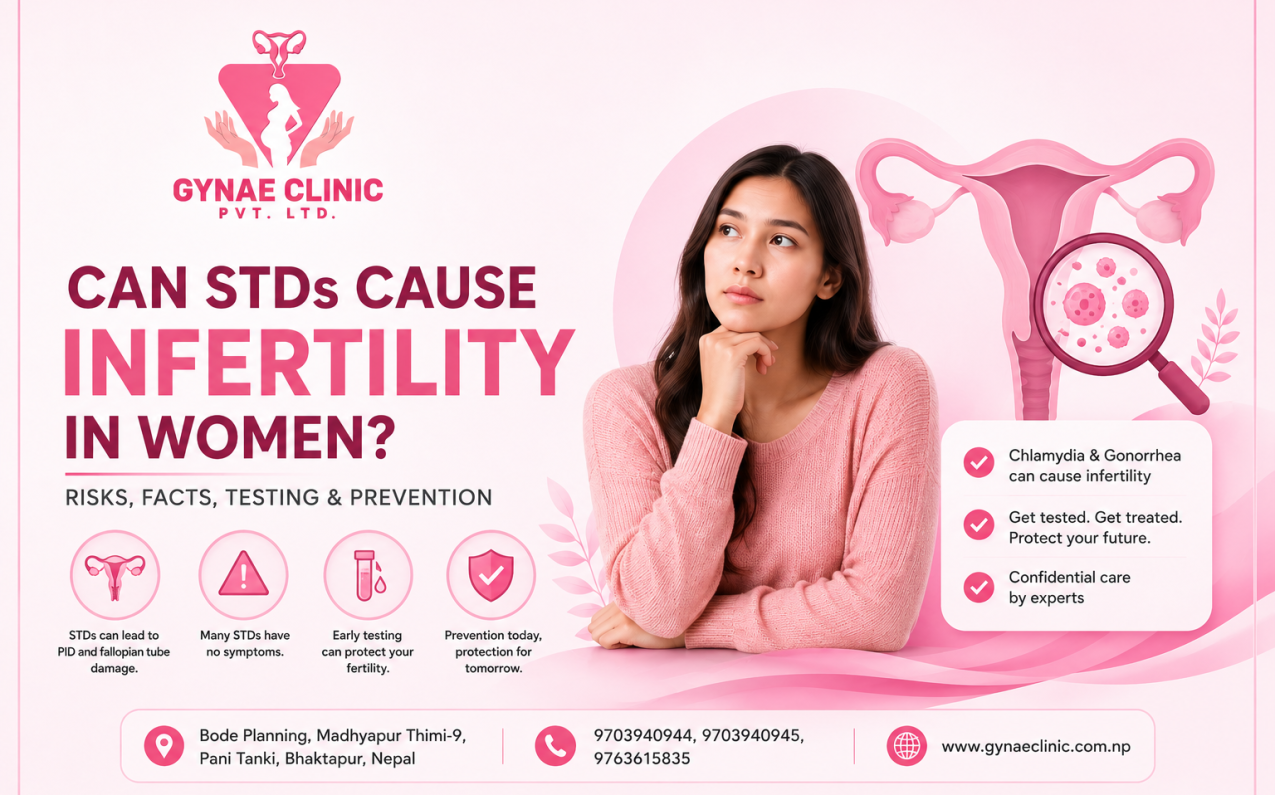
Yes, some sexually transmitted infections (STIs), commonly called STDs, can cause infertility in women—especially when they are left untreated.
STIs such as chlamydia and gonorrhea can spread from the cervix into the upper reproductive organs and cause pelvic inflammatory disease (PID). PID can damage and scar the fallopian tubes, making it more difficult for an egg and sperm to meet and increasing the risk of infertility and ectopic pregnancy.
The most concerning part is that an STI can sometimes cause reproductive damage without obvious symptoms. WHO notes that the majority of STIs are asymptomatic, which means a woman may not know she has an infection until complications develop or she experiences difficulty becoming pregnant.
If you are concerned about STDs and infertility, previous unprotected sex, abnormal vaginal discharge, pelvic pain, or difficulty conceiving, appropriate medical evaluation and STI testing can help identify possible causes.
Can an STD Cause Infertility in Women?
Yes, certain untreated STIs can contribute to female infertility.
The main concern is not that every STI directly causes infertility. Rather, certain bacterial STIs—particularly chlamydia and gonorrhea—can cause inflammation and infection in the upper reproductive tract.
This may lead to:
- Pelvic inflammatory disease
- Fallopian tube inflammation
- Scar tissue formation
- Blocked or damaged fallopian tubes
- Ectopic pregnancy
- Chronic pelvic pain
- Tubal-factor infertility
WHO identifies untreated STIs as a cause of tubal disorders, including blocked fallopian tubes, and specifically identifies chlamydia and gonorrhea as major causes of PID and infertility in women.
How Do STDs Cause Infertility?
To understand how an STI can affect fertility, it helps to understand the female reproductive system.
Normally, an egg released from an ovary travels through a fallopian tube. Fertilization usually occurs within the fallopian tube before the early embryo travels toward the uterus.
An untreated infection can interfere with this process.
Step 1: Infection begins
An STI such as chlamydia or gonorrhea may initially infect the cervix or genital tract.
Step 2: The infection may move upward
If untreated, bacteria can travel upward into the uterus, fallopian tubes and surrounding reproductive organs.
Step 3: Inflammation develops
The body’s response to infection can cause inflammation of the reproductive organs.
Step 4: Scarring can occur
After inflammation, scar tissue may form.
Step 5: The fallopian tubes may become damaged
Scarring can narrow or block the fallopian tubes.
Step 6: Fertility may be affected
When the tubes are significantly damaged or blocked, sperm may have difficulty reaching the egg, or a fertilized egg may have difficulty traveling normally toward the uterus.
This is one pathway through which untreated STIs can contribute to infertility and ectopic pregnancy.
Which STDs Can Cause Infertility in Women?
1. Chlamydia
Chlamydia is one of the most important STIs associated with female infertility.
It is caused by Chlamydia trachomatis and can often occur without obvious symptoms.
When symptoms occur, they may include:
- Abnormal vaginal discharge
- Burning while urinating
- Lower abdominal or pelvic pain
- Pain during sex
- Bleeding after sex
- Bleeding between periods
Without appropriate treatment, chlamydia can cause PID and damage the reproductive tract. WHO specifically identifies untreated chlamydia as a cause of PID, infertility and ectopic pregnancy.
Why is chlamydia particularly concerning?
A woman can have chlamydia without realizing she is infected.
The initial infection may cause little or no noticeable discomfort. Meanwhile, inflammation can potentially affect the upper reproductive tract.
This is why STI testing can be important even when symptoms are absent.
2. Gonorrhea
Gonorrhea is another bacterial STI that can affect female reproductive health.
Like chlamydia, gonorrhea can cause PID when infection spreads into the upper reproductive tract.
Possible symptoms include:
- Vaginal discharge
- Burning during urination
- Pelvic pain
- Abnormal vaginal bleeding
- Bleeding after sex
However, some women may have mild or no symptoms.
Untreated gonorrhea can therefore remain unnoticed and potentially contribute to reproductive tract complications. WHO identifies gonorrhea and chlamydia as major causes of PID and infertility in women.
Can Trichomoniasis Cause Infertility?
Trichomoniasis is a common STI caused by the parasite Trichomonas vaginalis.
It can cause:
- Vaginal discharge
- Vaginal odor
- Genital irritation
- Itching
- Burning during urination
- Discomfort during sex
However, not everyone develops symptoms.
Trichomoniasis is not the classic direct cause of tubal infertility in the way untreated chlamydia and gonorrhea are. Nevertheless, any suspected STI should be evaluated and treated appropriately because untreated genital infections can affect reproductive and sexual health.
Can HPV Cause Infertility?
HPV is different from chlamydia and gonorrhea.
HPV is primarily known for causing genital warts and, with certain high-risk types, cervical precancer and cancer.
HPV itself is not considered a typical direct cause of tubal infertility.
However, cervical disease, procedures used to treat significant cervical abnormalities, and other reproductive-health circumstances can have implications for pregnancy and reproductive care.
This is why HPV vaccination and appropriate cervical cancer screening are important parts of women’s preventive healthcare.
Can Syphilis Cause Infertility?
Syphilis is a sexually transmitted bacterial infection that can affect multiple parts of the body if untreated.
It is not generally considered one of the primary causes of tubal infertility in women.
However, untreated syphilis can cause serious health complications and can be transmitted during pregnancy, potentially causing severe pregnancy outcomes.
Therefore, appropriate testing and treatment are important whenever syphilis exposure is possible.
What Is Pelvic Inflammatory Disease (PID)?
Pelvic inflammatory disease is an infection of the female reproductive organs.
It can affect structures including the:
- Uterus
- Fallopian tubes
- Ovaries
- Surrounding pelvic tissues
Chlamydia and gonorrhea are important causes of PID, although PID can also result from other bacteria.
PID matters because inflammation can result in scar tissue.
That scar tissue may affect the fallopian tubes and increase the risk of:
- Infertility
- Ectopic pregnancy
- Chronic pelvic pain
- Tubal damage
CDC notes that PID can cause difficulty becoming pregnant, while ACOG explains that scarring of the fallopian tubes can block the tubes and prevent fertilization.
Can PID Cause Infertility Even Without Severe Symptoms?
Yes.
PID does not always produce dramatic symptoms.
Some women may have:
- Mild pelvic discomfort
- Unusual bleeding
- Abnormal discharge
- Pain during sex
- No obvious symptoms at all
CDC specifically notes that PID episodes can go unrecognized and that even mild or asymptomatic PID can be associated with infertility risk.
This is one reason women should not ignore persistent or unexplained reproductive symptoms.
Can You Have an STD and Still Get Pregnant?
Yes.
Having an STI does not automatically mean you are infertile.
Many women who have had an STI can become pregnant, particularly when the infection is diagnosed and treated before it causes reproductive tract damage.
The fertility risk depends on factors such as:
- Which infection is present
- How long it has been present
- Whether treatment was received
- Whether PID developed
- Whether the fallopian tubes were damaged
- Whether other fertility factors are present
An STI diagnosis should therefore not be interpreted as a diagnosis of infertility.
Does Having Chlamydia Mean I Am Infertile?
No.
Having chlamydia does not automatically mean you will become infertile.
The concern is primarily with untreated infection and complications such as PID and tubal damage.
Early diagnosis and appropriate treatment can reduce the risk of long-term complications. WHO states that chlamydia is curable with antibiotics and that early treatment is important in preventing long-term problems.
If you have previously had chlamydia, speak with a gynecologist if you are concerned about fertility, especially if you have been trying to conceive.
What Are the Warning Signs of PID?
Seek medical evaluation if you experience symptoms such as:
- Lower abdominal pain
- Pelvic pain
- Fever
- Abnormal vaginal discharge
- Pain during sex
- Burning while urinating
- Bleeding between periods
- Bleeding after sex
- Unusual menstrual bleeding
Severe pelvic or abdominal pain, fever, vomiting, fainting or other serious symptoms require prompt medical attention.
Not every case of pelvic pain is caused by PID. Other conditions—including ovarian cysts, endometriosis, urinary infections and other gynecological conditions—can cause similar symptoms.
Professional assessment is therefore important.
Can STDs Cause Blocked Fallopian Tubes?
Yes, untreated STIs can contribute to blocked or damaged fallopian tubes.
Fallopian tube damage is one of the most important ways that pelvic infections can affect fertility.
WHO identifies tubal disorders caused by untreated STIs as one of the causes of female infertility.
If both tubes are severely damaged or blocked, natural conception may become more difficult.
However, not every woman with an STI develops tubal blockage.
Can STDs Cause Ectopic Pregnancy?
Yes.
Tubal damage associated with PID can increase the risk of ectopic pregnancy, in which a fertilized egg implants outside the uterus, commonly within a fallopian tube.
An ectopic pregnancy can be a medical emergency.
If you have a positive pregnancy test together with severe one-sided pelvic or abdominal pain, vaginal bleeding, dizziness or fainting, seek urgent medical care.
Chlamydia and PID are recognized risk factors for ectopic pregnancy.
Can an STD Cause Infertility Without Symptoms?
Yes, this is possible.
One of the biggest challenges with STIs is that they may be silent.
A woman may have:
- No pelvic pain
- No unusual discharge
- No burning urination
- No abnormal bleeding
- No fever
and still have an STI.
WHO reports that the majority of STIs are asymptomatic.
This is why relying exclusively on symptoms is not enough to determine whether an infection is present.
When Should Women Consider STI Testing?
Consider discussing STI testing with a qualified healthcare professional if:
- You had sex without a condom.
- A condom broke or slipped.
- You have a new sexual partner.
- Your partner has an STI.
- Your partner’s STI status is unknown.
- You have symptoms suggestive of an STI.
- You have unexplained pelvic pain.
- You have unusual vaginal discharge.
- You experience bleeding after sex.
- You are concerned about a previous sexual exposure.
- You are planning pregnancy and have concerns about previous STI exposure.
- You are experiencing difficulty becoming pregnant.
The appropriate test depends on your symptoms, exposure, medical history and the suspected infection.
What Tests Can Be Used for STDs?
Depending on the suspected infection, a healthcare professional may recommend:
Chlamydia testing
Testing may involve a urine sample or genital swab, depending on the clinical situation and testing method available.
Gonorrhea testing
Gonorrhea can be evaluated using appropriate laboratory testing, often from urine or genital samples.
Syphilis testing
Blood testing is commonly used to evaluate for syphilis.
HIV testing
Blood or other approved testing methods may be used depending on the situation and test type.
Hepatitis B testing
Blood tests can help determine hepatitis B infection and immune status.
Other STI testing
Additional testing may be recommended based on sexual exposure, symptoms and clinical assessment.
Testing should be selected according to individual circumstances rather than ordering every possible test automatically.
Can STI Treatment Protect Fertility?
Early diagnosis and appropriate treatment can help reduce the risk of complications from treatable bacterial STIs.
Chlamydia, gonorrhea, syphilis and trichomoniasis are among the curable STIs identified by WHO.
However, treatment cannot always reverse reproductive damage that has already occurred.
For example, if an untreated infection has already caused significant fallopian tube scarring, antibiotics may eliminate the infection but may not restore the original anatomy of the tubes.
This is why early testing and treatment matter.
What If I Have Already Had an STD?
Do not assume that you are infertile.
A previous STI does not automatically mean that your fertility has been permanently affected.
If you are concerned, a gynecologist can evaluate your reproductive health based on your history and symptoms.
If you are trying to conceive and pregnancy has not occurred, your evaluation may consider several possible factors, including:
- Ovulation
- Fallopian tubes
- Uterus
- Ovaries
- Hormonal factors
- Age
- Previous pelvic infections
- Male-partner fertility factors
Infertility can have female, male, combined or unexplained causes, so both partners may need evaluation when appropriate.
How Can Women Protect Their Fertility From STDs?
1. Get tested when appropriate
Do not wait for severe symptoms before seeking advice about STI testing.
2. Treat infections promptly
If an STI is diagnosed, follow the prescribed treatment exactly.
3. Make sure partners are evaluated when recommended
Depending on the infection, sexual partners may also need testing and treatment.
4. Use condoms correctly and consistently
Correct and consistent condom use is one of the most effective ways to reduce the risk of many STIs.
5. Consider HPV and hepatitis B vaccination
Vaccination can help prevent HPV and hepatitis B, two important infections with major health consequences.
6. Avoid self-medication
Do not take antibiotics without professional guidance.
The correct medicine depends on the infection, and inappropriate treatment can contribute to antibiotic resistance.
STD Testing and Women’s Sexual Health Care in Bhaktapur
If you are searching for STD testing in Bhaktapur, STI testing in Bhaktapur, or medical advice about STDs and female infertility, professional evaluation can help you understand your risk and determine what testing may be appropriate.
At Gynae Clinic Pvt. Ltd., women can discuss concerns related to STIs, vaginal symptoms, pelvic pain, reproductive health and fertility in a confidential healthcare setting.
If you have experienced possible STI exposure or symptoms such as unusual vaginal discharge, genital itching, burning urination, pelvic pain, pain during sex or abnormal bleeding, do not ignore them.
Gynae Clinic Pvt. Ltd.
Address: Bode Planning, Madhyapur Thimi-9, Pani Tanki, Bhaktapur, Nepal
Website: www.gynaeclinic.com.np
Contact: 9703940944 | 9703940945 | 9763615835
Frequently Asked Questions
Can STDs cause infertility in women?
Yes. Certain untreated STIs, particularly chlamydia and gonorrhea, can cause PID, fallopian tube damage and infertility.
Which STD causes infertility in women?
Chlamydia and gonorrhea are particularly important because untreated infections can lead to PID and tubal damage.
Can chlamydia cause infertility?
Yes. Untreated chlamydia can cause PID, fallopian tube damage, infertility and ectopic pregnancy.
Can gonorrhea cause infertility?
Yes. Untreated gonorrhea can cause PID and reproductive tract complications that may affect fertility.
Can you have an STD and still get pregnant?
Yes. Having an STI does not automatically mean that a woman is infertile. Fertility depends on whether reproductive organs, particularly the fallopian tubes, have been affected.
Can an STD cause blocked fallopian tubes?
Yes. Untreated STIs can contribute to PID and scarring that damages or blocks the fallopian tubes.
Can PID cause infertility?
Yes. PID can cause scarring of the reproductive organs and fallopian tubes and can make pregnancy more difficult.
Can an STD cause infertility without symptoms?
Yes. Some STIs and cases of PID may have few or no noticeable symptoms, which is why appropriate testing and medical evaluation are important.
Can infertility be treated after an STD?
Treatment depends on the cause of infertility and whether an STI caused reproductive tract damage. A fertility evaluation can determine whether the fallopian tubes, ovaries, uterus or other factors may be involved.
Final Takeaway
Yes, STDs can cause infertility in women—but having an STI does not automatically mean you will become infertile.
The greatest concern is untreated infection, particularly chlamydia and gonorrhea, which can lead to pelvic inflammatory disease, fallopian tube damage, ectopic pregnancy and tubal-factor infertility.
Because many STIs can cause few or no symptoms, women should not rely only on how they feel.
If you have had a possible STI exposure, have symptoms, have a history of an STI, or are experiencing difficulty becoming pregnant, speaking with a qualified gynecologist and getting appropriate testing can be an important step toward protecting your reproductive health.
Early awareness, appropriate STI testing and timely treatment can help protect your future fertility.
Medical Disclaimer
This blog is for general health information only and does not replace professional medical advice, diagnosis or treatment. If you have symptoms, a possible STI exposure or concerns about fertility, consult a qualified healthcare professional.


