


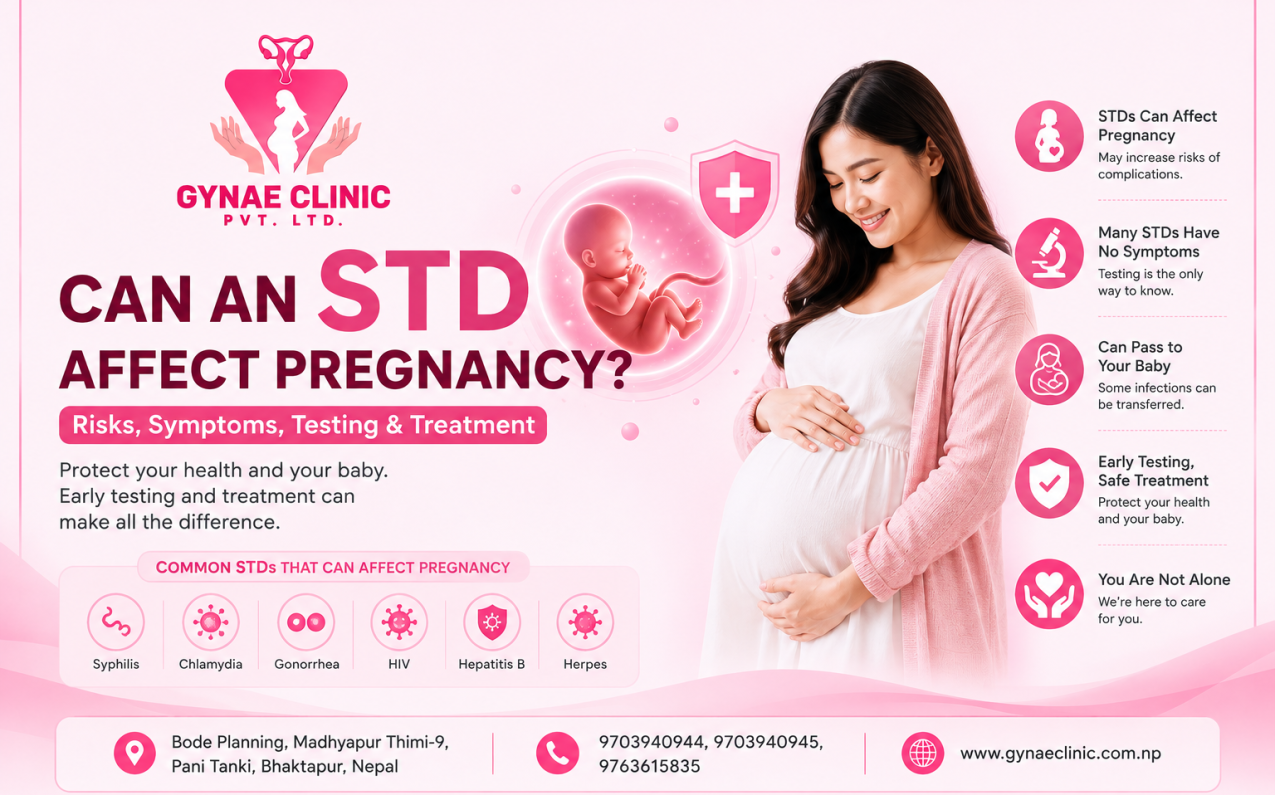
Yes, an STD (sexually transmitted disease), also called an STI (sexually transmitted infection), can affect pregnancy. Some STIs can increase the risk of pregnancy complications, affect the mother’s health, or be passed from mother to baby during pregnancy or childbirth.
The good news is that many STIs can be detected and treated or managed during pregnancy. Early testing, appropriate treatment and regular antenatal care can significantly reduce the risk of complications.
If you are pregnant and concerned about an STI, do not wait for symptoms. Many STIs can cause few or no noticeable symptoms, so testing can be important even when you feel completely healthy.
Can an STD Affect Pregnancy?
Yes.
An untreated STI can potentially affect pregnancy in several ways. Depending on the infection, it may increase the risk of:
- Pregnancy complications
- Premature birth
- Low birth weight
- Premature rupture of membranes
- Stillbirth
- Infection of the newborn
- Congenital infection
- Neonatal eye infection
- Neonatal pneumonia
- Ectopic pregnancy in certain circumstances
- Maternal health complications
The exact risk depends on the type of STI, how long the infection has been present, whether it is treated, the stage of pregnancy and other individual factors. WHO identifies STIs as an important cause of pregnancy complications and mother-to-child transmission.
Can You Have an STD During Pregnancy Without Knowing?
Yes.
This is one of the most important facts about STIs during pregnancy.
A pregnant woman can have an STI without experiencing:
- Vaginal discharge
- Genital itching
- Burning while urinating
- Pelvic pain
- Genital sores
- Fever
- Bleeding
- Other obvious symptoms
Many STIs are asymptomatic or cause symptoms that are mild and easy to overlook.
Therefore, feeling healthy does not always mean that an STI is absent.
Can an STD Be Passed From Mother to Baby?
Yes.
Some STIs can be transmitted from mother to baby during pregnancy, childbirth or, depending on the infection, breastfeeding.
The risk and timing of transmission vary considerably between infections.
This is why STI screening and appropriate treatment are important components of pregnancy care.
Which STDs Can Affect Pregnancy?
Different infections can affect pregnancy in different ways.
1. Syphilis During Pregnancy
Syphilis is one of the most important STIs to identify during pregnancy.
If untreated, syphilis can pass from a pregnant woman to her fetus and cause congenital syphilis.
Possible adverse pregnancy outcomes include:
- Miscarriage
- Stillbirth
- Premature birth
- Low birth weight
- Neonatal death
- Congenital infection
WHO reports that untreated maternal syphilis can result in serious adverse pregnancy outcomes and emphasizes early detection and effective treatment.
The important point is that syphilis is treatable, and timely diagnosis and appropriate treatment during pregnancy can substantially reduce the risk to the baby.
2. Chlamydia During Pregnancy
Chlamydia can occur without obvious symptoms.
When untreated during pregnancy, it has been associated with complications including:
- Preterm birth
- Low birth weight
- Newborn eye infection
- Newborn pneumonia
A baby can also be exposed to chlamydia during delivery.
WHO states that chlamydia can cause neonatal conjunctivitis and pneumonia and is associated with preterm delivery and low birth weight.
Because chlamydia is a curable bacterial STI, appropriate testing and treatment are important.
3. Gonorrhea During Pregnancy
Gonorrhea can also affect pregnancy and may be passed to a newborn during childbirth.
Possible complications include:
- Premature birth
- Premature rupture of membranes
- Maternal infection
- Newborn eye infection
Gonorrhea may cause few or no symptoms, particularly in some women, which makes appropriate testing important when there is a risk of infection.
4. HIV During Pregnancy
HIV can be transmitted from mother to baby during pregnancy and childbirth and can also be transmitted through breastfeeding.
However, effective HIV treatment during pregnancy can dramatically reduce the risk of transmission to the baby.
If you are pregnant and have HIV or believe you may have been exposed to HIV, seek medical care promptly so an appropriate treatment and prevention plan can be established.
5. Hepatitis B During Pregnancy
Hepatitis B can be transmitted from mother to baby, particularly around the time of birth.
Pregnancy care may include hepatitis B testing and appropriate management to reduce the risk of transmission to the newborn.
Hepatitis B vaccination is also an important prevention strategy.
6. Genital Herpes During Pregnancy
Genital herpes can be important during pregnancy, particularly when a woman develops a new genital herpes infection close to the time of delivery.
A newborn can potentially acquire herpes during childbirth.
If you have a history of genital herpes or develop genital blisters or sores during pregnancy, tell your obstetric or gynecological healthcare provider.
7. HPV During Pregnancy
Human papillomavirus (HPV) is extremely common.
HPV itself does not usually cause the same pregnancy complications as untreated syphilis, chlamydia or gonorrhea. However, pregnancy can require individualized management when genital warts or cervical abnormalities are present.
Regular cervical health care and appropriate follow-up remain important.
Can an STD Cause Miscarriage?
Some untreated STIs are associated with adverse pregnancy outcomes, including pregnancy loss.
Syphilis is particularly important because untreated maternal infection can cause fetal loss and stillbirth.
However, miscarriage has many possible causes, including chromosomal abnormalities, hormonal problems, structural abnormalities, infections and other medical conditions.
Therefore, a miscarriage should not automatically be attributed to an STI.
If you have experienced recurrent pregnancy loss or a miscarriage and are concerned about infection, discuss appropriate evaluation with a gynecologist.
Can an STD Cause Premature Birth?
Yes, certain STIs have been associated with pregnancy complications including preterm birth.
Chlamydia and other infections have been associated with adverse pregnancy outcomes, while untreated syphilis can cause serious fetal and neonatal complications.
The presence of an STI does not mean that premature birth will definitely occur. Risk depends on the infection, treatment status and individual pregnancy circumstances.
Can an STD Cause Low Birth Weight?
Some maternal STIs are associated with low birth weight.
For example, WHO notes that untreated maternal chlamydia can be associated with preterm delivery and low birth weight.
Early diagnosis and appropriate treatment can help reduce preventable complications.
Can an STD Affect the Baby?
Yes.
An STI can affect a baby either through infection during pregnancy or exposure during childbirth, depending on the infection.
Potential newborn complications include:
- Eye infection
- Pneumonia
- Congenital infection
- Prematurity
- Low birth weight
- Sepsis
- Neurological complications in certain infections
- Stillbirth or neonatal death in severe untreated maternal infections
WHO notes that mother-to-child transmission of STIs can result in stillbirth, neonatal death, low birth weight, prematurity, sepsis, neonatal conjunctivitis and congenital abnormalities.
Can You Have a Healthy Pregnancy With an STD?
Yes.
Having an STI does not automatically mean that you cannot have a healthy pregnancy.
The outcome depends on:
- Which infection you have
- When it was diagnosed
- Whether treatment is available
- Whether treatment is started promptly
- Whether the infection has caused complications
- The stage of pregnancy
- Your overall health
- Appropriate pregnancy and newborn care
Many bacterial STIs are curable, while viral infections can often be managed with appropriate medical care.
The most important step is not to ignore the infection.
Should Pregnant Women Get Tested for STDs?
STI screening during pregnancy may be recommended based on standard antenatal care, individual risk factors, symptoms and medical history.
Testing may include evaluation for infections such as:
- HIV
- Syphilis
- Hepatitis B
- Chlamydia
- Gonorrhea
- Other STIs when clinically indicated
The exact tests and timing should be determined by a qualified healthcare professional.
If you have a new partner, previous STI, possible exposure, symptoms or concerns about your partner’s STI status, tell your pregnancy-care provider.
Why Is STI Testing Important During Pregnancy?
Testing is important because many STIs do not cause symptoms.
A woman may not know that she has an infection until testing identifies it.
Early diagnosis can allow:
- Appropriate treatment
- Prevention of further transmission
- Partner evaluation when appropriate
- Reduction of pregnancy-related complications
- Appropriate planning for delivery and newborn care
WHO specifically emphasizes screening and treatment of infections such as syphilis during pregnancy to prevent adverse outcomes.
What STD Symptoms Should Pregnant Women Watch For?
Contact your healthcare provider if you experience:
Vaginal symptoms
- Unusual vaginal discharge
- Yellow or green discharge
- Strong or unusual odor
- Vaginal irritation
- Genital itching
Urinary symptoms
- Burning while urinating
- Pain while urinating
- Unusual urinary discomfort
Genital symptoms
- Genital sores
- Blisters
- Genital bumps
- Warts
- Swelling
Pelvic symptoms
- Lower abdominal pain
- Pelvic pain
- Pain during sex
- Unexplained bleeding
Other symptoms
- Fever
- Rash
- Swollen lymph nodes
- Unusual fatigue associated with other symptoms
However, do not wait for symptoms before discussing STI screening.
Some infections may be silent.
What Should You Do If You Test Positive for an STD During Pregnancy?
First, do not panic.
A positive STI test does not mean that your pregnancy will necessarily have complications.
Instead:
- Tell your pregnancy-care provider about the result.
- Follow the recommended treatment exactly.
- Do not self-medicate.
- Ask whether your sexual partner needs testing or treatment.
- Follow any recommended follow-up testing.
- Inform your healthcare provider about any previous STI treatment.
- Continue your antenatal appointments.
- Follow recommendations regarding delivery and newborn care.
Treatment depends on the specific infection.
Never stop prescribed treatment during pregnancy without speaking with your healthcare provider.
Can STD Treatment Be Given During Pregnancy?
For several bacterial STIs, appropriate treatment can be given during pregnancy.
However, not every medicine is suitable during pregnancy, and treatment should be selected by a qualified healthcare professional.
Do not use antibiotics, antiviral medicines or other medications on your own simply because you suspect an STI.
Your healthcare provider will consider:
- The infection
- Pregnancy stage
- Test results
- Symptoms
- Drug safety
- Partner management
- Follow-up requirements
Can Treating an STD During Pregnancy Protect the Baby?
In many situations, timely diagnosis and appropriate treatment can significantly reduce the risk of transmission and complications.
Syphilis is an especially important example: early detection and effective maternal treatment can prevent congenital syphilis and other adverse pregnancy outcomes.
Chlamydia is also treatable, and WHO recommends testing and prompt treatment during pregnancy to help prevent transmission to the baby.
Can STDs Affect Fertility After Pregnancy?
Some STIs, particularly untreated chlamydia and gonorrhea, can cause pelvic inflammatory disease and reproductive tract damage in women.
This can potentially lead to:
- Fallopian tube damage
- Tubal blockage
- Infertility
- Ectopic pregnancy
- Chronic pelvic pain
WHO identifies chlamydia and gonorrhea as major causes of PID and infertility in women.
This is another reason why STI testing and treatment should not be delayed.
How Can You Prevent STDs During Pregnancy?
Pregnancy does not protect you from STIs.
Practical prevention measures include:
Use condoms
Correct and consistent condom use reduces the risk of many STIs, although it does not eliminate every possible transmission route.
Get appropriate testing
Discuss STI testing with your pregnancy-care provider, especially if there has been a potential exposure.
Know your partner’s status
If your partner has an STI or may have been exposed, both partners should seek appropriate medical advice.
Avoid sex during active genital sores
If you have genital sores or another suspected STI, seek medical advice before sexual contact.
Get recommended vaccinations
Vaccination against hepatitis B and HPV can help prevent important infections, although HPV vaccination is generally not given during pregnancy and should be discussed with a healthcare professional.
Do not self-medicate
Pregnancy is not the time to experiment with antibiotics or other medicines without medical advice.
Can One Sexual Partner Cause an STD During Pregnancy?
Yes.
Having only one sexual partner does not completely eliminate STI risk.
A partner may have an infection without symptoms or may have acquired an infection before the current relationship.
Therefore, STI risk should be evaluated based on exposure and medical history—not simply the number of sexual partners.
Does Having an STD Mean My Baby Will Definitely Get It?
No.
An STI does not automatically mean that the baby will become infected.
The risk depends on:
- The specific infection
- Whether it is treated
- Timing of treatment
- Stage of pregnancy
- Viral or bacterial load in certain infections
- Delivery circumstances
- Newborn preventive care
For many infections, appropriate maternal treatment and newborn management can substantially reduce risk.
When Should You See a Gynecologist During Pregnancy?
Seek professional medical advice if you:
- Test positive for an STI
- Have been exposed to an STI
- Have unusual vaginal discharge
- Have genital sores or blisters
- Have burning while urinating
- Have pelvic or lower abdominal pain
- Have unexplained vaginal bleeding
- Have concerns about your partner’s STI status
- Had unprotected sex and are worried about infection
- Have a previous history of an STI
- Want to know which STI tests are appropriate during pregnancy
If you experience severe abdominal pain, heavy bleeding, fainting, high fever or other serious symptoms, seek urgent medical care.
STI Testing and Pregnancy Care in Bhaktapur
If you are searching for STD testing in Bhaktapur, STI testing in Bhaktapur, or confidential women’s healthcare during pregnancy, Gynae Clinic Pvt. Ltd. provides gynecological consultation and reproductive healthcare in Bhaktapur.
If you are pregnant and concerned about an STI, you can discuss your symptoms, sexual-health history and possible exposure with a healthcare professional. Appropriate testing can then be considered based on your individual circumstances.
The clinic can also provide guidance regarding women’s reproductive health, STI concerns and pregnancy-related care.
Gynae Clinic Pvt. Ltd.
Address: Bode Planning, Madhyapur Thimi-9, Pani Tanki, Bhaktapur, Nepal
Website: www.gynaeclinic.com.np
Contact: 9703940944 | 9703940945 | 9763615835
Confidential women’s health and STI consultation available.
Frequently Asked Questions
Can an STD affect pregnancy?
Yes. Some STIs can increase the risk of pregnancy complications or be transmitted from mother to baby during pregnancy or childbirth.
Can you have an STD while pregnant and not know it?
Yes. Many STIs can cause no noticeable symptoms.
Which STD is most dangerous during pregnancy?
There is no single STI that is universally “most dangerous.” Syphilis, HIV, hepatitis B, herpes, chlamydia and gonorrhea can all require specific pregnancy management. Untreated syphilis is particularly important because it can cause severe fetal and newborn complications.
Can chlamydia affect pregnancy?
Yes. Untreated chlamydia has been associated with preterm delivery and low birth weight and can cause newborn eye infection and pneumonia.
Can gonorrhea affect pregnancy?
Yes. Gonorrhea can be associated with pregnancy complications and can infect a newborn during childbirth.
Can syphilis affect an unborn baby?
Yes. Syphilis can cross from a pregnant woman to her fetus and cause congenital syphilis, stillbirth, premature birth and other serious complications if not appropriately treated.
Can an STD cause miscarriage?
Some untreated STIs, especially syphilis, can contribute to adverse pregnancy outcomes including miscarriage and stillbirth. However, miscarriage has many possible causes.
Can an STD cause premature birth?
Yes. Some STIs have been associated with preterm birth and other pregnancy complications.
Should I get an STD test if I am pregnant?
Discuss STI screening with your healthcare provider. Testing is particularly important if you have symptoms, a possible exposure, a new partner, a history of an STI or other risk factors.
Can STDs be treated during pregnancy?
Several bacterial STIs can be treated during pregnancy with medicines selected by a healthcare professional. Treatment should never be self-prescribed because medication safety depends on the infection and pregnancy circumstances.
Final Takeaway
Yes, an STD can affect pregnancy, but early diagnosis and appropriate medical care can make a major difference.
STIs such as syphilis, chlamydia, gonorrhea, HIV, hepatitis B and genital herpes can require special attention during pregnancy. Some can be transmitted from mother to baby, while others can increase the risk of pregnancy or newborn complications.
The most important message is simple:
Do not wait for symptoms. Get appropriate STI testing when recommended, follow treatment carefully, and keep your pregnancy-care appointments.
If you are pregnant and worried about an STD, confidential professional evaluation can help determine what testing and treatment may be appropriate for you and your baby.
Medical Disclaimer
This blog is for general health information only and does not replace professional medical advice, diagnosis or treatment. If you are pregnant, have STI symptoms, or have had a possible STI exposure, consult a qualified healthcare professional promptly.
Author; Gynae Clinic Pvt. Ltd.


