


Author: Gynae Clinic Pvt. Ltd.
If your periods have recently become heavier than usual, last longer, contain larger blood clots, or require you to change pads much more frequently, it is worth paying attention to the change.
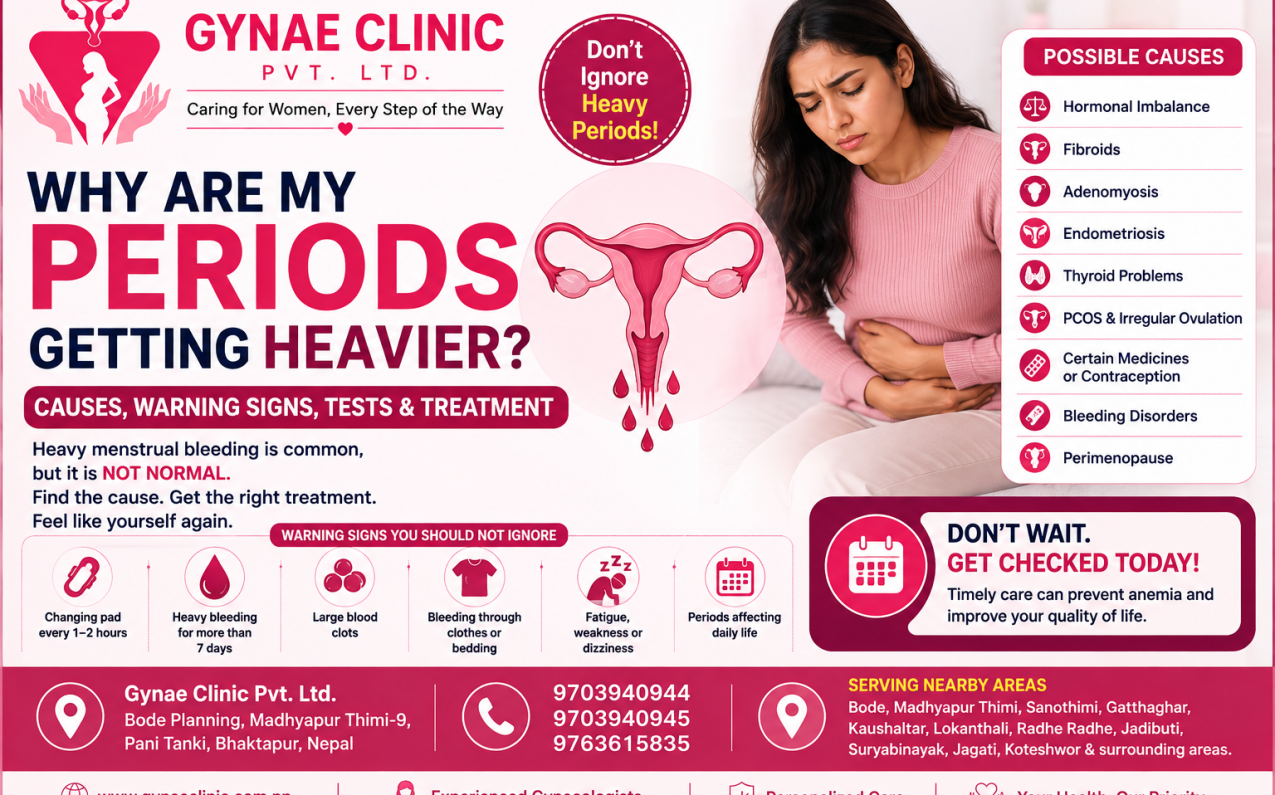
Heavy menstrual bleeding is common, but it is not something women should simply tolerate when it affects daily life. Heavy periods can sometimes be related to fibroids, adenomyosis, endometriosis, hormonal changes, thyroid problems, pregnancy-related conditions, certain medicines, bleeding disorders, or other gynecological conditions.
The most important point is this:
If your periods are becoming progressively heavier, the goal is not only to reduce the bleeding—it is to find out why it is happening.
This guide explains the common causes of increasingly heavy periods, how to recognize abnormal menstrual bleeding, what tests may be needed, available treatment options, and when women in Bhaktapur, Madhyapur Thimi and nearby areas should see a gynecologist.
What Is Considered a Heavy Period?
There is no single amount of blood that feels “normal” for every woman. Your usual menstrual pattern is important.
Your period may be considered unusually heavy if you:
- Need to change a pad or tampon every 1–2 hours
- Need to use two menstrual products at the same time
- Bleed through clothes or bedding
- Pass large blood clots
- Have bleeding that lasts longer than 7 days
- Frequently wake during the night to change menstrual products
- Avoid work, exercise, travel or social activities because of bleeding
- Feel unusually tired, weak or short of breath during or after your periods
However, even if your bleeding does not meet one of these descriptions, a significant change from your normal period deserves attention.
Why Are My Periods Getting Heavier?
There are several possible causes.
1. Uterine Fibroids
Fibroids are common, non-cancerous growths that develop in or around the uterus.
Some women with fibroids have no symptoms, while others may experience:
- Heavy periods
- Longer periods
- Painful periods
- Pelvic pressure
- Lower abdominal discomfort
- Frequent urination
- Difficulty becoming pregnant
Fibroids are an important possible cause when periods gradually become heavier, particularly when heavy bleeding is accompanied by pelvic pressure or pain.
A pelvic ultrasound can often help identify fibroids.
2. Adenomyosis
Adenomyosis occurs when tissue similar to the uterine lining grows into the muscular wall of the uterus.
It can cause:
- Heavy periods
- Painful periods
- Pelvic pain
- Increasing menstrual cramps
- Bloating or pelvic heaviness
Women may notice that periods become heavier and more painful over time.
Persistent heavy or increasingly painful periods should therefore be evaluated rather than simply treated with painkillers every month.
3. Endometriosis
Endometriosis can cause significant menstrual pain and may also be associated with heavy or irregular bleeding.
Other symptoms can include:
- Severe period pain
- Pelvic pain
- Pain during sex
- Pain with bowel movements
- Pain with urination during periods
- Difficulty becoming pregnant
Not every woman with heavy periods has endometriosis, but heavy bleeding accompanied by severe or worsening pain warrants evaluation.
4. Hormonal Imbalance
Your menstrual cycle is controlled by a complex hormonal system.
Changes affecting ovulation and the balance between reproductive hormones can alter the development and shedding of the uterine lining.
Hormonal problems may cause:
- Heavy periods
- Irregular periods
- Longer periods
- Unpredictable bleeding
- Difficulty becoming pregnant
Hormonal causes can be particularly relevant when heavy bleeding occurs together with irregular cycles.
5. Thyroid Problems
Thyroid disorders can affect menstrual patterns.
Both an underactive and overactive thyroid can be associated with menstrual changes, including irregular or heavy periods.
If your heavy periods are accompanied by symptoms such as:
- Unexplained weight change
- Fatigue
- Feeling unusually cold or hot
- Hair changes
- Palpitations
- Changes in bowel habits
your doctor may consider thyroid testing.
6. PCOS and Irregular Ovulation
PCOS is commonly associated with irregular ovulation and irregular menstrual cycles.
When ovulation is irregular, the uterine lining may sometimes build up for a longer period before bleeding occurs, which can contribute to an unusually heavy episode of bleeding.
However, heavy periods alone do not diagnose PCOS.
If heavy bleeding is associated with:
- Irregular periods
- Acne
- Excess facial or body hair
- Hair thinning
- Weight or metabolic concerns
- Difficulty becoming pregnant
a gynecological evaluation may be appropriate.
Related internal guide:
Irregular Periods Treatment in Bhaktapur: Causes, PCOS, Hormonal Problems & When to See a Gynecologist
7. Pregnancy-Related Causes
If pregnancy is possible, unusual bleeding should not automatically be considered a normal period.
Pregnancy-related conditions can sometimes cause vaginal bleeding.
If you have:
- A late or unusual period
- A positive pregnancy test
- Heavy bleeding
- Severe abdominal or pelvic pain
- One-sided pelvic pain
- Dizziness or fainting
you should seek medical assessment promptly.
8. Hormonal Contraception
Changes in contraception can alter menstrual bleeding.
Depending on the method, women may experience:
- Spotting
- Irregular bleeding
- Heavier bleeding
- Lighter periods
- Changes in cycle timing
If your periods became heavier after starting, stopping or changing contraception, tell your gynecologist.
Hormonal contraception is among the recognized causes of menstrual-pattern changes.
9. Copper IUD
A copper intrauterine device can cause heavier or longer periods in some women, particularly after insertion.
If your bleeding became noticeably heavier after an IUD was inserted, discuss the change with your healthcare provider.
Do not remove or change contraception without appropriate medical advice.
10. Bleeding Disorders
Some women have an underlying bleeding disorder that makes menstrual bleeding unusually heavy.
This may be more likely if you have:
- Very heavy periods since your first periods
- Frequent nosebleeds
- Easy bruising
- Excessive bleeding after dental procedures or surgery
- Family members with unusual bleeding
A doctor may recommend blood tests when a bleeding disorder is suspected.
11. Certain Medicines
Some medications can increase bleeding.
For example, certain blood-thinning medicines can contribute to heavier periods.
Always tell your doctor about all medicines and supplements you take.
12. Perimenopause
As women approach menopause, menstrual cycles can become unpredictable.
Periods may become:
- Heavier
- Lighter
- Longer
- Shorter
- More frequent
- Less frequent
Perimenopause commonly occurs in the 40s and 50s, although timing varies.
Even during this stage, new or significantly heavier bleeding should not automatically be dismissed as menopause.
13. Uterine or Cervical Polyps
Polyps are tissue growths that can occur in the uterus or cervix.
They may cause:
- Irregular bleeding
- Bleeding between periods
- Heavy menstrual bleeding
- Bleeding after sex
If you have bleeding outside your normal period as well as heavy menstruation, your gynecologist may investigate the uterus and cervix.
14. Rarely, More Serious Conditions
Most causes of heavy menstrual bleeding are not cancer.
However, abnormal uterine bleeding—especially new, persistent or unusual bleeding—should be properly evaluated.
This becomes particularly important after menopause or when abnormal bleeding occurs with other concerning symptoms.
The NHS notes that, although uncommon, heavy periods can rarely be associated with cancer of the womb.
Why Are My Periods Getting Heavier With Age?
A gradual change in menstrual bleeding can happen for several reasons.
Depending on your age, possibilities may include:
In younger women
- Hormonal changes
- Irregular ovulation
- PCOS
- Thyroid disorders
- Bleeding disorders
- Fibroids
In women in their 30s and 40s
- Fibroids
- Adenomyosis
- Endometriosis
- Hormonal changes
- Pregnancy-related causes
- Contraceptive changes
Around perimenopause
- Changing ovulation
- Hormonal fluctuations
- Fibroids
- Adenomyosis
- Endometrial conditions
Age alone does not explain every case of increasingly heavy bleeding.
What Does a Large Blood Clot During Your Period Mean?
Blood clots can occur during menstruation, particularly when bleeding is heavy.
Occasional small clots may not be concerning.
However, repeatedly passing large clots, particularly together with very heavy bleeding or prolonged periods, should be discussed with a gynecologist.
If you are frequently passing large clots and soaking through pads or clothes, don’t simply assume it is your normal period.
Can Heavy Periods Cause Anemia?
Yes.
This is one of the most important complications of persistent heavy menstrual bleeding.
Repeated blood loss can reduce the body’s iron stores and may eventually lead to iron-deficiency anemia.
Possible symptoms include:
- Tiredness
- Weakness
- Dizziness
- Headaches
- Pale skin
- Shortness of breath
- Reduced ability to exercise
- Fast heartbeat
- Difficulty concentrating
If your periods are heavy and you are increasingly tired or weak, ask your doctor whether you should be checked for anemia.
Blood tests may be used to assess anemia and iron deficiency.
When Should I See a Gynecologist for Heavy Periods?
You should arrange a gynecological consultation if:
- Your periods are becoming progressively heavier
- Bleeding lasts more than 7 days
- You need to change pads every 1–2 hours
- You regularly pass large blood clots
- You bleed through clothing or bedding
- Heavy bleeding interferes with work or daily activities
- You have severe or worsening period pain
- You bleed between periods
- You bleed after sex
- You have symptoms of anemia
- You are trying to conceive
- Your normal menstrual pattern has suddenly changed
What Tests Are Used for Heavy Periods?
The tests depend on your age, symptoms, menstrual history and possible causes.
Your gynecologist may consider:
1. Pregnancy Test
If pregnancy is possible, pregnancy testing may be necessary.
2. Complete Blood Count
A blood count can help determine whether heavy bleeding has caused anemia.
3. Iron Testing
Iron studies may be considered when iron deficiency is suspected.
4. Thyroid Testing
A thyroid blood test may be appropriate when symptoms or medical history suggest thyroid dysfunction.
5. Hormonal Evaluation
Selected hormone tests may be considered when hormonal or ovulatory problems are suspected.
Not every woman needs a large hormone panel.
6. Pelvic Ultrasound
An ultrasound can help assess the uterus and ovaries and may identify conditions such as:
- Fibroids
- Adenomyosis-related changes
- Ovarian abnormalities
- Other structural causes of abnormal bleeding
7. Additional Evaluation
Depending on your age, symptoms and risk factors, your doctor may recommend additional assessment of the uterine lining or cervix.
The purpose of testing is to determine why your periods are becoming heavier, rather than simply treating the bleeding without identifying the cause.
How Are Heavy Periods Treated?
Treatment depends on the cause, severity of bleeding, age, pregnancy plans and overall health.
Possible treatments can include:
Medicines to Reduce Bleeding
Certain medications can reduce menstrual blood loss when appropriate.
Hormonal Treatment
Depending on the cause, hormonal contraception or other hormonal treatment may help regulate or reduce menstrual bleeding.
Treatment for Anemia
If heavy bleeding has caused iron deficiency or anemia, your doctor may recommend appropriate iron replacement and treatment of the underlying bleeding.
Treatment of Fibroids or Polyps
If a structural problem is responsible, medication or procedures may be considered.
Treatment for Adenomyosis or Endometriosis
Treatment is individualized according to symptoms, severity and fertility plans.
Procedures or Surgery
Some women with persistent heavy bleeding caused by structural conditions may require a gynecological procedure or surgery.
Treatment should always be individualized rather than choosing medication simply because it worked for someone else.
Can Heavy Periods Be Treated Without Surgery?
Often, yes.
Many women with heavy menstrual bleeding can be managed with medication or hormonal treatment.
However, the appropriate treatment depends on the underlying cause.
For example, treatment for:
Hormonal bleeding
may be very different from treatment for:
Large fibroids or a uterine polyp.
That is why diagnosis comes first.
What Can You Do Before Your Appointment?
Keep a menstrual record for at least a few cycles.
Write down:
- First day of each period
- Last day of bleeding
- Number of pads used
- Whether pads become completely soaked
- Number and approximate size of clots
- Pain severity
- Bleeding between periods
- Bleeding after sex
- Medication and contraception
- Symptoms such as dizziness or fatigue
A menstrual diary can help your doctor understand how your bleeding has changed.
Do Not Ignore These Warning Signs
Seek urgent medical care if you have very heavy bleeding accompanied by:
- Fainting
- Severe dizziness
- Severe weakness
- Shortness of breath
- Chest symptoms
- Severe abdominal or pelvic pain
- Pregnancy or possible pregnancy
- Bleeding so heavy that you are rapidly soaking through menstrual products
Very heavy bleeding can sometimes require urgent assessment and treatment.
Heavy Periods and Fertility
Heavy periods do not automatically mean infertility.
However, some underlying conditions associated with heavy periods—such as fibroids, endometriosis, adenomyosis or ovulatory problems—may affect fertility in some women.
If you are trying to become pregnant and your periods have become unusually heavy, painful or irregular, it is worth discussing both your menstrual symptoms and fertility goals with your gynecologist.
Heavy Periods in Bhaktapur: When Should You Seek Local Gynecological Care?
If you are searching for:
- Heavy period treatment in Bhaktapur
- Heavy menstrual bleeding treatment in Bhaktapur
- Gynecologist for heavy periods in Bhaktapur
- Fibroid treatment in Bhaktapur
- Irregular period treatment in Madhyapur Thimi
- Female gynecologist near Bode
- Women’s health clinic near Sanothimi
- Gynecologist near Gatthaghar
- Gynecologist near Kaushaltar
- Gynecologist near Lokanthali
- Gynecologist near Suryabinayak
- Gynecologist near Jadibuti
- Gynecologist near Koteshwor
Gynae Clinic Pvt. Ltd. is located at:
Bode Planning, Madhyapur Thimi-9, Pani Tanki, Bhaktapur, Nepal
The clinic is conveniently located for women from Bode, Madhyapur Thimi, Sanothimi, Gatthaghar, Kaushaltar, Lokanthali, Radhe Radhe, Jadibuti, Koteshwor, Suryabinayak, Jagati, Sallaghari and surrounding Bhaktapur areas.
For local women experiencing increasingly heavy periods, persistent menstrual problems or abnormal bleeding, a gynecological assessment can help identify the cause and determine the appropriate treatment. Gynae Clinic’s published women’s-health information also highlights heavy menstrual bleeding, irregular periods and related gynecological conditions as reasons to seek evaluation.
Gynae Clinic Pvt. Ltd. – Women’s Gynecological Care in Bhaktapur
Gynae Clinic Pvt. Ltd.
Address:
Bode Planning, Madhyapur Thimi-9, Pani Tanki, Bhaktapur, Nepal
Contact:
9703940944
9703940945
9763615835
Website:
www.gynaeclinic.com.np
For more information about gynecological services and women’s health care, visit the Gynae Clinic official website.
Related Articles From Gynae Clinic
Continue learning about menstrual and hormonal health:
- Irregular Periods Treatment in Bhaktapur: Causes, PCOS, Hormonal Problems & When to See a Gynecologist
- PCOS Symptoms in Women: Signs, Genital Warts & Cervical Health
- Gynecologist in Bhaktapur: Complete Women’s Health Guide
- Thyroid and Irregular Periods: Can Thyroid Problems Affect Your Menstrual Cycle?
Frequently Asked Questions
Why are my periods suddenly heavier than before?
Possible causes include fibroids, adenomyosis, endometriosis, hormonal or ovulatory problems, thyroid disorders, contraception, pregnancy-related conditions and some medications. A new or persistent change should be evaluated.
Is it normal for periods to get heavier with age?
Menstrual patterns can change with age, particularly during perimenopause, but new or significantly heavier bleeding should not automatically be considered normal.
Are large blood clots during periods normal?
Small clots can occur, particularly during heavier bleeding. Repeatedly passing large clots together with heavy or prolonged bleeding warrants medical evaluation.
Can fibroids make periods heavier?
Yes. Heavy or painful periods are among the common symptoms of uterine fibroids.
Can thyroid problems cause heavy periods?
Yes. Thyroid disorders can affect menstrual patterns, and thyroid testing may be considered when clinically appropriate.
Can PCOS cause heavy periods?
PCOS commonly causes irregular ovulation and irregular periods. Some women may experience heavy bleeding, particularly when cycles are irregular, but heavy periods alone do not diagnose PCOS.
Can heavy periods cause anemia?
Yes. Repeated blood loss can lead to iron deficiency and anemia, causing fatigue, weakness, dizziness and shortness of breath.
Should I see a gynecologist if my periods are getting heavier?
Yes, especially if the change is persistent, your bleeding affects daily activities, you have severe pain, large clots, prolonged bleeding, bleeding between periods or symptoms of anemia.
What is the best treatment for heavy periods?
There is no single best treatment for every woman. Treatment depends on the underlying cause, severity of bleeding, age, health and whether you want to become pregnant.
Can heavy periods affect fertility?
The bleeding itself does not necessarily cause infertility, but some conditions associated with heavy periods can affect fertility. Proper diagnosis is important when pregnancy is a goal.
Final Takeaway
If your periods are getting heavier, don’t simply accept it as “normal.”
Occasional changes may happen, but progressively heavier periods, prolonged bleeding, large clots, bleeding between periods or symptoms of anemia deserve attention.
The cause may be hormonal, but it could also be fibroids, adenomyosis, endometriosis, thyroid problems, contraception, pregnancy-related conditions, a bleeding disorder or another gynecological condition.
A proper evaluation can identify the cause and help you choose treatment that is appropriate for your body, your symptoms and your future fertility plans.
“When menstrual bleeding becomes heavier, the right care begins by finding the cause—not simply stopping the bleeding.”
Medical Disclaimer
This article is intended for general educational purposes and does not replace an individual medical consultation, diagnosis or treatment plan. Heavy or abnormal vaginal bleeding, particularly when severe or associated with pain, dizziness, fainting or possible pregnancy, should receive appropriate medical attention.
Author: Gynae Clinic Pvt. Ltd


