


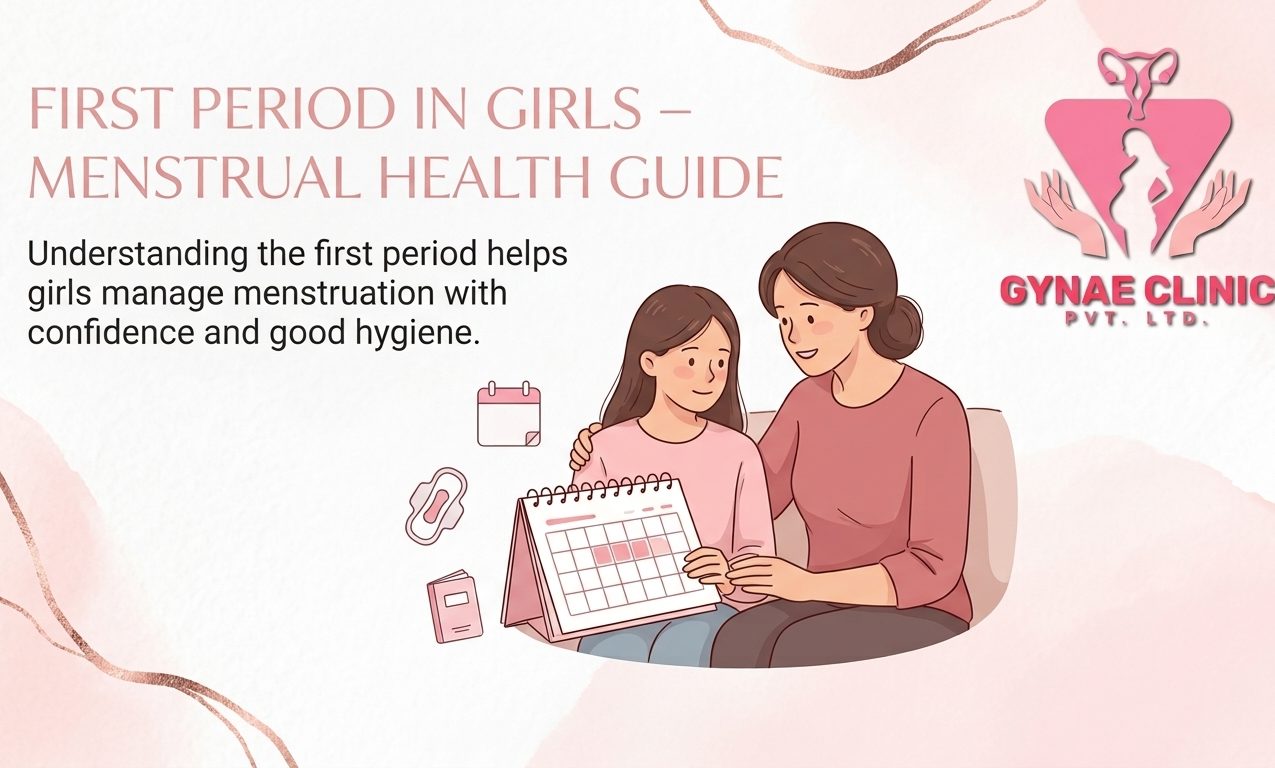
A girl’s first period is an important milestone of puberty. It is a normal part of growing up, but it can also bring questions, uncertainty and anxiety for girls and their parents. Knowing what to expect, how to manage menstrual bleeding and which symptoms need medical attention can make the experience less stressful.
If you are looking for guidance about a first period, teenage menstrual health or puberty-related concerns in Bhaktapur, this guide explains the basics in simple language.
Gynae Clinic Pvt. Ltd., located at Bode Planning, Madhyapur Thimi-9, Pani Tanki, Bhaktapur, Nepal, provides gynecological consultation and women’s healthcare.
What Is a First Period?
A first menstrual period is called menarche. It happens when the lining of the uterus sheds and leaves the body through the vagina as menstrual blood.
During puberty, hormonal changes prepare the body for menstruation. The timing differs from one girl to another, and there is no single age at which every girl must begin menstruating.
A first period is a normal developmental change. It does not mean that every menstrual cycle will immediately become regular.
At What Age Do Girls Get Their First Period?
Many girls get their first period between the ages of 12 and 13, although it may begin earlier or later. Menstruation often starts around two to three years after breast development begins.
The timing can vary because of genetics, nutrition, general health, physical activity and other factors.
Parents should avoid comparing one girl’s development with that of her friends or classmates. Some variation is normal.
When should you seek medical advice?
- A girl has not had her first period by age 15.
- Three years have passed since breast development began, but menstruation has not started.
- There are concerns about delayed puberty or other unusual symptoms.
A healthcare professional can assess development and decide whether any tests are needed.
What Are the Signs That a First Period Is Coming?
A first period usually follows other signs of puberty. These may include:
- Breast development.
- Growth of pubic and underarm hair.
- A growth spurt.
- Clear or whitish vaginal discharge that may occur before the first period.
These signs do not predict the exact day the first period will start. Every girl’s development follows its own pattern.
What Does the First Period Look Like?
The first period may look different from what a girl expects. It may begin with a few spots of blood rather than a steady flow.
Normal first-period appearances can include:
- Light pink, red or dark reddish-brown blood.
- A small amount of spotting at first.
- Bleeding that becomes heavier or lighter over a few days.
- Mild lower abdominal cramps or back discomfort.
The first few periods may be irregular. It can take time for menstrual cycles to settle into a more predictable pattern.
A period commonly lasts about two to seven days. Bleeding that lasts longer than seven days or is unusually heavy should be assessed.
How to Manage a First Period
Preparing in advance helps girls feel more confident and comfortable.
1. Use a suitable menstrual product
Sanitary pads are one option for beginners. Choose a comfortable product and change it regularly, particularly when it becomes wet or full. Menstrual underwear and other menstrual products may also be options depending on personal comfort and preference.
2. Maintain good hygiene
Wash the external genital area gently with clean water. Change menstrual products regularly and wash your hands before and after changing them.
Avoid putting soaps, fragrances or cleansing products inside the vagina. The vagina cleans itself naturally, and internal washing can cause irritation.
3. Track the menstrual cycle
Mark the first day of bleeding on a calendar or menstrual-tracking app. Recording the duration of bleeding, flow and symptoms can help identify patterns over time.
The menstrual cycle is counted from the first day of one period to the first day of the next.
4. Eat balanced meals and stay hydrated
A balanced diet supports growth and general health. Include a variety of foods containing iron, protein, vitamins and minerals. Iron-rich foods are particularly important for girls who experience heavy menstrual bleeding.
5. Manage cramps comfortably
Mild cramps can occur during menstruation. Gentle movement, rest and a warm compress on the lower abdomen may help.
If pain is severe, persistent or interferes with school, sleep or normal activities, seek medical advice rather than assuming it is simply part of having a period.
Are Irregular Periods Normal After the First Period?
Menstrual cycles are often irregular during the first few years after menstruation begins. Hormonal changes can cause the time between periods to vary.
For many teenagers, cycles fall within approximately 21 to 45 days. However, certain patterns deserve medical evaluation.
Seek advice if periods repeatedly occur less than 21 days apart, more than 45 days apart, or if there is a gap of 90 days between periods—even once.
Do not assume every irregular cycle is normal. A healthcare professional can consider factors such as nutrition, stress, exercise, hormonal conditions and other possible causes.
When Is Period Bleeding Too Heavy?
Heavy menstrual bleeding can affect a girl’s energy, concentration and daily activities. It can sometimes lead to iron deficiency or anemia.
Warning signs include:
- Soaking through a sanitary pad every one to two hours.
- Bleeding that lasts longer than seven days.
- Repeatedly passing large blood clots alongside heavy bleeding.
- Feeling unusually tired, weak or short of breath during or after periods.
- Dizziness or fainting associated with bleeding.
Seek urgent medical attention if bleeding is very heavy and accompanied by fainting, severe dizziness, marked weakness or difficulty breathing.
When Should Parents Take Their Daughter to a Gynecologist?
A consultation may be helpful when a girl or her parents have concerns about puberty, menstrual timing, pain, bleeding or cycle irregularity.
Consider arranging a medical assessment if:
- The first period has not started by age 15.
- Periods are extremely painful or interfere with daily activities.
- Bleeding is unusually heavy or prolonged.
- Periods stop for around 90 days after they have started.
- There are other concerning symptoms, such as persistent pelvic pain or unusual discharge.
- The girl is worried, distressed or unsure about changes in her body.
A first consultation can focus on questions, health history and guidance. An internal examination is not automatically necessary for every teenager; the clinician determines what assessment is appropriate for the individual.
Teenagers should be treated respectfully and given an opportunity to discuss their concerns. Confidentiality and parental involvement should be handled in accordance with applicable laws and the young person’s healthcare needs.
How Can Parents Prepare Their Daughter for Her First Period?
Parents and caregivers can help by talking about menstruation before it begins.
Helpful steps include:
- Explain that periods are a normal part of puberty.
- Show her how to use and dispose of menstrual products hygienically.
- Keep spare sanitary pads and underwear available at home or in her school bag.
- Encourage questions without embarrassment or judgment.
- Reassure her that early periods may not follow a predictable schedule.
- Seek medical advice if symptoms or developmental timing are concerning.
Menstruation should not be treated as something shameful. Accurate information helps girls manage their periods confidently and seek care when needed.
First Period and Teenage Menstrual Health in Bhaktapur
Families searching for first-period guidance, teenage menstrual health information or a gynecological consultation in Bhaktapur can seek appropriate healthcare advice when questions or symptoms arise.
Gynae Clinic Pvt. Ltd. is located at Bode Planning, Madhyapur Thimi-9, Pani Tanki, Bhaktapur, Nepal.
For appointments or inquiries, contact the clinic using the details below.
Gynae Clinic Pvt. Ltd.
Address: Bode Planning, Madhyapur Thimi-9, Pani Tanki, Bhaktapur, Nepal
Phone: 9703940944, 9703940945, 9763615835
Website: https://www.gynaeclinic.com.np
Book an appointment through WhatsApp:
https://wa.me/9779703940944
Frequently Asked Questions About the First Period
1. What is the normal age for a first period?
Many girls begin menstruating between ages 12 and 13, but there is variation. Seek medical advice if menstruation has not started by age 15 or within three years of breast development.
2. Can the first period be brown instead of red?
Yes. The first period may appear brown, reddish-brown, pink or red. A small amount of spotting can be normal.
3. How long does a first period last?
A first period commonly lasts about two to seven days. Bleeding lasting longer than seven days should be discussed with a healthcare professional.
4. Are irregular periods normal in teenagers?
Some irregularity is common during the first few years. However, cycles repeatedly shorter than 21 days, longer than 45 days, or a 90-day gap between periods should be evaluated.
5. Is period pain normal for girls?
Mild cramps can occur. Severe pain, persistent pain or pain that prevents normal daily activities should be assessed by a healthcare professional.
6. What should a girl use during her first period?
Sanitary pads are a common and convenient option for beginners. The best menstrual product is one that is safe, comfortable and suitable for her needs.
7. Can a girl visit a gynecologist before her first period?
Yes. A consultation can help address concerns about puberty, delayed menstruation, pain or other symptoms. An internal examination is not automatically required.
8. Where can families seek teenage menstrual health advice in Bhaktapur?
Families can contact Gynae Clinic Pvt. Ltd. in Bode Planning, Madhyapur Thimi-9, Pani Tanki, Bhaktapur, Nepal, to inquire about an appropriate gynecological consultation.
Medical Disclaimer
This article provides general educational information and does not replace individual medical advice, diagnosis or treatment. Seek professional assessment for delayed menstruation, very heavy bleeding, severe pain or other concerning symptoms.


