



Do you experience mood swings, irritability, anxiety, tiredness, bloating or sadness before your period? If these symptoms return every month, you may wonder whether they are caused by premenstrual syndrome (PMS) or something more severe.
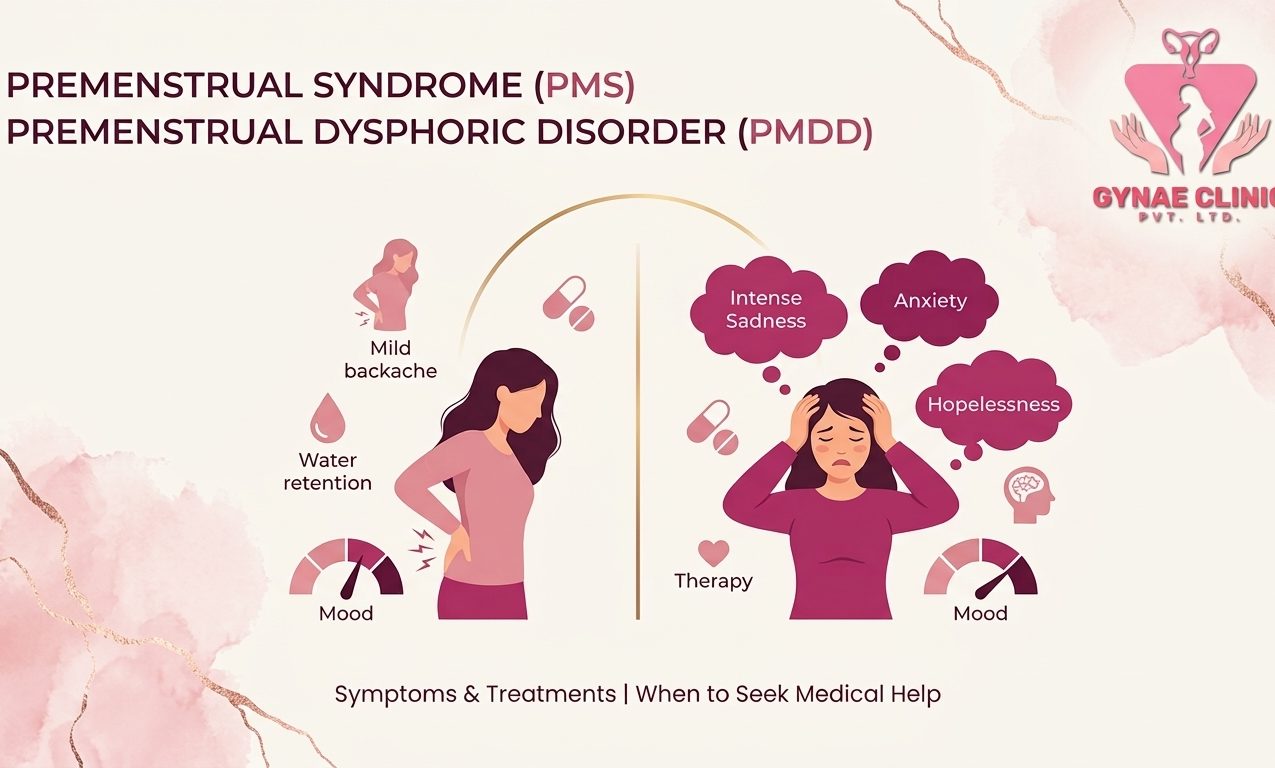
PMS and premenstrual dysphoric disorder (PMDD) can cause similar physical and emotional symptoms. The main difference is their severity and how much they affect daily life. PMDD can cause intense mood changes, anxiety, depression and difficulty managing normal responsibilities.
Understanding PMS vs PMDD symptoms, differences, diagnosis and treatment can help women recognise patterns in their menstrual health and know when to seek medical advice.
If you are searching for women’s health information or gynecological consultation in Bhaktapur, Madhyapur Thimi or nearby areas, this guide from Gynae Clinic Pvt. Ltd. explains the key differences in clear, practical language.
What Is Premenstrual Syndrome (PMS)?
Premenstrual syndrome, commonly called PMS, refers to physical, emotional and behavioural symptoms that occur before menstruation. Symptoms often appear during the one or two weeks before a period and improve after menstruation begins.
PMS affects women differently. Some experience mild discomfort, while others find that their symptoms interfere with work, study, relationships or household activities.
Common PMS symptoms include:
- Mood swings and irritability
- Feeling anxious, emotional or unusually sad
- Breast tenderness
- Bloating or abdominal discomfort
- Headaches
- Tiredness or low energy
- Food cravings or appetite changes
- Difficulty concentrating
- Changes in sleep
- Mild to moderate menstrual-related cramps
Having occasional mood changes before a period does not automatically mean that you have PMS. A recurring pattern linked to the menstrual cycle and its impact on daily activities are important considerations.
What Is Premenstrual Dysphoric Disorder (PMDD)?
Premenstrual dysphoric disorder, or PMDD, is a more severe premenstrual condition involving significant emotional and physical symptoms. It can seriously affect relationships, work, education, social activities and quality of life.
PMDD is not simply ordinary moodiness before menstruation. It is a recognised health condition that deserves proper assessment and treatment.
Possible PMDD symptoms include:
- Severe irritability or anger
- Intense mood swings
- Persistent feelings of sadness or hopelessness
- Marked anxiety or tension
- Feeling overwhelmed or out of control
- Reduced interest in usual activities
- Difficulty concentrating
- Significant sleep or appetite changes
- Fatigue, bloating, breast tenderness or body aches
Some people with PMDD experience thoughts of self-harm or suicide. These symptoms require urgent attention and should never be dismissed as normal period-related mood changes.
PMS vs PMDD: What Is the Difference?
The most important distinction is the intensity of symptoms and how much they interfere with everyday life.
| Feature | PMS | PMDD |
|---|---|---|
| Physical symptoms | May include bloating, cramps, breast tenderness and headaches | Similar physical symptoms may occur |
| Emotional symptoms | Irritability, mood changes, anxiety or sadness | Often more intense mood symptoms, anxiety, anger or hopelessness |
| Effect on daily life | May cause discomfort or some disruption | Can substantially disrupt work, studies, relationships or daily activities |
| Timing | Usually linked to the days or weeks before menstruation | Also follows a recurring premenstrual pattern |
| Assessment | Based on symptom timing, pattern and impact | Requires assessment of symptom pattern, severity and other possible explanations |
| Treatment | Depends on symptom severity and individual needs | May require targeted medical treatment and psychological support |
Important: PMS and PMDD cannot be reliably distinguished by one symptom alone. A healthcare professional considers the timing, severity, recurrence and effect on daily functioning.
When Do PMS and PMDD Symptoms Usually Start?
Symptoms commonly develop during the days or one to two weeks before menstruation. They often improve after the period begins, although the exact pattern varies.
Tracking symptoms throughout the menstrual cycle can help identify whether they are consistently linked to the premenstrual phase.
For example, record:
- The first day of each period
- When emotional or physical symptoms begin
- Which symptoms occur and how severe they are
- Whether symptoms improve after menstruation starts
- How symptoms affect work, relationships, sleep and daily activities
Keeping a daily symptom diary for at least two menstrual cycles can provide useful information during a consultation. A clinician may recommend a longer tracking period depending on the symptoms and diagnostic criteria.
What Causes PMS and PMDD?
The exact causes are not fully understood. Both conditions are associated with the menstrual cycle and the body’s response to hormonal changes.
Oestrogen and progesterone naturally fluctuate during the cycle. Some women may be more sensitive to these normal changes and to their effects on brain processes involved in mood and emotional regulation.
PMS and PMDD are not signs of personal weakness or an inability to control emotions. Severe symptoms deserve the same thoughtful assessment as other health concerns.
Other conditions can cause similar symptoms or worsen before menstruation. These may include depression, anxiety disorders, thyroid disease and other medical or mental health conditions. A proper assessment helps distinguish between possible causes.
How Are PMS and PMDD Diagnosed?
There is no single blood test that independently confirms PMS or PMDD. Diagnosis usually depends on the history of symptoms, their timing in relation to menstruation and how they affect daily life.
A healthcare professional may:
- Ask when symptoms begin and when they improve.
- Review menstrual history and symptom severity.
- Assess the effect on work, relationships, sleep and routine activities.
- Review medications, medical history and mental health concerns.
- Consider whether another condition may explain the symptoms.
- Recommend daily symptom tracking for at least two cycles.
For PMDD, clinicians look for a specific pattern of severe symptoms and significant distress or impairment. The diagnosis requires careful assessment rather than relying only on a person’s description of having bad periods.
Blood tests may be considered if symptoms suggest another medical condition, but testing depends on the individual’s history and clinical findings.
PMS Treatment: What Can Help?
Treatment depends on the symptoms, their severity, medical history and personal needs. Mild symptoms may improve with practical lifestyle measures, while persistent or disruptive symptoms may need professional treatment.
1. Maintain regular physical activity
Walking, cycling or other suitable physical activity may help some women manage fatigue, stress and mood symptoms. Choose an activity that fits your health and routine.
2. Prioritise sleep
Try to maintain a consistent sleep schedule and allow enough time for rest. Poor sleep can make it harder to manage fatigue, concentration problems and emotional stress.
3. Eat balanced meals
A balanced diet with vegetables, fruits, whole grains, protein and other nutrient-rich foods supports general health. Some women find that smaller, regular meals help with appetite changes or bloating.
4. Track symptoms and triggers
A menstrual and symptom diary can help you identify recurring patterns and explain your concerns during a medical appointment.
5. Consider stress-management strategies
Relaxation exercises, mindfulness, yoga or other suitable stress-management practices may help some people cope with symptoms. These approaches are supportive measures, not substitutes for assessment when symptoms are severe.
6. Seek medical advice when symptoms persist
If PMS affects your daily activities or does not improve with lifestyle measures, consult a healthcare professional. Depending on your situation, treatment may include medication, hormonal treatment or psychological therapies.
Do not start prescription medication or high-dose supplements without appropriate medical advice.
PMDD Treatment: What Are the Options?
PMDD may require more targeted treatment because symptoms can be severe and disruptive. Treatment is individualised according to symptom patterns, health history, medication risks and personal preferences.
Options a clinician may discuss include:
Antidepressant medication: Certain medicines, including selective serotonin reuptake inhibitors (SSRIs), can help manage PMDD symptoms. They should be used under medical supervision.
Hormonal treatment: Some hormonal contraceptive options may help selected patients. Suitability depends on individual health factors and treatment goals.
Psychological therapy: Cognitive behavioural therapy (CBT) can help some people manage distress, negative thought patterns and the effects of symptoms on daily life.
Lifestyle support: Regular physical activity, adequate sleep, balanced nutrition and stress-management strategies can complement other treatment.
Treatment may need adjustment over time. If symptoms continue, discuss the response and any side effects with the treating clinician rather than stopping or changing medication independently.
When Should You See a Gynecologist for PMS or PMDD?
Consider seeking a medical assessment if:
- Emotional or physical symptoms return before most periods.
- Mood changes interfere with your relationships, work or education.
- Anxiety, sadness or irritability feels unusually intense.
- Symptoms make it difficult to carry out normal daily activities.
- Period-related symptoms persist despite lifestyle changes.
- You are unsure whether your symptoms relate to PMS, PMDD or another condition.
If you experience thoughts of suicide or self-harm, or feel unable to keep yourself safe, seek urgent help immediately and contact a trusted person who can stay with you. Do not wait for your next period or a routine appointment.
PMS vs PMDD: Frequently Asked Questions
1. Is PMDD more serious than PMS?
PMDD can be more severe and can significantly affect daily functioning, relationships and emotional wellbeing. Both conditions deserve attention when symptoms are distressing.
2. Can PMS cause anxiety and depression?
Yes. PMS may involve anxiety, sadness or irritability before menstruation. Severe symptoms, significant impairment or symptoms that persist throughout the month need further assessment.
3. How do I know if I have PMDD?
A recurring premenstrual pattern with severe emotional or physical symptoms and substantial disruption to daily life may indicate PMDD. A healthcare professional must assess the symptoms and consider other possible causes.
4. Is there a test for PMS or PMDD?
There is no single blood test that confirms either condition. Diagnosis is based primarily on symptom history, timing, severity and impact. Daily symptom records over at least two cycles can help.
5. Can PMS and PMDD be treated?
Yes. Depending on the condition and individual needs, treatment may include lifestyle changes, medication, hormonal treatment or psychological therapy.
6. Should I ignore severe mood swings before my period?
No. Severe mood changes, hopelessness, anxiety or symptoms that disrupt daily life should be discussed with a healthcare professional. Suicidal thoughts or feeling unsafe require urgent help.
7. Where can I seek gynecological consultation in Bhaktapur?
You can contact Gynae Clinic Pvt. Ltd. in Bode Planning, Madhyapur Thimi-9, Pani Tanki, Bhaktapur, Nepal, to inquire about an appropriate gynecological consultation.
Women’s Health Consultation at Gynae Clinic Pvt. Ltd., Bhaktapur
Women experiencing recurring premenstrual symptoms may benefit from understanding their menstrual pattern and discussing concerns with a healthcare professional.
Gynae Clinic Pvt. Ltd. is located in Bode Planning, Madhyapur Thimi-9, Pani Tanki, Bhaktapur, Nepal.
If you are looking for women’s healthcare information in Bhaktapur or Madhyapur Thimi, visit the Gynae Clinic website for clinic information and appointment inquiries.
Gynae Clinic Pvt. Ltd.
Address: Bode Planning, Madhyapur Thimi-9, Pani Tanki, Bhaktapur, Nepal
Phone: 9703940944, 9703940945, 9763615835
Website: https://www.gynaeclinic.com.np
Book an appointment through WhatsApp:
https://wa.me/9779703940944
Compassionate Care for Every Women’s Health
महिला स्वास्थ्यको साथी, भरपर्दो उपचारको सारथी
Medical Disclaimer
This article provides general educational information and does not replace individual medical advice, diagnosis or treatment. PMS and PMDD symptoms can overlap with other physical or mental health conditions, so professional assessment may be appropriate when symptoms are severe or disruptive.


