
Chlamydia is one of the most common bacterial sexually transmitted infections (STIs). It can affect women of different ages and is especially important because many women may have no noticeable symptoms.
This means a woman can feel completely well and still have chlamydia. Without appropriate testing and treatment, the infection can sometimes spread to the upper reproductive tract and lead to serious complications, including pelvic inflammatory disease (PID), infertility and ectopic pregnancy.
If you are searching for chlamydia symptoms in women, chlamydia testing in Bhaktapur, STD testing for women, or confidential sexual health consultation, understanding the symptoms, testing options and treatment process can help you take the right next step.
What Is Chlamydia?
Chlamydia is a bacterial STI caused by Chlamydia trachomatis. It is primarily transmitted through vaginal, anal or oral sexual contact. The infection is treatable and curable with appropriate antibiotics prescribed by a qualified healthcare professional.
One of the challenges with chlamydia is that symptoms may be absent or so mild that they are not recognized as an infection.
For this reason:
The absence of symptoms does not always mean the absence of chlamydia.
Women concerned about possible exposure can also read our guide:
Can You Have an STD Without Symptoms? Understanding Silent STIs, Testing & Treatment in Bhaktapur
Chlamydia Symptoms in Women
Many women with chlamydia do not notice any symptoms.
When symptoms occur, they may include:
- Unusual vaginal discharge
- Burning or discomfort while urinating
- Pelvic or lower abdominal discomfort
- Pain during sexual intercourse
- Bleeding between periods
- Bleeding after sexual intercourse
- Cervical inflammation
- Rectal pain, discharge or bleeding when the rectum is affected
Symptoms can overlap with other vaginal infections and STIs. For example, abnormal discharge or burning urination can also occur with other conditions.
This is why symptoms alone cannot confirm chlamydia. Appropriate laboratory testing is important.
Featured Image Placement
Place the featured image directly below the blog title.
Recommended image concept:
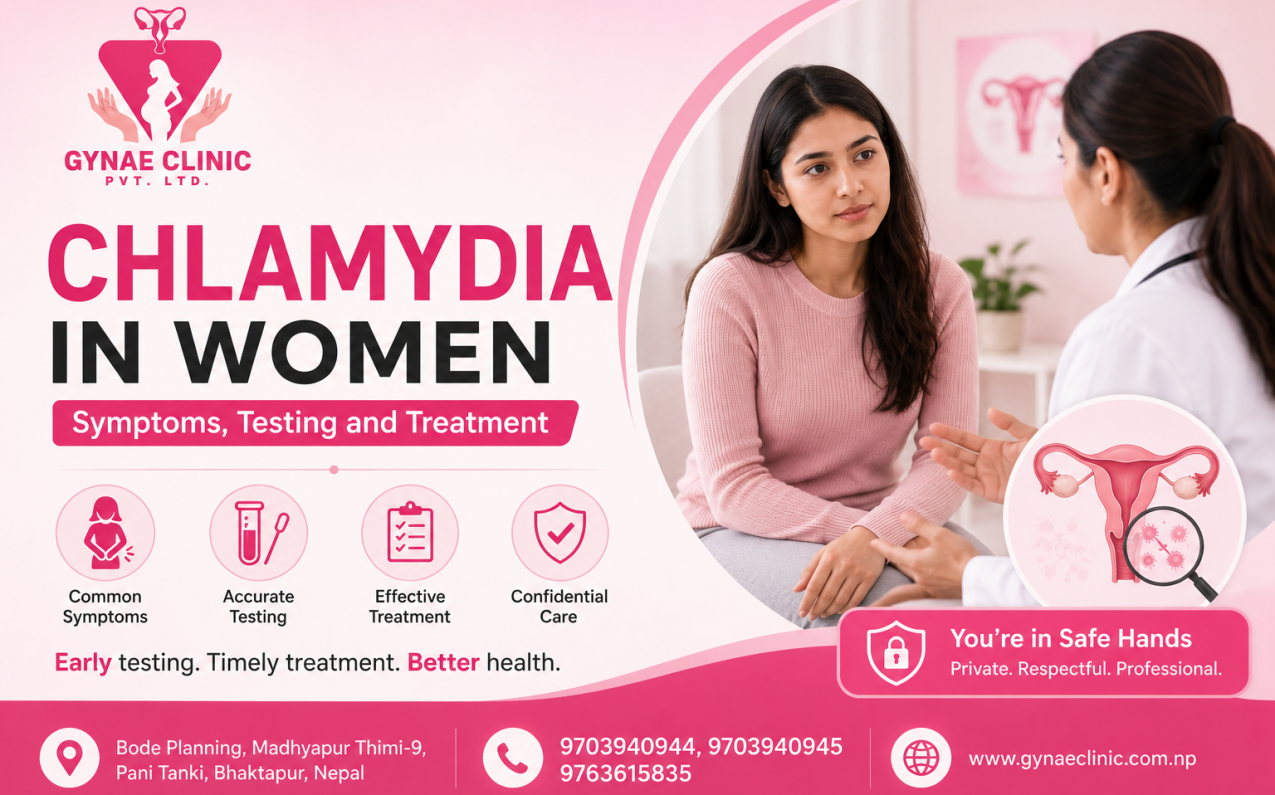
A premium, confidential women’s healthcare consultation showing a woman speaking privately with a compassionate female healthcare professional about sexual and reproductive health. Soft pink, blush and white medical branding, clean modern clinic, realistic and professional.
Can Women Have Chlamydia Without Symptoms?
Yes.
Chlamydia is frequently asymptomatic, meaning a person may not experience obvious symptoms despite having the infection.
This is one reason screening can be important for women based on age, sexual activity and individual risk factors.
You should not rely only on the following to determine whether you have an STI:
- How you feel
- Whether you have discharge
- Whether your partner has symptoms
- Whether the sexual exposure happened recently
- Whether previous symptoms disappeared
The only reliable way to determine whether chlamydia is present is through appropriate testing.
How Do Women Get Chlamydia?
Chlamydia can be transmitted through sexual contact with a person who has the infection.
Transmission can occur through:
- Vaginal sex
- Anal sex
- Oral sex
A person with chlamydia may not know they have the infection because symptoms may be absent.
This is why open communication, appropriate testing and safer sexual practices are important for sexual health.
When Should Women Get Tested for Chlamydia?
Women may consider chlamydia testing when they:
- Have had unprotected sexual contact
- Have a new sexual partner
- Have multiple sexual partners
- Learn that a sexual partner has an STI
- Develop unusual vaginal discharge
- Experience burning during urination
- Have unexplained pelvic discomfort
- Experience bleeding after sex
- Have bleeding between periods
- Are concerned about a previous sexual exposure
- Have been diagnosed with another STI
Sexually active women younger than 25 are generally recommended to receive annual chlamydia screening. Women aged 25 and older may also need screening when they have increased risk factors, such as a new or multiple sexual partners or a partner with an STI.
For a broader screening guide, read:
When Should Women Get Tested for STIs?
How Is Chlamydia Tested in Women?
Chlamydia cannot be reliably diagnosed from symptoms alone.
Laboratory testing is used to identify the infection.
NAAT Testing
Nucleic acid amplification tests, commonly called NAATs, are widely used and are the recommended laboratory method for detecting Chlamydia trachomatis.
Depending on the clinical situation, testing may involve:
Vaginal Swab
A vaginal sample may be collected for laboratory testing.
For women, vaginal swabs are among the preferred specimen types for NAAT-based screening.
Cervical Swab
A cervical sample may be collected in appropriate clinical circumstances.
Urine Sample
Urine testing may also be used in some situations.
Rectal or Throat Testing
Depending on the type of sexual exposure, testing from other anatomical sites may sometimes be appropriate.
The correct test depends on your symptoms, medical history and type of possible exposure.
Image 2 Placement
Place this image after the chlamydia testing section.
Recommended image concept:
A clean medical educational illustration representing laboratory STI testing, showing a sample tube, vaginal swab, laboratory testing and a female reproductive health symbol. Premium pink and white color palette, modern medical editorial style.
Chlamydia and Vaginal Discharge
Chlamydia may cause abnormal vaginal or cervical discharge, but discharge alone cannot confirm the infection.
Many other conditions can cause changes in vaginal discharge, including:
- Bacterial vaginosis
- Yeast infection
- Trichomoniasis
- Gonorrhea
- Cervical inflammation
- Hormonal changes
- Other vaginal infections
This is why it is better to identify the underlying cause rather than treating discharge based only on its color or appearance.
You may also find these articles helpful:
Vaginal Discharge Treatment in Bhaktapur: Causes, Symptoms, Tests & Treatment
Yellow Vaginal Discharge in Women: Causes, STI Testing & Treatment in Bhaktapur
Can Chlamydia Cause Pelvic Pain?
Chlamydia may cause pelvic or lower abdominal discomfort.
However, pelvic pain can have many different causes, including gynecological, urinary and gastrointestinal conditions.
If chlamydia is untreated, infection can sometimes spread to the upper reproductive tract and contribute to pelvic inflammatory disease.
Prompt evaluation is particularly important when pelvic pain occurs with:
- Fever
- Abnormal vaginal discharge
- Bleeding between periods
- Pain during sex
- Burning urination
- A possible STI exposure
Untreated chlamydia can lead to serious reproductive health complications, including PID, infertility and ectopic pregnancy.
Can Chlamydia Affect Fertility?
Untreated chlamydia can cause infection to spread to the upper reproductive tract.
In women, complications may include:
- Pelvic inflammatory disease
- Inflammation of the fallopian tubes
- Increased risk of ectopic pregnancy
- Fertility problems
Not every woman with chlamydia will develop these complications.
However, early testing and appropriate treatment are important because treatment can prevent ongoing infection and reduce the risk of further complications.
Chlamydia During Pregnancy
Chlamydia is important to identify during pregnancy because untreated infection can affect both maternal and newborn health.
Appropriate testing and treatment during pregnancy can reduce the risk of transmission and complications. Treatment decisions during pregnancy should always be made by a qualified healthcare professional using appropriate pregnancy-specific medical guidance.
If you are pregnant and are concerned about possible STI exposure, do not delay discussing testing with your healthcare provider.
Chlamydia Treatment
Chlamydia is a treatable and curable bacterial infection.
Treatment involves antibiotics prescribed by a qualified healthcare professional. The appropriate medicine depends on individual factors, including pregnancy status, allergies, infection site and current clinical guidance.
Important: Do Not Self-Medicate
Do not:
- Take leftover antibiotics
- Use another person’s medicine
- Stop treatment early
- Choose antibiotics based on internet advice
- Assume that symptoms disappearing means the infection is cured
Taking inappropriate antibiotics may fail to treat the infection correctly.
Why Sexual Partner Management Is Important
Treatment of sexual partners is an important part of managing chlamydia.
If only one partner receives appropriate treatment while another infected partner remains untreated, reinfection can occur.
Healthcare professionals can provide guidance about:
- Partner notification
- Partner testing
- Appropriate treatment
- When sexual activity can safely resume
Repeat infection is possible even after successful treatment.
Can You Get Chlamydia Again After Treatment?
Yes.
Successfully treating chlamydia does not provide permanent protection against future infection.
A person can become infected again after another exposure.
Repeat infection is common enough that CDC guidance recommends repeat testing about three months after treatment.
How Long Should You Wait Before Sex After Chlamydia Treatment?
The timing depends on the treatment prescribed.
Public health guidance generally advises avoiding sexual activity until treatment has been completed and appropriate partner management has occurred. Specific instructions can differ depending on the treatment regimen and individual circumstances.
Follow the instructions provided by your healthcare professional.
How Can Women Help Prevent Chlamydia?
Reducing the risk of chlamydia may involve:
- Consistent and correct condom use
- Appropriate STI testing
- Testing when a new partner or other risk factor is present
- Open communication with sexual partners
- Ensuring appropriate treatment when an infection is diagnosed
- Appropriate partner testing and treatment
There is currently no vaccine that prevents chlamydia.
Image 3 Placement
Place this image before the FAQ section.
Recommended image concept:
A premium and reassuring women’s sexual health consultation showing a woman receiving confidential medical guidance from a female gynecology professional. The image should communicate privacy, trust, STI testing and compassionate healthcare using soft pink, rose and white tones.
Frequently Asked Questions About Chlamydia in Women
Can I Have Chlamydia Without Symptoms?
Yes. Many women with chlamydia may not notice symptoms.
This is why appropriate screening can be important based on age and individual risk factors.
What Are the First Symptoms of Chlamydia in Women?
Some women may experience abnormal vaginal discharge or burning during urination.
Others may experience bleeding between periods, bleeding after sex or pelvic discomfort.
However, many women have no noticeable symptoms.
Can Chlamydia Cause Vaginal Itching?
Chlamydia is not always associated with itching.
Vaginal itching has many possible causes, including yeast infection, irritation, skin conditions and other infections.
Testing can help identify the underlying cause.
Is Chlamydia Curable?
Yes. Chlamydia is a bacterial infection that can be treated and cured with appropriate antibiotics.
Can Chlamydia Return After Treatment?
Yes. You can become infected again after successful treatment if you are exposed again.
Appropriate partner management and follow-up testing can help reduce the risk of repeat infection.
Can Chlamydia Affect Pregnancy?
Untreated chlamydia during pregnancy can contribute to complications and may affect newborn health.
Pregnant women with possible exposure should discuss appropriate testing and treatment with their healthcare provider.
Chlamydia Testing and Women’s Sexual Health Care in Bhaktapur
If you are searching for:
- Chlamydia testing in Bhaktapur
- Chlamydia symptoms in women
- STI testing for women in Bhaktapur
- STD testing near Madhyapur Thimi
- Confidential STI consultation
- Abnormal vaginal discharge evaluation
- Burning urination and STI testing
- Gynecologist for sexual health concerns
- STI testing near Bode
- Women’s health clinic near Pani Tanki
- Confidential gynecology care near Gatthaghar
- STI consultation near Lokanthali
- Women’s sexual health consultation near Jadibuti
- Gynecology and STI care near Koteshwor
you can seek professional consultation at Gynae Clinic Pvt. Ltd.
Gynae Clinic Pvt. Ltd.
Address:
Bode Planning, Madhyapur Thimi-9, Pani Tanki, Bhaktapur, Nepal
Contact:
9703940944
9703940945
9763615835
Website:
Gynae Clinic Pvt. Ltd. Official Website
For additional information, you can also read our related internal guides:
STI Screening and Treatment in Bhaktapur: Complete Guide
STI Testing for Women: Which Tests May Be Needed?
STD Clinic in Bhaktapur: Confidential STI Testing, Treatment & Venereology Care
Final Thoughts
Chlamydia in women can be difficult to recognize because symptoms may be mild or completely absent.
Possible symptoms can include abnormal vaginal discharge, burning during urination, pelvic discomfort and abnormal bleeding, but symptoms alone cannot diagnose chlamydia.
Appropriate testing is the most reliable way to identify the infection.
The good news is that chlamydia is treatable and curable with appropriate medical care. Early testing, correct treatment and appropriate partner management are important steps in protecting both reproductive and sexual health.
If you are concerned about a possible STI exposure or unusual symptoms, confidential professional consultation can help determine which tests may be appropriate.
Medical Disclaimer
This article is for general health education and does not replace an individual medical consultation, diagnosis or treatment plan. STI symptoms can overlap with other infections and conditions, so appropriate testing is important for accurate diagnosis. Certain complex conditions may benefit from advanced specialist care.
Author: Gynae Clinic Pvt. Ltd. Medical Content Team