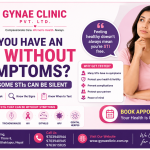


Sexual health is an important part of a woman’s overall health, reproductive health and quality of life. However, many women hesitate to discuss sexual health concerns because of embarrassment, fear of judgment or concerns about privacy.
If you are experiencing unusual vaginal discharge, genital itching, burning while urinating, genital sores, pain during sex, bleeding after sex, or you are worried about a sexually transmitted infection (STI), you do not have to ignore the problem or try to diagnose yourself.
A confidential sexual health consultation for women in Bhaktapur can provide a safe opportunity to discuss your concerns with a qualified healthcare professional, understand whether testing is appropriate, and receive an individualized treatment or follow-up plan.
At Gynae Clinic Pvt. Ltd., women can seek professional gynecological consultation for sexual health, reproductive health and STI-related concerns in Bhaktapur.
What Is a Confidential Sexual Health Consultation?
A confidential sexual health consultation is a private medical consultation where a woman can discuss concerns related to sexual, vaginal, reproductive and genital health.
Depending on your symptoms and medical history, the consultation may address:
- Sexually transmitted infections (STIs)
- STD testing
- Vaginal discharge
- Abnormal vaginal odor
- Genital itching
- Genital irritation
- Genital sores
- Genital blisters
- Genital bumps or warts
- Burning while urinating
- Pain during sexual intercourse
- Bleeding after sex
- Pelvic or lower abdominal pain
- HPV-related concerns
- Cervical health
- Sexual health after unprotected sex
- Sexual health after a new sexual partner
- Partner STI exposure
- STI testing after a partner’s positive result
- Pregnancy-related sexual health concerns
- Contraception and reproductive health questions
The purpose is not to judge your sexual history.
The purpose is to understand your health concern and determine what medical evaluation, testing or treatment may be appropriate.
Why Do Women Need Confidential Sexual Health Care?
Sexual health concerns can be difficult to discuss openly.
Some women worry:
“What will the doctor think?”
“Will anyone find out?”
“What if my test is positive?”
“Do I really need an STI test if I don’t have symptoms?”
These concerns are common.
However, delaying medical evaluation can sometimes allow an infection or another gynecological condition to continue without appropriate treatment.
Confidential, respectful healthcare can make it easier for women to seek help early.
Importantly, some sexually transmitted infections can occur without obvious symptoms, meaning a woman may feel completely healthy while still having an infection. Current WHO guidance specifically highlights the importance of identifying asymptomatic STIs.
Can a Woman Have an STI Without Symptoms?
Yes.
This is one of the most important things to understand about sexual health.
Not every STI produces obvious symptoms.
A woman may not have:
- Pain
- Itching
- Discharge
- Genital sores
- Burning urination
- Bleeding
- Pelvic pain
and may still have an STI.
This is why testing may be recommended after a known exposure, when a sexual partner has been diagnosed with an STI, or when a healthcare professional considers testing appropriate.
You should not rely only on symptoms to decide whether you have an STI.
When Should a Woman Consider a Sexual Health Consultation?
You should consider confidential sexual health consultation if you have:
1. Unusual vaginal discharge
A change in vaginal discharge may occur because of several conditions, including vaginal infections and some STIs.
Pay attention to changes in:
- Color
- Amount
- Consistency
- Odor
- Associated itching or irritation
Do not assume every unusual discharge is an STI, and do not assume every discharge is simply a yeast infection.
A proper evaluation can help determine the likely cause.
2. Vaginal or genital itching
Persistent genital itching can have several causes.
These may include:
- Yeast infection
- Skin irritation
- Allergic reaction
- Vaginal infections
- Certain STIs
- Other dermatological or gynecological conditions
If itching continues or is associated with discharge, sores, swelling or pain, professional evaluation is advisable.
3. Genital sores or blisters
Genital sores, ulcers or blisters should be medically evaluated.
Different conditions can produce similar-looking lesions, so attempting to identify the cause from appearance alone can be misleading.
4. Genital bumps or warts
A new bump around the vulva or genital area may have different causes.
Some may be harmless skin changes, while others may require medical assessment.
Genital warts can be associated with HPV, but not every genital bump is a wart.
5. Burning while urinating
Burning urination may occur with a urinary tract infection, but it can also occur with some sexually transmitted infections.
If burning is accompanied by vaginal discharge, genital irritation, pelvic pain or a recent sexual exposure, tell your healthcare professional.
6. Pain during sex
Pain during sexual intercourse should not simply be accepted as normal.
Possible causes can include:
- Vaginal dryness
- Vaginal infections
- Pelvic conditions
- Hormonal changes
- Inflammation
- Genital conditions
- Psychological or relationship factors
- Other gynecological problems
A gynecological consultation can help identify the possible cause.
7. Bleeding after sex
Bleeding after intercourse can have multiple causes.
It may be related to:
- Cervical changes
- Vaginal dryness
- Infection
- Cervical inflammation
- Hormonal factors
- Other gynecological conditions
Persistent or unexplained bleeding after sex deserves medical evaluation.
Should You Get an STI Test After Unprotected Sex?
If you have had unprotected sexual contact and are worried about an STI, speaking with a healthcare professional is a sensible step.
The appropriate test and timing depend on:
- When the exposure occurred
- Type of sexual contact
- Possible infection
- Symptoms
- Partner’s diagnosis
- Previous STI history
- Type of laboratory test available
Testing immediately after an exposure may not detect every infection.
Therefore, rather than guessing the correct testing date, discuss the timing with a healthcare professional.
Should Your Partner Get Tested If You Have an STI?
In many situations, yes.
If you have been diagnosed with an STI, your sexual partner may need medical evaluation, testing and/or treatment even if they feel completely healthy.
Partner management is an important component of comprehensive STI care. WHO guidance recommends voluntary STI partner services as part of a broader package of testing, care and prevention while protecting privacy and confidentiality.
Treating only one person may not always be enough.
Depending on the infection, an untreated partner can contribute to ongoing transmission or reinfection.
If you have been diagnosed with an STI, ask your healthcare professional what your partner should do.
What STI Tests May Be Recommended for Women?
There is no single test that detects every STI.
Depending on your symptoms and possible exposure, a healthcare professional may recommend:
- Urine testing
- Vaginal swab testing
- Cervical testing
- Blood testing
- Specific bacterial STI tests
- HIV testing when appropriate
- Syphilis testing when appropriate
- Hepatitis testing when appropriate
- HPV-related assessment
- Other laboratory investigations
The appropriate test depends on your individual circumstances.
For example, the type of sexual exposure can influence which anatomical site should be considered for testing.
This is why a professional consultation can be more useful than ordering random STI tests without understanding what they are designed to detect.
Confidential STI Testing for Women in Bhaktapur
If you are searching online for:
“STI testing in Bhaktapur”
“STD test in Bhaktapur”
“confidential STI test near me”
“sexual health clinic for women in Bhaktapur”
or
“gynecologist for STI treatment in Bhaktapur,”
the first step should be choosing appropriate medical evaluation rather than self-diagnosing.
At Gynae Clinic Pvt. Ltd., women can discuss sexual health concerns and receive gynecological consultation based on their individual symptoms and circumstances.
What Happens During a Confidential Sexual Health Consultation?
Many women worry that visiting a gynecologist automatically means undergoing an examination.
That is not necessarily the case.
A consultation commonly begins with a discussion about your concerns and medical history.
Your healthcare professional may ask about:
- Your main symptoms
- When symptoms started
- Menstrual history
- Previous infections
- Previous STI testing
- Previous treatment
- Sexual exposure
- Recent or new sexual partners
- Condom use
- Partner’s STI status
- Pregnancy plans
- Previous gynecological conditions
Based on the information provided, the healthcare professional can determine whether further examination or laboratory testing may be appropriate.
Not every woman requires the same tests.
Will My Sexual History Be Judged?
A sexual health consultation should be focused on your health—not on judging you.
Providing accurate information about sexual exposure helps the healthcare professional understand what infections or conditions may need consideration.
You should feel comfortable discussing:
- Unprotected sex
- New sexual partners
- Multiple partners
- Previous STI diagnosis
- Partner’s STI diagnosis
- Condom use
- Oral or anal sexual exposure when relevant
- Concerns about pregnancy
- Sexual pain
Accurate information helps guide appropriate medical care.
What If I Am Embarrassed to Talk About Sexual Health?
Feeling embarrassed is completely understandable.
You can start with a simple sentence:
“I have a private sexual health concern and I would like to discuss it confidentially.”
You do not need to know the medical terminology.
You can simply describe what you have noticed.
For example:
“I have unusual discharge.”
“I have itching.”
“I had unprotected sex and I’m worried about an STI.”
“My partner tested positive for an STI.”
“I have pain during sex.”
These are legitimate medical concerns.
Can Vaginal Discharge Be an STI?
Sometimes—but not always.
Vaginal discharge is common and can be completely normal depending on the menstrual cycle.
However, discharge that is:
- New
- Unusually heavy
- Foul-smelling
- Yellow
- Green
- Associated with itching
- Associated with burning
- Associated with pelvic pain
- Associated with pain during sex
may require medical evaluation.
Several infections can produce similar symptoms, so testing may be needed to determine the cause.
HPV and Women’s Sexual Health
Human papillomavirus (HPV) is an important part of women’s sexual and reproductive health.
Some HPV infections can cause genital warts, while persistent infection with certain high-risk HPV types can contribute to cervical cancer.
Women may have HPV without obvious symptoms.
This is why appropriate cervical cancer screening and HPV-related evaluation are important according to individual screening recommendations.
If you are concerned about HPV, genital warts or cervical health, discuss your concerns with a gynecologist.
Is a Pap Smear an STI Test?
No.
A Pap smear or cervical screening test should not be considered a general STI test.
Cervical screening is intended to identify cervical abnormalities and, depending on the method used, HPV-related risk.
STI testing is separate.
If you are visiting a gynecologist because of a possible STI exposure, tell the healthcare professional about the exposure so that appropriate testing can be considered.
Sexual Health Consultation Before Marriage
Some women seek confidential sexual health consultation before marriage or a new relationship.
A consultation can be an opportunity to discuss:
- STI testing
- Previous STI concerns
- HPV
- Hepatitis
- HIV testing when appropriate
- Vaginal infections
- Menstrual health
- Contraception
- Pregnancy planning
- Fertility concerns
- Sexual pain
- Reproductive health
The exact tests should be based on individual circumstances and professional medical advice.
A sexual health consultation is about making informed decisions—not creating fear.
Sexual Health Consultation Before Pregnancy
Women planning pregnancy may also benefit from discussing sexual and reproductive health with a gynecologist.
Depending on your history, your healthcare professional may discuss:
- STI screening
- Cervical health
- Previous infections
- Vaccination
- Menstrual health
- Fertility
- Pregnancy planning
- Existing medical conditions
- Medications
- Preconception health
If you have had a possible STI exposure or previous STI diagnosis, mention it during your consultation.
What If My STI Test Is Positive?
A positive STI test does not mean you should panic.
Many STIs can be managed or treated with appropriate medical care.
Your healthcare professional can explain:
- What the result means
- Whether treatment is required
- Which treatment is appropriate
- Whether your partner needs evaluation
- Whether sexual activity should temporarily be avoided
- Whether follow-up testing is needed
- How to reduce the risk of future infection
Do not take someone else’s medication or use antibiotics without medical advice.
The correct treatment depends on the specific infection.
What If My STI Test Is Negative?
A negative test can be reassuring, but the meaning of the result depends on:
- Which infection was tested
- Which test was used
- When testing occurred
- When the exposure occurred
- Whether symptoms are present
- Whether additional testing is recommended
A very early test may not always provide the complete answer after a recent exposure.
If you remain concerned, discuss the result and timing with your healthcare professional.
How Can Women Protect Their Sexual Health?
Good sexual health involves more than STI testing.
Important steps can include:
Know your sexual health status
Testing can help identify certain infections, including infections that may not cause symptoms.
Use condoms correctly
Condoms can reduce the risk of many STIs when used correctly and consistently, although they do not eliminate all STI transmission.
Communicate with partners
Discuss testing, sexual health and protection openly.
Do not ignore symptoms
Unusual discharge, genital sores, itching, pain or bleeding should not simply be ignored.
Complete prescribed treatment
If you are diagnosed with an infection, follow your healthcare professional’s treatment instructions.
Consider appropriate vaccination
Vaccination can help prevent certain infections, including HPV and hepatitis B.
Attend recommended cervical screening
Cervical screening is an important part of women’s preventive healthcare.
Why Confidentiality Matters in Sexual Healthcare
Privacy is particularly important when discussing sexual health.
Women may avoid healthcare because they fear:
- Judgment
- Stigma
- Lack of privacy
- Disclosure of personal information
- Embarrassment
WHO guidance on STI services emphasizes people-centred care, privacy and confidential handling of personal information.
A respectful clinical environment can make it easier for women to seek care when they need it.
Confidential Sexual Health Consultation in Bhaktapur
If you are looking for a confidential sexual health consultation for women in Bhaktapur, Gynae Clinic Pvt. Ltd. provides a women-focused setting where you can discuss sensitive gynecological and sexual health concerns.
Consultation may be appropriate for women concerned about:
- STI exposure
- STD symptoms
- STI testing
- Partner’s STI diagnosis
- Vaginal discharge
- Vaginal odor
- Genital itching
- Genital sores
- Genital bumps
- HPV
- Cervical health
- Pain during sex
- Burning urination
- Pelvic pain
- Bleeding after sex
- Sexual health before marriage
- Sexual health before pregnancy
- Reproductive health
You do not need to wait until symptoms become severe before asking for professional advice.
Frequently Asked Questions
Is sexual health consultation confidential?
Sexual health consultations should be handled professionally and confidentially, subject to applicable medical and legal requirements.
If privacy is a major concern, you can tell the clinic at the beginning of your consultation that you want to discuss a sensitive sexual health issue privately.
Can I get an STI without symptoms?
Yes. Some STIs can be asymptomatic. This is one reason testing can be important after certain exposures or when a healthcare professional recommends it.
Should I get tested if my partner has an STI?
You should seek medical advice. Depending on the infection and exposure, your partner’s diagnosis may mean you need testing and/or treatment.
Do all women need the same STI tests?
No. Testing should be based on individual circumstances, symptoms, exposure, medical history and the infections being considered.
Can vaginal discharge mean an STI?
It can, but vaginal discharge has many possible causes. A medical evaluation may be needed to determine the cause.
Is a Pap smear the same as an STI test?
No. Pap smear/cervical screening and STI testing are different types of testing.
Should I see a doctor after unprotected sex?
If you are concerned about STI exposure, seeking medical advice can help determine whether testing is appropriate and when it should be performed.
Should my partner be tested if I have an STI?
Often, yes. Depending on the STI, partner evaluation, testing and/or treatment may be important to prevent ongoing transmission or reinfection.
Takeaway: Your Sexual Health Deserves Privacy, Respect and Proper Medical Care
A confidential sexual health consultation for women in Bhaktapur can be the right first step if you are worried about an STI, unusual vaginal symptoms, sexual pain, HPV, a partner’s diagnosis, or another sensitive gynecological concern.
You should not feel ashamed about asking for help.
Sexual health is healthcare.
Getting appropriate medical advice can help identify infections, address symptoms, protect reproductive health and provide peace of mind.
If you have a concern, do not rely on symptoms alone or self-medicate. Speak with a qualified healthcare professional and get the evaluation that is appropriate for your situation.
Gynae Clinic Pvt. Ltd. – Women’s Sexual Health Consultation in Bhaktapur
Clinic: Gynae Clinic Pvt. Ltd.
Address: Bode Planning, Madhyapur Thimi-9, Pani Tanki, Bhaktapur, Nepal
Website: www.gynaeclinic.com.np
Contact: 9703940944, 9703940945, 9763615835
Confidential gynecological and sexual health consultation for women in Bhaktapur.
Medical Disclaimer: This article is intended for general educational purposes only. It does not replace an individual medical consultation, examination, diagnosis or treatment plan. STI testing and treatment should be determined according to individual symptoms, exposure, medical history and professional medical advice.
Author; Gynae Clinic Pvt. Ltd.