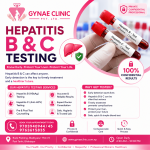

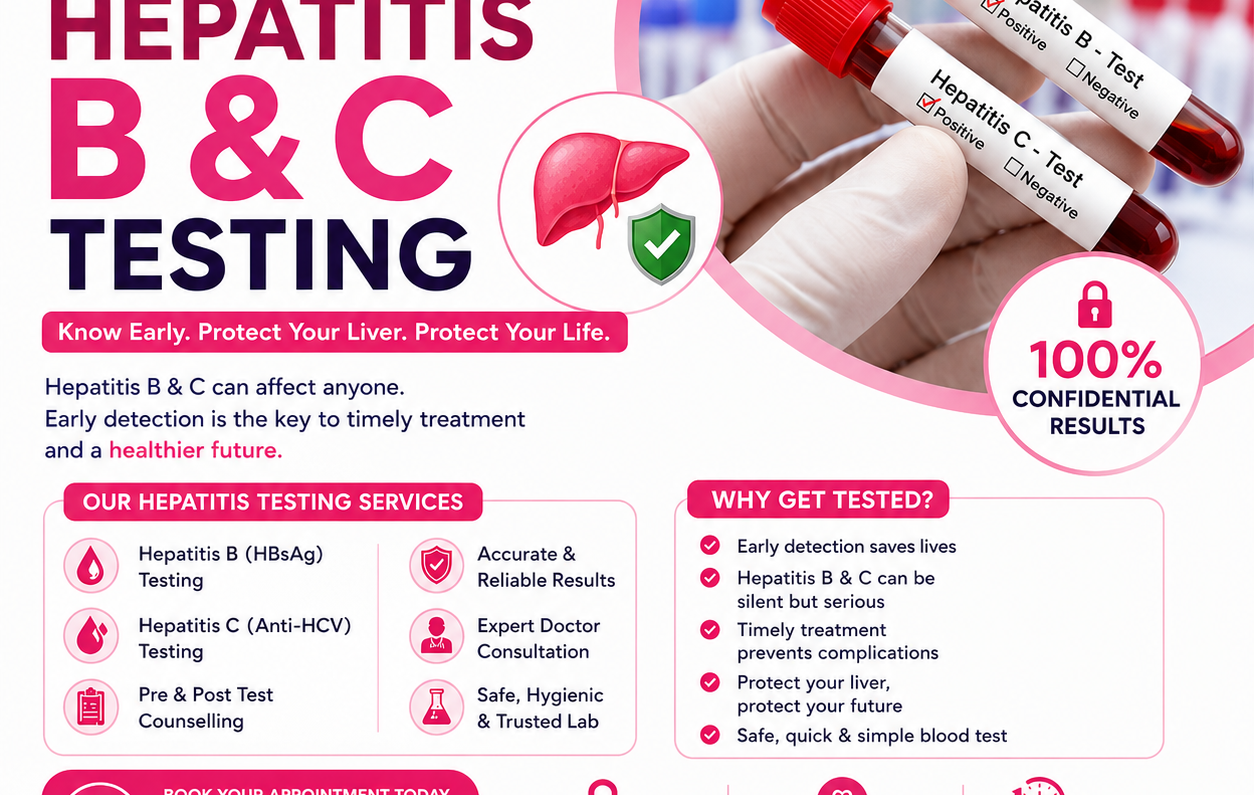
Hepatitis B and hepatitis C are viral infections that primarily affect the liver. One of the challenges with both infections is that a person may have no noticeable symptoms, particularly during the early stages. This means that feeling healthy does not always mean that hepatitis infection is absent.
A Hepatitis B & C test is a blood test or group of blood tests used to determine whether a person has been exposed to or is currently infected with hepatitis B virus (HBV) or hepatitis C virus (HCV).
Testing can be particularly important during pregnancy, before certain medical procedures, after possible exposure to infected blood or body fluids, or when a person has symptoms or risk factors associated with viral hepatitis.
For women looking for Hepatitis B and C testing in Bhaktapur, Gynae Clinic Pvt. Ltd. provides confidential gynecological and women’s healthcare consultation where appropriate testing can be discussed according to individual circumstances.
What Are Hepatitis B and Hepatitis C?
Hepatitis means inflammation of the liver. Several viruses can cause hepatitis, but hepatitis B and hepatitis C are two important causes of viral liver disease.
Hepatitis B
Hepatitis B is caused by the hepatitis B virus. Infection can be short-term or become chronic.
Chronic hepatitis B can progressively damage the liver and may increase the risk of complications such as cirrhosis and liver cancer. Testing is therefore important because many people with hepatitis B do not have obvious symptoms.
There is also an effective vaccine that helps prevent hepatitis B infection.
Hepatitis C
Hepatitis C is caused by the hepatitis C virus.
Like hepatitis B, hepatitis C can remain unnoticed for years. When chronic infection develops, liver damage can progress without obvious symptoms until significant disease occurs.
Unlike hepatitis B, there is currently no vaccine that prevents hepatitis C. However, modern antiviral medicines can cure most people with hepatitis C when appropriately diagnosed and treated.
Why Is Hepatitis B & C Testing Important?
The most important reason for testing is simple:
You cannot reliably know whether you have hepatitis B or C based only on how you feel.
Some people have no symptoms, while others may experience symptoms that could easily be mistaken for another health problem.
Testing can:
- Detect hepatitis infection
- Identify previous exposure
- Determine whether hepatitis B immunity is present
- Identify current hepatitis C infection
- Help assess pregnancy-related risks
- Allow appropriate medical follow-up
- Reduce the possibility of unknowingly transmitting infection
- Help identify people who may benefit from treatment or monitoring
WHO emphasizes that testing is an important gateway to appropriate prevention, care and treatment for viral hepatitis.
Hepatitis B Test: Which Tests Are Used?
Hepatitis B testing can involve several blood markers because one test alone may not provide the complete picture.
For initial screening in adults, CDC recommends a triple panel consisting of:
- HBsAg – Hepatitis B surface antigen
- Anti-HBs – Hepatitis B surface antibody
- Total anti-HBc – Total hepatitis B core antibody
These markers help healthcare professionals determine whether a person has:
- Current hepatitis B infection
- Previous hepatitis B infection
- Immunity from vaccination
- Immunity following previous infection
- Susceptibility to hepatitis B
What Does HBsAg Mean?
HBsAg stands for hepatitis B surface antigen.
A positive HBsAg result generally indicates current hepatitis B infection, although the complete interpretation depends on the other test results and clinical circumstances.
What Does Anti-HBs Mean?
Anti-HBs refers to antibodies against hepatitis B surface antigen.
A positive anti-HBs result can indicate immunity, which may occur after successful vaccination or after recovery from a previous infection.
What Does Anti-HBc Mean?
Anti-HBc refers to antibodies against hepatitis B core antigen.
This marker can help determine whether someone has been exposed to hepatitis B infection in the past or has an infection that requires further evaluation.
Because the interpretation depends on the combination of results, it is better not to interpret a single hepatitis B marker in isolation.
Hepatitis C Test: How Does It Work?
Hepatitis C testing generally follows a two-step approach.
Step 1: Anti-HCV Antibody Test
The initial test looks for antibodies against hepatitis C.
A reactive or positive anti-HCV result means that the person has been exposed to HCV at some point.
It does not automatically prove that the virus is currently present.
Step 2: HCV RNA Test
If the antibody test is reactive, an HCV RNA nucleic acid test (NAT) is used to determine whether hepatitis C virus is currently detectable in the blood.
This distinction is important because some people who were infected with hepatitis C clear the virus naturally but continue to have detectable antibodies.
Therefore:
Anti-HCV positive ≠ automatically active hepatitis C infection.
The HCV RNA result helps determine whether the virus is currently present.
Hepatitis B vs Hepatitis C Testing
| Feature | Hepatitis B | Hepatitis C |
|---|---|---|
| Virus | HBV | HCV |
| Main initial testing | HBV serologic markers | Anti-HCV antibody |
| Important follow-up testing | Depends on HBV markers and clinical situation | HCV RNA if antibody is reactive |
| Vaccine available | Yes | No |
| Can become chronic? | Yes | Yes |
| Can cause liver damage? | Yes | Yes |
| May have no symptoms? | Yes | Yes |
| Treatment | Depends on infection status and liver assessment | Modern antiviral treatment can cure most infections |
The exact testing pathway should be determined by a healthcare professional according to the individual’s circumstances.
Who Should Consider Hepatitis B & C Testing?
Testing recommendations depend on age, pregnancy status, exposure history, medical conditions and other risk factors.
You may be advised to undergo hepatitis testing if you:
- Have never previously been tested
- Are pregnant
- Have a history of possible blood exposure
- Have had an STI
- Have multiple sexual partners or another recognized HBV risk
- Have a partner or household contact with hepatitis B
- Have abnormal liver enzymes
- Have a history of injection drug use
- Have HIV
- Have received certain blood products or transfusions in the past
- Are undergoing evaluation for liver disease
- Have symptoms suggesting liver problems
Current CDC guidance recommends hepatitis B screening for all adults at least once and testing during each pregnancy for HBsAg.
CDC also recommends hepatitis C screening for adults and during pregnancy, with certain exceptions based on local prevalence.
Hepatitis B & C Testing During Pregnancy
Hepatitis testing is particularly important during pregnancy.
A pregnant woman may have hepatitis B or hepatitis C without symptoms. Identifying infection during pregnancy allows healthcare professionals to take appropriate steps to reduce risks to the mother and baby.
Hepatitis B During Pregnancy
CDC recommends testing pregnant women for HBsAg during each pregnancy, preferably during the first trimester.
If hepatitis B infection is identified, the pregnancy can be managed with appropriate medical follow-up and measures to reduce mother-to-child transmission.
WHO’s current hepatitis B guidance also emphasizes prevention of mother-to-child transmission, including appropriate antiviral prophylaxis when indicated.
Hepatitis C During Pregnancy
CDC recommends hepatitis C screening during each pregnancy in most settings.
If the initial antibody test is reactive, additional HCV RNA testing is used to determine whether current infection is present.
Pregnancy is therefore an important time to discuss hepatitis testing with your obstetric or gynecological healthcare provider.
Can Hepatitis B or C Be Sexually Transmitted?
Yes, but the transmission patterns differ.
Hepatitis B can be transmitted through infected blood and certain body fluids, including through sexual contact. This makes sexual-health assessment relevant when considering HBV testing.
Hepatitis C is primarily associated with blood-to-blood transmission. Sexual transmission can occur but is generally less efficient than hepatitis B transmission and varies according to circumstances.
Because transmission risk depends on the type of exposure, anyone concerned about a possible exposure should discuss the situation with a healthcare professional rather than trying to estimate risk based only on symptoms.
Can Hepatitis B or C Cause Symptoms?
Yes, but many people may not have noticeable symptoms.
Possible symptoms of viral hepatitis can include:
- Tiredness
- Loss of appetite
- Nausea
- Abdominal discomfort
- Dark urine
- Pale-colored stool
- Joint pain
- Yellowing of the skin or eyes
- General weakness
Hepatitis C is particularly likely to remain unnoticed, and chronic infection can remain asymptomatic for years.
This is why testing can be important even when you feel completely well.
What Does a Positive Hepatitis B Test Mean?
A positive hepatitis B result does not automatically tell you whether the infection is recent, chronic, or whether you are immune.
The meaning depends on the combination of markers.
For example, healthcare professionals may consider:
- HBsAg
- Anti-HBs
- Total anti-HBc
- IgM anti-HBc when acute infection is suspected
- Liver function tests
- HBV DNA testing when appropriate
- Clinical history
Further evaluation may be necessary to determine the stage of infection and whether monitoring or treatment is appropriate.
Do not panic after receiving a positive result. The next step is proper interpretation and medical evaluation.
What Does a Positive Hepatitis C Test Mean?
A positive or reactive anti-HCV antibody test means that antibodies to hepatitis C have been detected.
It does not necessarily mean that you currently have hepatitis C.
An HCV RNA test is used to determine whether the virus is currently detectable.
There are several possible situations:
Anti-HCV negative:
Usually means there is no evidence of previous HCV exposure, although very recent exposure may require additional consideration.
Anti-HCV positive + HCV RNA detected:
Indicates current HCV infection.
Anti-HCV positive + HCV RNA not detected:
Usually indicates that there is no current active HCV infection, although interpretation should consider the individual’s history and timing.
What If Hepatitis Testing Is Negative?
A negative result can be reassuring, but the meaning depends on:
- Which test was performed
- When exposure occurred
- Whether vaccination has occurred
- Previous infection history
- The individual’s risk factors
- Whether repeat testing is recommended
For example, after a very recent possible HCV exposure, antibody testing may not yet detect infection. CDC recommends HCV RNA testing when recent exposure within the previous six months is a concern.
Similarly, hepatitis B testing should be interpreted according to the specific markers tested.
If you recently had a possible exposure, tell your healthcare provider when it happened.
How Is the Hepatitis Test Done?
Hepatitis B and C testing generally requires a blood sample.
The process is usually straightforward:
Step 1: Consultation
Your healthcare professional discusses your symptoms, medical history, pregnancy status and possible exposure.
Step 2: Appropriate Test Selection
The appropriate hepatitis B and/or C tests are selected based on your circumstances.
Step 3: Blood Collection
A small blood sample is collected for laboratory testing.
Step 4: Result Interpretation
Your healthcare provider interprets the results and determines whether additional testing is necessary.
Step 5: Follow-Up
If infection is detected, further evaluation may include liver assessment, additional viral testing and appropriate specialist management.
Do I Need Hepatitis B and C Tests Together?
Not necessarily.
Some people may need testing for both viruses, while others may only need one.
The decision can depend on:
- Pregnancy
- Sexual-health history
- Blood exposure
- Previous test results
- Liver abnormalities
- Medical history
- Known exposure
- Other risk factors
If you are already being evaluated for an STI or genital infection, discussing hepatitis B and C testing with your healthcare provider may also be appropriate.
You can read more about [STI testing for women and which tests may be needed] as part of a broader sexual-health evaluation.
Hepatitis Testing and STI Screening
Hepatitis B can be sexually transmitted, and hepatitis testing may form part of a broader sexual-health assessment depending on the person’s circumstances.
If you are concerned about a sexually transmitted infection, your healthcare provider may discuss testing for conditions such as:
- HIV
- Syphilis
- Hepatitis B
- Hepatitis C
- Chlamydia
- Gonorrhea
- Other infections based on symptoms and exposure
Not every person needs every test. A personalized assessment helps determine which tests are appropriate.
For confidential sexual-health concerns, you can also explore our [confidential STI testing and treatment services in Bhaktapur].
Can Hepatitis B Be Prevented?
Yes.
The hepatitis B vaccine is an important way to prevent hepatitis B infection.
Other prevention measures include:
- Avoiding contact with infected blood
- Using sterile needles and equipment
- Practicing safer sex
- Not sharing razors or toothbrushes that may contain blood
- Ensuring appropriate infection-control practices for procedures
- Testing when recommended
- Screening during pregnancy
If you do not know whether you are vaccinated against hepatitis B, discuss your vaccination history with your healthcare provider.
Can Hepatitis C Be Prevented?
There is currently no hepatitis C vaccine.
Prevention therefore focuses on reducing exposure to infected blood.
Important measures include:
- Never sharing needles or injection equipment
- Using properly sterilized medical and cosmetic equipment
- Avoiding sharing personal items contaminated with blood
- Following appropriate precautions after blood exposure
- Testing when recommended
Early diagnosis also helps reduce the possibility of unknowingly transmitting infection.
Is Hepatitis C Curable?
Yes.
Hepatitis C is now considered a curable viral infection in most people when appropriate direct-acting antiviral treatment is available and completed as prescribed. WHO states that current oral direct-acting antiviral treatments can cure more than 95% of people with HCV infection in many settings.
However, treatment should be based on confirmed diagnosis and medical assessment.
A positive antibody test alone does not establish current infection.
Is Hepatitis B Curable?
Hepatitis B is different from hepatitis C.
There is currently no medication that reliably eliminates chronic HBV infection from the body in every person. However, effective antiviral treatment is available for people who meet treatment criteria, and ongoing monitoring can help reduce the risk of serious liver complications.
Some people with hepatitis B may need regular monitoring rather than immediate antiviral treatment.
The appropriate approach depends on factors such as viral activity, liver health and the overall clinical situation.
What Should You Do After a Positive Hepatitis Test?
If you receive a positive or reactive result:
Do not panic.
Instead:
- Find out exactly which test was positive.
- Ask whether additional confirmatory testing is needed.
- Discuss your medical history with a healthcare professional.
- Follow recommended liver and viral testing.
- Avoid sharing personal items that could be contaminated with blood.
- Discuss prevention of transmission with your healthcare provider.
- If pregnant, inform your obstetric care provider promptly.
For hepatitis C, a reactive antibody test normally needs HCV RNA testing to establish current infection.
For hepatitis B, interpretation requires looking at the relevant serologic markers together.
Confidential Hepatitis B & C Testing in Bhaktapur
Hepatitis testing can sometimes feel sensitive, particularly when a person is worried about sexual exposure, previous medical procedures, pregnancy, or an unexpected laboratory result.
There is no reason to feel ashamed about getting tested.
At Gynae Clinic Pvt. Ltd., women can discuss sensitive women’s health and sexual-health concerns in a private and respectful clinical environment.
The clinic is located at:
Gynae Clinic Pvt. Ltd.
Bode Planning, Madhyapur Thimi-9, Pani Tanki, Bhaktapur, Nepal
Appointments:
9703940944
9703940945
9763615835
Email: gynaeclinic1@gmail.com
Women from Madhyapur Thimi, Bode, Kausaltar, Lokanthali, Gatthaghar, Radhe Radhe, Sallaghari, Sanothimi, Suryabinayak, Jagati, Jadibuti and nearby areas can seek women’s healthcare consultation in Bhaktapur.
For broader women’s healthcare, you can also explore our [gynecology services in Bhaktapur].
Frequently Asked Questions About Hepatitis B & C Testing
1. Is the hepatitis B and C test a blood test?
Yes. Hepatitis B and hepatitis C testing commonly uses blood samples.
2. Can hepatitis B or C exist without symptoms?
Yes. Both infections can occur without noticeable symptoms, particularly in their early or chronic stages.
3. Is one blood test enough for hepatitis B?
Not always. Hepatitis B can require several blood markers. CDC recommends a triple-panel approach for initial adult screening: HBsAg, anti-HBs and total anti-HBc.
4. Is a positive hepatitis C antibody test proof of active infection?
No. A reactive anti-HCV antibody test shows previous exposure but does not by itself prove current infection. HCV RNA testing is used to identify current infection.
5. Should pregnant women get hepatitis testing?
Yes. Hepatitis B and C screening are important components of pregnancy care. CDC recommends HBsAg testing during each pregnancy and hepatitis C screening during each pregnancy in most settings.
6. Can hepatitis B be sexually transmitted?
Yes. Hepatitis B can be transmitted through sexual exposure as well as infected blood and certain body fluids.
7. Can hepatitis C be sexually transmitted?
Sexual transmission of hepatitis C can occur, but blood exposure is the major route of transmission. Risk varies according to circumstances.
8. Is there a vaccine for hepatitis C?
No. There is currently no hepatitis C vaccine.
9. Is hepatitis C curable?
Yes. Modern direct-acting antiviral treatment can cure most people with hepatitis C when appropriately diagnosed and treated.
10. Where can I discuss hepatitis B and C testing confidentially in Bhaktapur?
You can discuss your testing needs with the healthcare team at Gynae Clinic Pvt. Ltd., Bode Planning, Madhyapur Thimi-9, Pani Tanki, Bhaktapur, Nepal.
Final Takeaway
Hepatitis B and hepatitis C can remain silent for a long time, making testing an important part of preventive healthcare.
For hepatitis B, understanding the combination of HBsAg, anti-HBs and anti-HBc can help determine whether a person has current infection, previous exposure, immunity or susceptibility.
For hepatitis C, an anti-HCV antibody test is generally followed by HCV RNA testing when the antibody result is reactive to determine whether the virus is currently present.
Testing is particularly important during pregnancy and when there has been a possible exposure or other recognized risk.
If you are concerned about hepatitis B or C, do not rely on symptoms alone. A confidential consultation can help determine which tests are appropriate and what your results mean.
Gynae Clinic Pvt. Ltd.
Compassionate care for every women’s health.
Bode Planning, Madhyapur Thimi-9, Pani Tanki, Bhaktapur, Nepal
9703940944 | 9703940945 | 9763615835
gynaeclinic1@gmail.com
Medical Disclaimer: This article is intended for general educational purposes and does not replace an individual medical consultation, examination, laboratory testing, or treatment plan. Test interpretation depends on the specific markers tested, timing and individual clinical circumstances. Certain complex conditions may benefit from advanced specialist care.
Author: Gynae Clinic Pvt. Ltd. Medical Content Team