
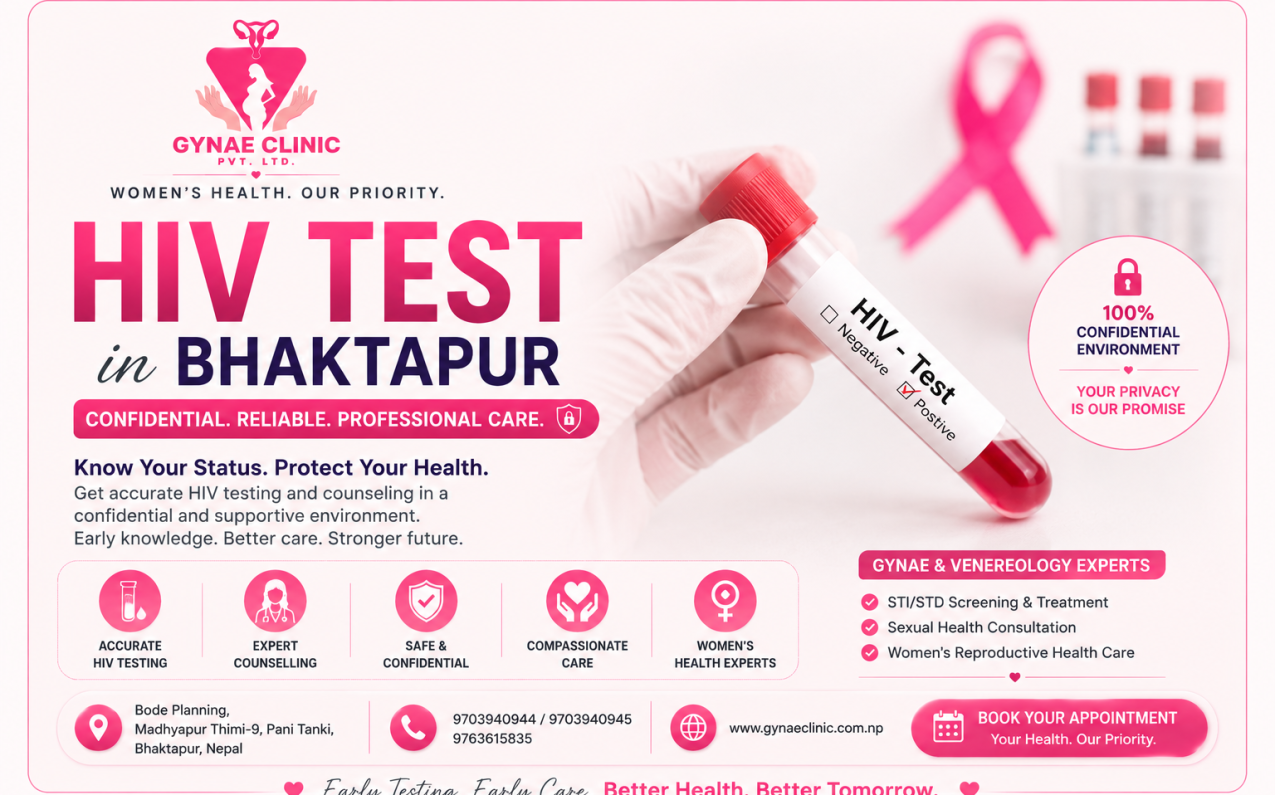
HIV testing is the only reliable way to know your HIV status. Many people may have no noticeable symptoms for a long time, so waiting for symptoms is not a dependable way to determine whether HIV infection is present.
If you are searching for HIV testing in Bhaktapur, an HIV test near me, confidential HIV testing, or professional sexual health consultation, Gynae Clinic Pvt. Ltd. provides HIV testing and women’s sexual health services in Bode Planning, Madhyapur Thimi-9, Pani Tanki, Bhaktapur, Nepal.
This guide explains what an HIV test is, who should consider testing, how HIV testing works, the HIV window period, what positive and negative results mean, and when to seek medical advice.
What Is an HIV Test?
An HIV test checks whether there is evidence of Human Immunodeficiency Virus (HIV) infection.
Modern HIV testing can use different types of tests, including antibody tests and tests that detect HIV antigen and/or viral genetic material. The appropriate test depends on factors such as the time since possible exposure, the testing method available, and clinical circumstances.
HIV testing is important because early diagnosis allows a person to access appropriate medical care and treatment. Knowing your status can also help with prevention and protecting sexual partners.
Why Should You Get an HIV Test?
People may consider HIV testing for different reasons.
You may want an HIV test if:
- You have had a possible sexual exposure
- A sexual partner has HIV or an unknown HIV status
- A condom broke or was not used during sex
- You are concerned about a previous sexual exposure
- You have been diagnosed with another sexually transmitted infection
- You are planning a pregnancy
- You are pregnant and require routine antenatal testing
- You have had exposure to potentially contaminated blood or needles
- You simply want to know your HIV status
You do not have to wait until you develop symptoms.
If you are worried about a recent exposure, speak with a healthcare professional as soon as possible. The timing of testing and whether additional testing is needed can depend on when the exposure occurred.
Can HIV Have Symptoms?
Yes, HIV can cause symptoms, but symptoms are not a reliable way to diagnose HIV.
Some people develop flu-like symptoms during early HIV infection, while others may have no noticeable symptoms. HIV can then remain without obvious symptoms for an extended period.
Possible symptoms can include:
- Fever
- Fatigue
- Sore throat
- Swollen lymph nodes
- Skin rash
- Headache
- Muscle aches
However, these symptoms can also occur with many other illnesses.
The only reliable way to know your HIV status is appropriate HIV testing.
HIV Testing in Bhaktapur
If you are looking for an HIV test in Bhaktapur, professional testing can provide a confidential way to understand your HIV status.
Depending on the test used, HIV testing may involve a blood sample or other approved specimen collection method.
Rapid HIV diagnostic tests can provide results quickly, including same-day results in appropriate settings. However, a reactive or positive screening result requires appropriate confirmatory testing before an HIV-positive diagnosis is established.
This distinction is important:
Screening result ≠ final HIV diagnosis.
A healthcare professional will explain what your result means and whether additional testing is necessary.
HIV Test Window Period: How Soon Can HIV Be Detected?
One of the most common questions after a possible exposure is:
“How many days after exposure should I take an HIV test?”
The answer depends on the type of HIV test.
Different tests detect different markers of HIV infection, and their ability to detect infection changes over time. WHO explains that the window period is the time after infection during which an HIV test may not yet detect the infection.
Antibody-based tests generally need time for the body’s immune response to develop. WHO notes that, in many cases, antibodies develop within around 28 days, although the exact detection period depends on the test and individual circumstances.
Therefore, a negative test performed very soon after a possible exposure may not completely rule out a recent infection.
Your healthcare professional can advise whether repeat testing is appropriate based on:
- Date of possible exposure
- Type of exposure
- Type of HIV test
- Previous test results
- Current medications such as PrEP or PEP
- Individual medical circumstances
What Does a Negative HIV Test Mean?
A negative HIV test generally means that HIV was not detected by the test at the time of testing.
However, interpretation depends on the timing of the test.
If testing occurred during the window period following a recent exposure, repeat testing may be recommended. WHO guidance notes that people with ongoing risk or certain recent exposures may require retesting depending on the circumstances.
If you recently had a possible exposure and your test is negative, ask a healthcare professional whether another test is appropriate.
What Does a Positive HIV Test Mean?
A reactive HIV screening test does not automatically mean that you have HIV.
WHO states that a full HIV-positive diagnosis requires appropriate confirmatory testing according to an approved testing strategy.
If an initial test is reactive:
- Do not panic.
- Speak with a qualified healthcare professional.
- Complete the recommended confirmatory testing.
- Follow the medical advice provided.
- If HIV is confirmed, appropriate HIV care and treatment should be started through the appropriate healthcare service.
Modern HIV treatment can substantially improve health outcomes, and early diagnosis helps people access care sooner.
Is HIV Testing Confidential?
Confidentiality is particularly important when discussing sexual health.
At Gynae Clinic Pvt. Ltd., HIV and sexual health concerns can be discussed in a professional, private and respectful environment.
If you are embarrassed or worried about discussing a possible exposure, remember that seeking medical advice is a responsible step toward protecting your health.
You can discuss:
- HIV testing
- Possible exposure
- STI concerns
- Sexual health
- Genital symptoms
- Pregnancy-related HIV testing
- Partner-related concerns
- Follow-up testing
without feeling judged.
HIV Testing and Other STI Tests
HIV is only one sexually transmitted infection.
Depending on your symptoms and medical history, your healthcare provider may also discuss evaluation for other infections, such as:
- Syphilis
- Gonorrhea
- Chlamydia
- Hepatitis B
- Hepatitis C
- HPV
- Genital herpes
WHO’s current HIV testing guidance also emphasizes integration of HIV testing with broader STI services where appropriate.
If you are concerned about a sexual exposure, ask your healthcare provider whether additional STI testing is appropriate.
HIV Test During Pregnancy
HIV testing is also an important part of pregnancy and antenatal healthcare.
Identifying HIV during pregnancy allows appropriate medical care and interventions to be considered to reduce the risk of transmission from mother to baby.
If you are pregnant or planning pregnancy and have concerns about HIV exposure, discuss testing with your gynecologist or antenatal care provider.
What Should You Do After a Possible HIV Exposure?
If you think you may have recently been exposed to HIV, do not wait for symptoms.
Contact a qualified healthcare professional promptly.
The appropriate response depends on:
- When the exposure occurred
- Type of exposure
- Whether the source is known to have HIV
- Whether prevention medication has already been taken
- Other individual risk factors
If the exposure was very recent, urgent medical assessment may be appropriate because post-exposure prophylaxis (PEP) is time-sensitive.
Do not delay professional medical advice while waiting for an HIV test result.
HIV Testing in Bhaktapur at Gynae Clinic
If you are searching for:
- HIV test in Bhaktapur
- HIV testing Bhaktapur
- HIV test near me
- Confidential HIV testing Bhaktapur
- HIV screening Bhaktapur
- HIV testing clinic Nepal
- HIV test for women
- STI testing Bhaktapur
- STD clinic Bhaktapur
- Sexual health clinic Bhaktapur
- Venereologist Bhaktapur
- Gynecologist Bhaktapur
you can contact Gynae Clinic Pvt. Ltd.
The clinic is listed locally as an HIV testing center in Madhyapur Thimi, Bhaktapur. Gynae Clinic Pvt. Ltd.
Gynae Clinic Pvt. Ltd.
Bode Planning, Madhyapur Thimi-9, Pani Tanki, Bhaktapur, Nepal
HIV Testing | STI/STD Care | Venereology | Gynecology | Women’s Sexual Health
Phone:
9703940944 / 9703940945 / 9763615835
Website:
www.gynaeclinic.com.np
BOOK YOUR APPOINTMENT
Confidential. Professional. Respectful Sexual & Women’s Healthcare.
Frequently Asked Questions About HIV Testing
How can I know if I have HIV?
The only reliable way to know your HIV status is to take an appropriate HIV test. Symptoms alone cannot confirm or rule out HIV.
Can I get an HIV test without symptoms?
Yes. HIV can be present without noticeable symptoms, so testing can be appropriate even when you feel completely healthy.
Is an HIV test painful?
Testing discomfort depends on the specimen collection method. A blood-based test may involve a brief needle prick or blood draw.
Can an HIV test be done soon after exposure?
Testing can be performed after an exposure, but the result must be interpreted according to the window period and type of test. Very early testing may not detect a recent infection.
Does a positive HIV screening test mean I definitely have HIV?
No. A reactive screening result requires appropriate confirmatory testing before an HIV-positive diagnosis is established.
Where can I get a confidential HIV test in Bhaktapur?
You can contact Gynae Clinic Pvt. Ltd. in Bode Planning, Madhyapur Thimi-9, Pani Tanki, Bhaktapur, for HIV testing and sexual health consultation.
Conclusion
Getting tested for HIV is an important step in taking control of your sexual and reproductive health. Because HIV can be present without obvious symptoms, testing is more reliable than waiting for symptoms.
If you have had a possible exposure, are concerned about your partner’s status, are planning pregnancy, or simply want to know your HIV status, professional testing and counselling can provide appropriate guidance.
For people searching for HIV testing in Bhaktapur, confidential HIV testing, STI testing, STD care, a venereologist or gynecologist in Bhaktapur, Gynae Clinic Pvt. Ltd. provides a professional and confidential environment for sexual and women’s healthcare.
Gynae Clinic Pvt. Ltd.
Bode Planning, Madhyapur Thimi-9, Pani Tanki, Bhaktapur, Nepal
HIV Testing | STI/STD Care | Venereology | Gynecology | Women’s Health
9703940944 / 9703940945 / 9763615835
BOOK YOUR APPOINTMENT
Author:
Gynae Clinic Pvt. Ltd.
Bode Planning, Madhyapur Thimi-9, Pani Tanki, Bhaktapur, Nepal