

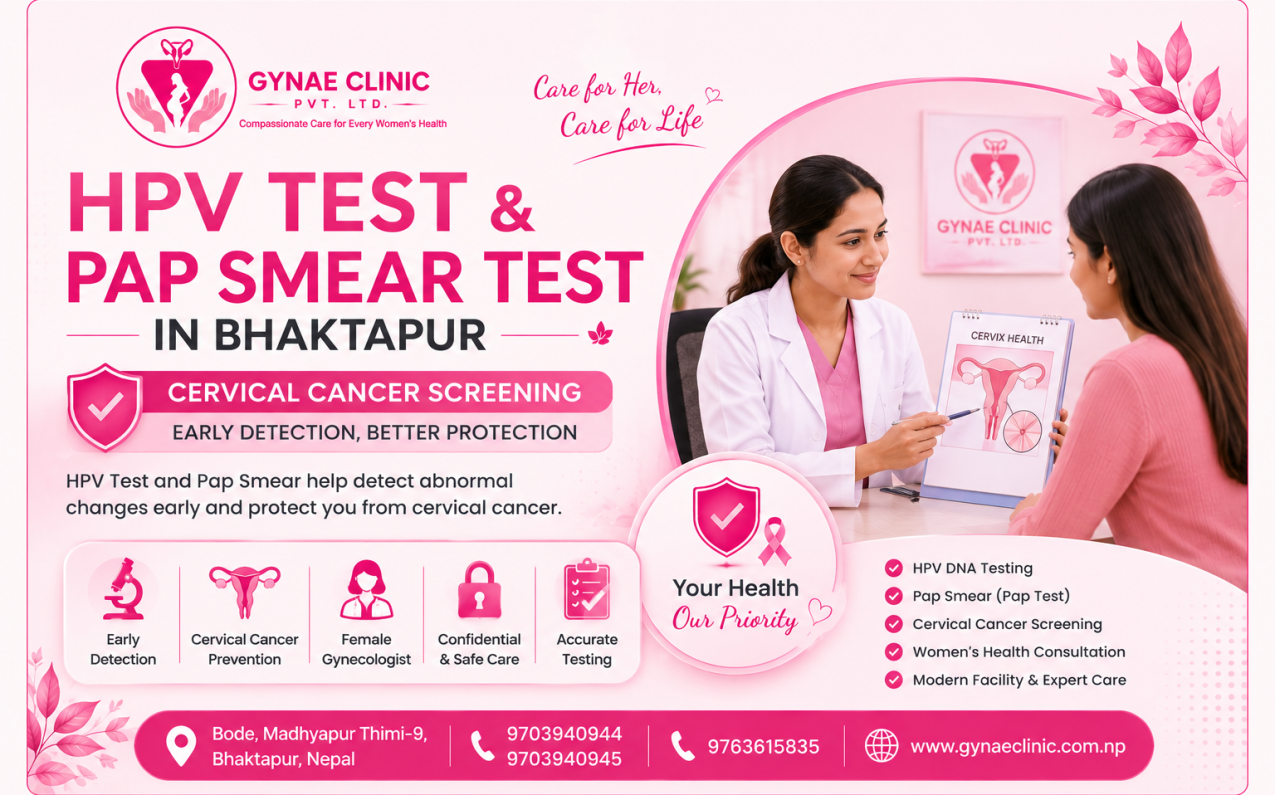
Cervical cancer is one of the most preventable cancers affecting women. Regular cervical screening can help detect abnormal changes early, often before they become serious.
Yet many women still have questions:
Do I need an HPV test?
What is a Pap smear?
Is a Pap test painful?
When should I get cervical cancer screening?
Where can I get an HPV test or Pap smear in Bhaktapur?
If you are looking for HPV test in Bhaktapur, Pap smear test in Bhaktapur, cervical cancer screening in Nepal, or a female gynecologist near you, this guide will help you understand the basics.
At Gynae Clinic Pvt. Ltd., Bode, Madhyapur Thimi-9, Bhaktapur, women can discuss cervical screening, HPV-related concerns and other gynecological health needs in a private and comfortable clinical environment.
What Is Cervical Cancer?
The cervix is the lower part of the uterus that connects to the vagina.
Cervical cancer develops when abnormal cells in the cervix grow and change over time. In most cases, persistent infection with certain high-risk types of Human Papillomavirus (HPV) is responsible.
The important thing to remember is that cervical cancer usually does not develop suddenly. Precancerous changes can occur before cancer develops, and these changes can often be detected through screening.
That is why regular cervical cancer screening is so important.
What Is HPV?
HPV stands for Human Papillomavirus.
HPV is a very common virus that can be transmitted through intimate or sexual contact. There are many different types of HPV.
Some types are considered low-risk, while certain high-risk HPV types can cause changes in cervical cells.
Having HPV does not mean that you have cervical cancer.
In many people, HPV infections clear naturally. The concern is when a high-risk HPV infection persists and causes changes in cervical cells over time.
What Is an HPV Test?
An HPV test checks for high-risk types of HPV that are associated with cervical cancer.
The test can help identify women who may have a higher risk of developing cervical abnormalities and may need further monitoring or evaluation.
An HPV test is different from a Pap smear.
The HPV test looks for the virus, while a Pap smear looks at cervical cells.
Depending on your age, previous results and individual circumstances, your gynecologist may recommend HPV testing, a Pap smear, or another appropriate screening approach.
What Is a Pap Smear Test?
A Pap smear, also known as a Pap test, is a screening test that examines cells collected from the cervix.
The purpose is to identify abnormal changes in cervical cells, including changes that may become precancerous.
Finding these changes early gives doctors an opportunity to monitor or treat them before they progress.
A Pap smear does not mean that cancer is suspected. It is primarily a screening and prevention tool.
HPV Test vs Pap Smear
Although both tests are used in cervical cancer prevention, they look for different things.
HPV Test
The HPV test looks for high-risk HPV infection.
Pap Smear
The Pap smear examines cervical cells for abnormal changes.
Depending on your circumstances, a doctor may recommend one test or a combination of tests.
The most suitable screening method and timing can depend on your age, previous screening results, medical history and the guidelines being followed.
Why Is Cervical Cancer Screening Important?
One of the biggest problems with cervical cancer is that early disease may not cause obvious symptoms.
A woman can feel completely healthy while abnormal cervical changes are developing.
Screening gives doctors an opportunity to identify these changes earlier.
This is why you should not wait until you experience symptoms before thinking about cervical screening.
Prevention and early detection are much better than waiting for a problem to become serious.
Who Should Have Cervical Cancer Screening?
Cervical screening recommendations are not exactly the same for every woman.
Your gynecologist may consider:
- Your age
- Previous Pap smear results
- Previous HPV results
- History of cervical abnormalities
- Previous treatment for cervical problems
- Immune system health
- Other medical conditions
- Pregnancy or other special circumstances
If you have never had cervical screening or are unsure whether you are due for a test, speaking with a gynecologist is a good place to start.
Is Cervical Cancer Preventable?
In many cases, cervical cancer can be prevented through a combination of:
HPV vaccination + regular screening + appropriate treatment of precancerous changes.
HPV vaccination can reduce the risk of infection with HPV types that cause cervical cancer.
However, vaccination does not mean that screening is no longer necessary.
Women should continue to follow appropriate cervical screening recommendations even after HPV vaccination.
HPV Vaccine and Cervical Cancer Prevention
The HPV vaccine is an important part of cervical cancer prevention.
It works best when given before exposure to HPV, which is why vaccination is commonly recommended during early adolescence.
In Nepal, HPV vaccination has also become an important part of national cervical cancer prevention efforts.
If you have questions about HPV vaccination for yourself or your daughter, a healthcare professional can explain whether vaccination is appropriate and which schedule applies.
What Happens During a Pap Smear?
Many women feel nervous before their first Pap smear because they do not know what to expect.
The procedure is usually straightforward.
First, the healthcare professional will explain the examination and answer your questions.
You will then be positioned comfortably for the examination. A speculum is gently used to allow the cervix to be seen.
A small sample of cervical cells is collected using an appropriate instrument.
The sample is then sent for laboratory examination.
The procedure generally takes only a few minutes.
Is a Pap Smear Painful?
Most women do not experience significant pain.
You may feel:
- Mild pressure
- Brief discomfort
- A sensation of examination
- Occasionally, mild spotting afterward
If you feel anxious or uncomfortable, let your healthcare professional know.
There is no need to feel embarrassed. Cervical screening is a routine part of women’s healthcare.
What Does a Positive HPV Test Mean?
A positive HPV test does not mean you have cervical cancer.
It means that a high-risk type of HPV has been detected.
Depending on your age, HPV type, previous results and other findings, your doctor may recommend follow-up testing or further examination.
The important thing is to follow the recommended follow-up rather than becoming frightened by the word “positive.”
What Does an Abnormal Pap Smear Mean?
An abnormal Pap smear does not automatically mean cancer.
It means that some cervical cells look different from normal.
Some abnormalities are minor and may resolve naturally. Others require closer monitoring or additional testing.
Depending on the result, your doctor may recommend:
- Repeat screening
- HPV testing
- Closer monitoring
- Colposcopy
- Further evaluation or treatment
Your doctor will explain what your particular result means and what should happen next.
Symptoms That Should Not Be Ignored
Early cervical cancer may have no symptoms.
However, possible warning signs can include:
- Bleeding after sexual intercourse
- Bleeding between periods
- Unusual vaginal discharge
- Pelvic pain
- Pain during sexual intercourse
- Unexplained bleeding after menopause
These symptoms do not necessarily mean cervical cancer. They can have many other causes.
However, unusual or unexplained symptoms should be checked by a gynecologist.
If you have significant pelvic pain, heavy bleeding, fever or rapidly worsening symptoms, seek medical care promptly.
Risk Factors for Cervical Cancer
Persistent high-risk HPV infection is the main cause of cervical cancer.
Other factors can increase risk, including:
- Smoking
- Weakened immunity
- HIV infection
- Lack of regular screening
- Persistent high-risk HPV infection
- Certain reproductive and sexual health factors
Regular screening remains important because risk cannot always be predicted from symptoms alone.
Cervical Cancer Screening in Nepal
Cervical cancer prevention is particularly important for women in Nepal.
Many women do not seek screening until they develop symptoms. Unfortunately, early cervical abnormalities may not cause any symptoms.
Making cervical screening part of routine women’s healthcare can help identify problems earlier.
If you have never had a Pap smear or HPV test, or you are unsure when your next screening is due, talk to a gynecologist about your individual situation.
HPV Test and Pap Smear in Bhaktapur
If you are searching online for:
HPV test in Bhaktapur
Pap smear test Bhaktapur
Cervical cancer screening in Nepal
Cervical cancer test near me
Female gynecologist in Bhaktapur
Women’s health clinic near me
a professional gynecology consultation can help you understand which screening option is appropriate for you.
Gynae Clinic Pvt. Ltd.
Bode, Madhyapur Thimi-9, Bhaktapur, Nepal
Gynae Clinic provides women’s health and gynecology consultation in a confidential and patient-focused environment.
Women can discuss cervical cancer screening, HPV-related concerns, menstrual problems, pregnancy care and other gynecological issues with a healthcare professional.
Why Choose Gynae Clinic?
Women’s health concerns can sometimes be difficult to discuss.
At Gynae Clinic, the focus is on providing a comfortable and respectful environment where women can openly discuss their health concerns.
Services and consultations include:
- Gynecology consultation
- Cervical cancer screening guidance
- HPV-related consultation
- Pap smear consultation
- Women’s reproductive health
- Menstrual health
- PCOS-related concerns
- Pregnancy care
- Ultrasound services
The goal is simple: help women understand their health and receive appropriate medical care at the right time.
When Should You Talk to a Gynecologist About Cervical Screening?
You should consider a consultation if:
- You have never had cervical screening
- You are unsure when your next screening is due
- You have previously had an abnormal Pap smear
- You have previously tested positive for HPV
- You have been advised to repeat a cervical test
- You have unexplained vaginal bleeding
- You have unusual or persistent vaginal discharge
- You have concerns about HPV
- You want advice about HPV vaccination
Don’t wait for symptoms to appear before thinking about preventive healthcare.
Frequently Asked Questions
Is a Pap smear necessary if I have no symptoms?
Yes, cervical screening is designed to detect abnormal changes before symptoms appear. Whether you need screening and how often depends on your age and individual circumstances.
Is an HPV test the same as a Pap smear?
No. An HPV test detects high-risk HPV, while a Pap smear examines cervical cells for abnormal changes.
Does a positive HPV test mean I have cancer?
No. HPV infection is common. A positive result means high-risk HPV was detected and appropriate follow-up may be required.
Is a Pap smear painful?
Most women experience only mild discomfort or pressure during the procedure.
Can HPV be prevented?
HPV vaccination can help prevent infection with HPV types responsible for many cervical cancers. Safe sexual health practices and regular screening also play important roles.
Can vaccinated women still need cervical screening?
Yes. HPV vaccination does not replace recommended cervical screening.
How often should I have a Pap smear?
The appropriate screening interval depends on factors such as your age, previous results, screening method and medical history. Your gynecologist can advise you based on your individual situation.
Where can I get cervical cancer screening consultation in Bhaktapur?
You can contact Gynae Clinic Pvt. Ltd., Bode, Madhyapur Thimi-9, Bhaktapur, for gynecology consultation and cervical cancer screening guidance.
Take Your Cervical Health Seriously
You do not need to wait until something feels wrong to take care of your health.
An HPV test or Pap smear may take only a short time, but regular cervical screening can play an important role in detecting cervical abnormalities early and preventing cervical cancer.
If you have been putting off your first screening, are unsure about your previous result, or simply want professional advice, consider speaking with a gynecologist.
Gynae Clinic Pvt. Ltd.
Bode, Madhyapur Thimi-9, Bhaktapur, Nepal
Women’s Health | Gynecology | Cervical Cancer Screening | Reproductive Health | Pregnancy Care
Contact Gynae Clinic to discuss your cervical screening needs and current test availability.
Author:Gynae Clinic Pvt. Ltd.