
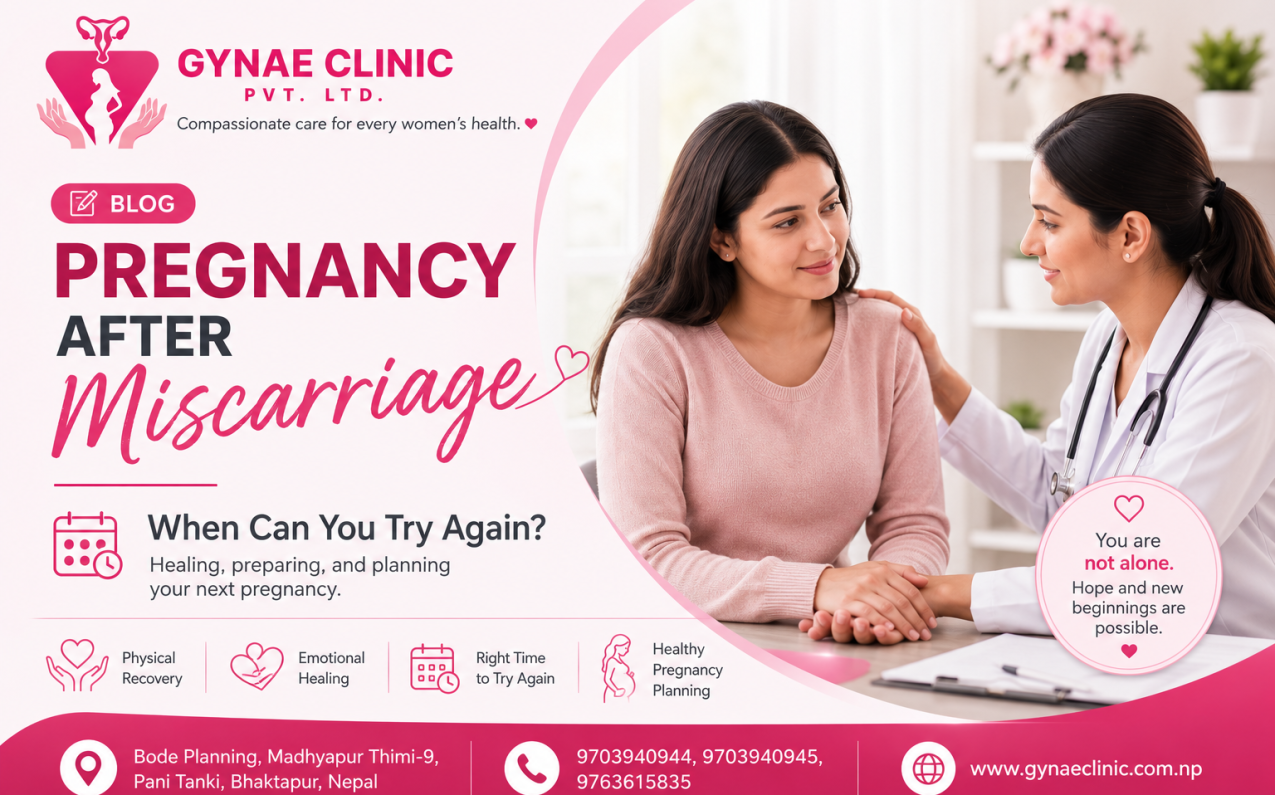
A miscarriage can be physically painful and emotionally overwhelming. After pregnancy loss, one of the most common questions is: “When can I try to get pregnant again?”
The answer is not exactly the same for every woman. After an uncomplicated early miscarriage, many women can try again once the miscarriage has completed, bleeding and significant symptoms have settled, and they feel physically and emotionally ready. Ovulation can return as early as about 2 weeks after an early miscarriage, meaning pregnancy can occur before the next menstrual period.
The right timing may be different after an ectopic pregnancy, molar pregnancy, later pregnancy loss, significant complications, or repeated miscarriages. In these situations, individualized medical advice is important.
Is It Safe to Get Pregnant Again After a Miscarriage?
For most women who have experienced an uncomplicated early miscarriage, a future healthy pregnancy is very possible.
The American College of Obstetricians and Gynecologists notes that most women who experience an early pregnancy loss go on to have successful pregnancies. The Royal College of Obstetricians and Gynaecologists similarly states that most early miscarriages are one-time events and that there is a good chance of a successful pregnancy in the future.
A miscarriage is also usually not caused by something the woman did. Early miscarriage commonly occurs because the pregnancy did not develop normally, often because of chromosome abnormalities that happen by chance.
This is important because many women experience guilt after pregnancy loss. In most cases, everyday activities, exercise, stress, arguments, or sex did not cause the miscarriage.
When Can You Try to Conceive After a Miscarriage?
There is no universal requirement for every woman to wait a fixed number of months after an uncomplicated early miscarriage.
Current guidance from ACOG and RCOG indicates that a woman may try again when she and her partner feel physically and emotionally ready, provided the miscarriage has been appropriately managed and there are no medical reasons to delay pregnancy.
Some clinicians may suggest waiting until after one normal menstrual period. This can make it easier to calculate the gestational age of a new pregnancy, but becoming pregnant before the first period does not automatically mean the pregnancy will be unsafe.
A simple way to think about it:
Physically ready:
Bleeding and significant symptoms have settled, the miscarriage is complete, and there are no signs of infection or other complications.
Emotionally ready:
You and your partner feel ready to consider another pregnancy, knowing that grief and anxiety can continue even when your body has recovered.
Medically ready:
A gynecologist has advised you if there were complications, repeated losses, an ectopic or molar pregnancy, or another condition that may affect when you should try again.
How Soon Can Ovulation Return?
Ovulation can return surprisingly quickly after a miscarriage.
ACOG states that pregnancy can occur as soon as 2 weeks after an early miscarriage. This means you can ovulate before your next period.
Your next period may take several weeks to return, and the first cycle may be different from your usual cycle. NHS guidance notes that a period can take up to around 8 weeks to return after miscarriage, although individual recovery varies.
If you do not want another pregnancy immediately, contraception is important because ovulation may happen before your first period.
Do You Have to Wait for One Period?
Not necessarily.
Some healthcare professionals recommend waiting for one normal menstrual period because it can make pregnancy dating easier. Other guidance states that there is generally no medical reason to delay trying after an uncomplicated early miscarriage once recovery is complete and you feel ready.
Therefore, the decision should be individualized rather than based on a rigid rule such as “you must wait three months.”
If your doctor has specifically advised you to wait because of your medical circumstances, follow that advice.
When Should You Wait Longer Before Trying Again?
The timing can be different when the pregnancy loss was not a straightforward early miscarriage.
You may need individualized medical advice if you experienced:
- Ectopic pregnancy
- Molar pregnancy
- Significant infection
- Heavy or prolonged bleeding
- Retained pregnancy tissue
- Surgical treatment with complications
- A later pregnancy loss
- Two or more miscarriages
- A known medical condition affecting pregnancy
- A condition requiring specific medication before conception
For example, after an ectopic pregnancy, the recommended waiting period can depend on how the ectopic pregnancy was treated. If methotrexate was used, a longer waiting period is generally advised because the medicine can affect a future pregnancy.
Do not apply advice for an uncomplicated early miscarriage to every type of pregnancy loss.
What Should You Do Before Trying Again?
A little preparation can help you enter your next pregnancy in the best possible health.
1. Have a Pre-Pregnancy Consultation
A pre-pregnancy consultation can be particularly helpful after miscarriage.
Your gynecologist can review:
- Your previous pregnancy
- How the miscarriage was managed
- Previous ultrasound findings
- Your menstrual cycle
- Current medicines
- Existing medical conditions
- Previous pregnancy complications
- Any concerns about fertility
- Whether additional testing is appropriate
Gynae Clinic Pvt. Ltd. provides pregnancy counselling, fertility evaluation, pregnancy care and ultrasound guidance in Bhaktapur.
2. Start Folic Acid
If you are planning another pregnancy, folic acid is an important part of preconception care.
ACOG and RCOG recommend 400 micrograms of folic acid daily for women planning pregnancy, unless a healthcare professional recommends a different dose for a particular medical reason.
Do not assume that a higher dose is automatically better. Your doctor can advise you if you need a different dose based on your individual health circumstances.
3. Review Your Medicines
Before trying again, tell your doctor about:
- Prescription medicines
- Over-the-counter medicines
- Vitamins
- Herbal products
- Supplements
Some medicines may need to be changed before pregnancy.
Do not stop an important prescribed medicine without discussing it with your healthcare professional.
4. Manage Existing Health Conditions
If you have a condition such as thyroid disease, diabetes, PCOS, hypertension, or another medical problem, appropriate control before conception can be important.
Your doctor may recommend specific tests or treatment depending on your medical history.
5. Avoid Smoking and Alcohol
If you are preparing for pregnancy, avoiding smoking and alcohol is an important part of preconception health. RCOG and ACOG include stopping smoking and avoiding alcohol among pregnancy-planning recommendations.
6. Look After Your Emotional Health
Physical recovery can happen faster than emotional recovery.
You may feel:
- Sadness
- Anxiety
- Fear about another pregnancy
- Guilt
- Anger
- Emotional numbness
- Hope mixed with fear
There is no correct timetable for grief.
ACOG emphasizes that emotional healing after pregnancy loss can take longer than physical recovery, and counseling or other support can be helpful when emotions become difficult to manage.
You do not have to rush into another pregnancy simply because your body is physically ready.
Does One Miscarriage Mean You Will Miscarry Again?
Usually, no.
Most women who experience one early miscarriage go on to have a successful pregnancy. RCOG states that women who have had one or two early miscarriages are not considered to have a higher risk of another miscarriage solely because of those losses.
This does not guarantee a particular outcome, but it is important to remember that one miscarriage does not mean you cannot have a healthy pregnancy.
What If You Have Had More Than One Miscarriage?
Repeated pregnancy loss deserves a more individualized evaluation.
ACOG defines recurrent pregnancy loss as two or more miscarriages and recommends a thorough evaluation after two losses. Testing may look at medical history, possible genetic causes, uterine factors, and other conditions depending on the individual situation.
If you have experienced repeated miscarriages, you do not necessarily need to give up hope. Even when testing does not identify a specific cause, many women go on to have successful pregnancies.
Gynae Clinic Pvt. Ltd. also provides information and consultation related to recurrent miscarriage, pregnancy planning and fertility evaluation in Bhaktapur.
What If You Become Pregnant Before Your First Period?
It is possible.
Because ovulation can occur before the first menstrual period after miscarriage, pregnancy can happen before your cycle returns to normal.
Becoming pregnant before the first period does not automatically mean something is wrong.
If you have a positive pregnancy test after a recent miscarriage, contact your gynecologist so your pregnancy can be assessed appropriately, particularly if you have pain, bleeding, or a history of ectopic pregnancy.
Early pregnancy assessment may include pregnancy testing, blood tests or ultrasound depending on your individual circumstances.
For women preparing for pregnancy in Bhaktapur, you can also read Gynae Clinic’s guide to pregnancy checkup and antenatal care, which explains the clinic’s pregnancy monitoring, ultrasound and laboratory services.
When Should You Seek Medical Care After a Miscarriage?
Contact a healthcare professional promptly if you experience:
- Heavy vaginal bleeding
- Severe abdominal or pelvic pain
- Fever or chills
- Foul-smelling vaginal discharge
- Severe weakness
- Dizziness or fainting
- Symptoms that are getting worse instead of improving
ACOG specifically advises contacting an obstetrician-gynecologist for heavy bleeding, fever, chills or severe pain after early pregnancy loss.
If you have severe symptoms, seek urgent medical attention rather than waiting for a routine appointment.
What If You Are Pregnant Again and Start Bleeding?
Bleeding in a new pregnancy does not always mean another miscarriage, but it should be assessed.
RCOG notes that many women who experience bleeding in early pregnancy go on to have a healthy baby, but bleeding and/or pain can also be associated with miscarriage or ectopic pregnancy.
If you become pregnant again and develop heavy bleeding, severe pain, one-sided pain, dizziness, fainting, or other concerning symptoms, seek prompt medical assessment.
Gynae Clinic’s guide on first pregnancy ultrasound explains how an early ultrasound may help assess pregnancy location and development when clinically appropriate.
Pregnancy After Miscarriage in Bhaktapur
If you are planning pregnancy after miscarriage and looking for pregnancy counselling, miscarriage evaluation, fertility consultation or pregnancy care in Bhaktapur, Gynae Clinic Pvt. Ltd. is located at:
Gynae Clinic Pvt. Ltd.
Bode Planning, Madhyapur Thimi-9, Pani Tanki, Bhaktapur, Nepal
The clinic serves women from Bode, Madhyapur Thimi, Kausaltar, Lokanthali, Jadibuti, Koteshwor, Balkumari, Gatthaghar, Radhe Radhe, Sallaghari, Sanothimi, Suryabinayak, Jagati, Banepa and Dhulikhel, as well as surrounding areas of Kathmandu Valley.
For women planning another pregnancy after miscarriage, an individualized consultation can help review the previous pregnancy, discuss physical recovery, address medical concerns and plan appropriate care for a future pregnancy.
Contact Gynae Clinic Pvt. Ltd.:
9703940944
9703940945
9763615835
Website: www.gynaeclinic.com.np
Frequently Asked Questions
How soon can I get pregnant after a miscarriage?
Ovulation can return as soon as about two weeks after an early miscarriage, so pregnancy is possible before the next period.
Should I wait three months after a miscarriage?
There is no universal requirement to wait three months after an uncomplicated early miscarriage. Current ACOG and RCOG guidance supports trying again when you are physically and emotionally ready, provided there are no medical reasons to delay.
Is it better to wait for one period?
Waiting for one period can make pregnancy dating easier, and some clinicians recommend it. However, pregnancy before the first period is possible and is not automatically unsafe after an uncomplicated early miscarriage.
Can I have a healthy pregnancy after a miscarriage?
Yes. Most women who experience an early miscarriage go on to have successful pregnancies.
When should I see a gynecologist before trying again?
A consultation is especially useful if you have had repeated miscarriages, an ectopic or molar pregnancy, significant complications, an existing medical condition, fertility concerns, or anxiety about planning another pregnancy.
Final Thoughts
Pregnancy after miscarriage can bring both hope and fear.
There is usually no need to follow a rigid waiting period after an uncomplicated early miscarriage. The more important questions are whether the miscarriage has completely resolved, whether you are physically well, whether you are emotionally ready, and whether there are any medical reasons for additional evaluation or a longer wait.
Take care of your body, start appropriate preconception care, take folic acid, review medicines and medical conditions, and seek individualized advice when needed.
Most importantly, remember that one miscarriage does not mean you cannot have a healthy pregnancy in the future.
Gynae Clinic Pvt. Ltd. — Compassionate care for every women’s health.
Medical Disclaimer
This article is for general educational purposes and does not replace an individual medical consultation, diagnosis, or treatment. The appropriate timing for another pregnancy depends on the type of pregnancy loss, physical recovery, emotional readiness, medical history and individual circumstances. Seek prompt medical attention for heavy bleeding, severe pain, fever, fainting, or other concerning symptoms. Certain complex conditions may benefit from advanced specialist care.
Author
Author: Gynae Clinic Pvt. Ltd. Medical Content Team