
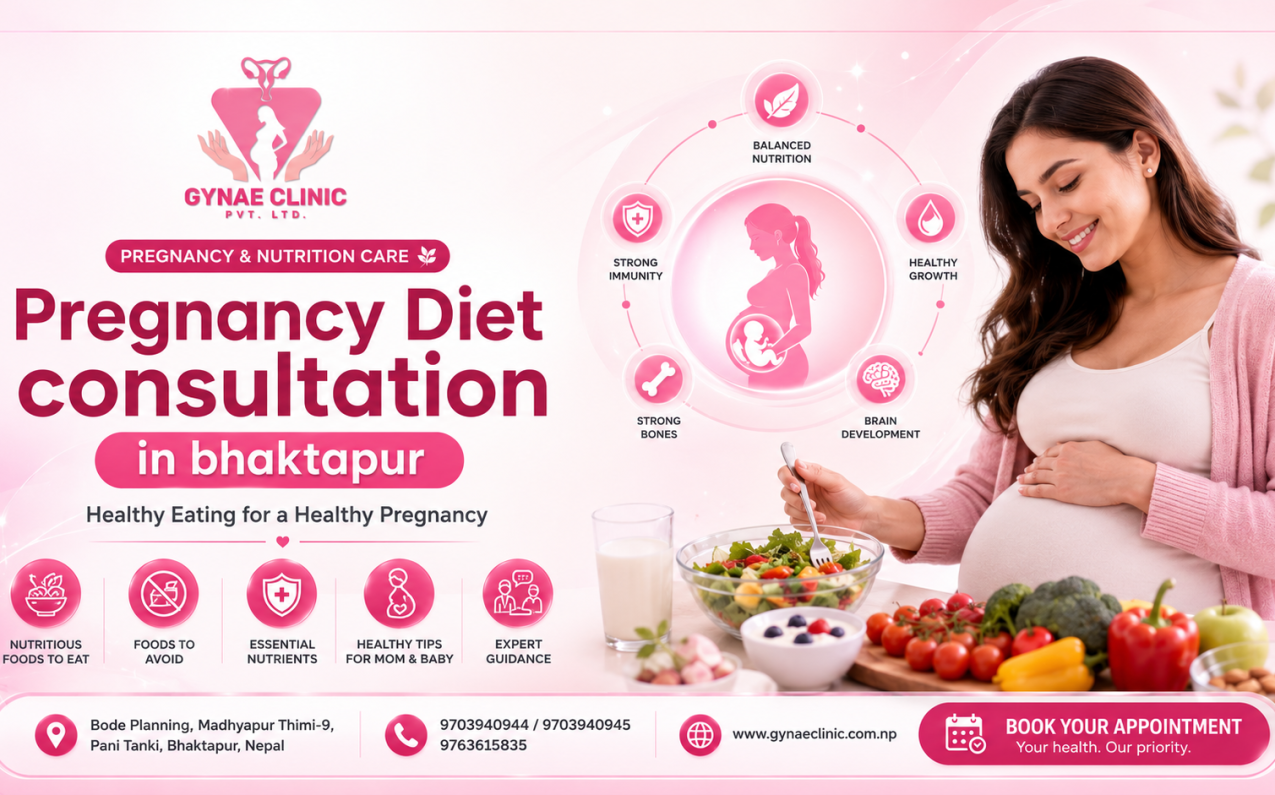
A healthy pregnancy diet provides the nutrients needed to support the mother’s health, the baby’s growth and development, and a healthy pregnancy. During pregnancy, your nutritional needs change, but eating well does not mean simply “eating for two.” The goal is to choose a varied, balanced diet with adequate protein, fruits, vegetables, whole grains, healthy fats and essential nutrients.
If you are searching for pregnancy diet advice in Nepal, foods to eat during pregnancy, foods to avoid during pregnancy, or a pregnancy clinic in Bhaktapur, this guide explains the basics of healthy pregnancy nutrition and when you should seek professional advice.
At Gynae Clinic Pvt. Ltd., Bode Planning, Madhyapur Thimi-9, Pani Tanki, Bhaktapur, women can receive pregnancy consultation, antenatal care, nutrition guidance, ultrasound services and comprehensive women’s healthcare.
Why Is a Healthy Pregnancy Diet Important?
Pregnancy places additional nutritional demands on the body. A balanced diet supports:
- Baby’s growth and development
- Development of the baby’s brain and organs
- Healthy blood production
- Maternal energy and wellbeing
- Bone development
- Normal immune function
- Healthy weight gain during pregnancy
- Overall maternal and fetal health
No single food provides every nutrient your body needs. The best healthy pregnancy diet includes a variety of foods from different food groups.
Your nutritional requirements can also vary depending on your age, stage of pregnancy, weight, medical history, activity level and whether you are carrying one baby or multiples.
What Should I Eat During Pregnancy?
A nutritious pregnancy diet should include a combination of fruits, vegetables, whole grains, protein-rich foods, dairy or suitable alternatives, and healthy fats.
1. Fruits During Pregnancy
Fruits provide vitamins, minerals, fiber and other beneficial nutrients.
Good choices include:
- Apples
- Bananas
- Oranges
- Guava
- Mangoes
- Berries
- Pears
- Pomegranate
- Melons
- Ripe papaya
Wash fresh fruits thoroughly before eating.
Can I eat papaya during pregnancy?
Ripe papaya can generally be included as part of a balanced diet. However, unripe or semi-ripe papaya contains higher amounts of latex, and many healthcare professionals recommend avoiding it during pregnancy.
If you are unsure about a particular food during pregnancy, discuss it with your gynecologist or healthcare provider.
2. Vegetables During Pregnancy
Vegetables are an important source of fiber, vitamins, minerals and antioxidants.
Include a variety of vegetables such as:
- Spinach and other leafy greens
- Broccoli
- Carrots
- Tomatoes
- Pumpkin
- Green beans
- Cauliflower
- Cucumber
- Bell peppers
- Sweet potatoes
Wash vegetables properly and prepare them safely.
Leafy green vegetables can be especially useful as part of a balanced diet because they provide nutrients such as folate and iron, although dietary sources alone may not provide all the nutrients needed during pregnancy.
3. Protein-Rich Foods
Protein supports the growth and development of the baby and helps maintain maternal tissues.
Healthy protein sources include:
- Lentils (dal)
- Beans
- Chickpeas
- Soy and soy-based foods
- Eggs
- Chicken
- Lean meat
- Fish that is low in mercury
- Milk
- Yogurt
- Nuts and seeds
Eggs, meat and poultry should be cooked thoroughly.
For vegetarian women, combining different plant-based protein sources can help provide a varied nutritional intake.
4. Fish During Pregnancy
Fish can provide protein and important nutrients, including omega-3 fatty acids.
Choose fish that is low in mercury and avoid fish known to contain high levels of mercury.
Fish should be:
- Fresh and properly stored
- Thoroughly cooked
- Prepared hygienically
Avoid raw or undercooked fish and seafood during pregnancy because of the risk of food-borne infections.
If you regularly eat locally caught fish, ask your healthcare provider about the safest choices available in your area.
5. Milk and Dairy Products
Milk, yogurt and other suitable dairy products can provide protein and calcium.
Good choices include:
- Milk
- Yogurt
- Pasteurized cheese
- Other pasteurized dairy products
Choose pasteurized dairy products during pregnancy.
Avoid unpasteurized milk and dairy products because they may carry harmful bacteria.
For women who cannot consume dairy, suitable fortified alternatives can be discussed with a healthcare professional.
6. Whole Grains
Whole grains provide carbohydrates, fiber and other nutrients.
Healthy choices may include:
- Oats
- Brown rice
- Whole-wheat roti
- Whole-grain bread
- Millet
- Barley
- Other minimally processed whole grains
For a Nepalese pregnancy diet, traditional foods such as dal, bhat, tarkari, roti, legumes, vegetables and yogurt can form part of a balanced meal when portions and preparation are appropriate.
7. Healthy Fats
Healthy fats are an important part of a balanced pregnancy diet.
Sources include:
- Walnuts
- Almonds
- Seeds
- Avocado
- Nut butters
- Appropriate vegetable oils
- Low-mercury oily fish
Fats are calorie-dense, so they are generally best consumed in appropriate portions.
Essential Nutrients During Pregnancy
Some nutrients become particularly important during pregnancy.
Folic Acid
Folic acid is important for early development of the baby’s neural tube.
Women planning pregnancy are commonly advised to take folic acid before conception and during early pregnancy, with the exact dose depending on individual circumstances.
Do not assume that food alone will provide enough folic acid. Follow your healthcare provider’s advice regarding supplementation.
Iron
Iron is needed to produce hemoglobin and support the increased blood supply during pregnancy.
Iron-rich foods include:
- Lentils
- Beans
- Green leafy vegetables
- Meat
- Eggs
- Fortified foods
Your healthcare provider may recommend an iron supplement, particularly if you have or are at risk of anemia.
Calcium
Calcium supports the development of the baby’s bones and teeth and also helps maintain maternal bone health.
Sources include:
- Milk
- Yogurt
- Pasteurized dairy products
- Calcium-fortified foods
- Some leafy vegetables
- Certain nuts and seeds
Vitamin D
Vitamin D contributes to bone health and calcium metabolism.
Your healthcare provider can advise whether dietary intake, sunlight exposure and/or supplementation are appropriate for you.
Iodine
Iodine is important for thyroid function and fetal development.
Pregnancy can increase iodine requirements, so discuss appropriate dietary intake and supplementation with your healthcare provider.
Protein
Protein is essential for fetal growth and maternal tissue development.
Include protein-rich foods regularly throughout the day rather than relying on one large meal.
Foods to Avoid or Limit During Pregnancy
Food safety is especially important during pregnancy because some infections and contaminants can cause serious complications.
Avoid Raw or Undercooked Meat
Avoid meat that is raw or not thoroughly cooked.
This includes:
- Undercooked chicken
- Undercooked meat
- Raw meat preparations
- Meat that remains pink or undercooked internally
Cook meat thoroughly and maintain good kitchen hygiene.
Avoid Raw or Undercooked Eggs
Raw or undercooked eggs can carry bacteria such as Salmonella.
Choose thoroughly cooked eggs and take care with foods containing raw egg.
Avoid Raw Seafood
Raw seafood can increase the risk of food-borne infections.
Avoid:
- Raw fish
- Raw shellfish
- Raw seafood dishes
Choose thoroughly cooked seafood from a safe source instead.
Avoid Unpasteurized Milk and Dairy Products
Unpasteurized products may carry harmful bacteria.
Choose pasteurized milk, yogurt and cheese during pregnancy.
Avoid High-Mercury Fish
Some fish contain high levels of mercury, which can affect fetal nervous system development.
Choose lower-mercury fish and follow local and professional dietary guidance regarding fish consumption.
Avoid Alcohol During Pregnancy
The safest approach during pregnancy is to avoid alcohol.
Alcohol can affect fetal development, and there is no established safe amount of alcohol during pregnancy.
Can I Drink Tea or Coffee During Pregnancy?
Caffeine intake should be limited during pregnancy.
Caffeine can be found in:
- Coffee
- Tea
- Energy drinks
- Cola and other caffeinated beverages
- Chocolate
- Some medicines
Many pregnancy guidelines recommend keeping total caffeine intake below 200 mg per day.
Because caffeine content varies considerably between drinks, ask your healthcare provider if you are unsure about your daily intake.
Energy drinks are generally best avoided during pregnancy unless specifically advised otherwise by your healthcare provider.
Healthy Eating Tips During Pregnancy
You do not need a complicated diet plan to eat well during pregnancy.
Try to:
Eat a Variety of Foods
Include different food groups rather than eating the same foods every day.
Eat Regular Meals
Regular balanced meals can help maintain energy and may be easier to tolerate when experiencing pregnancy-related nausea.
Stay Hydrated
Drink enough safe drinking water throughout the day. Your fluid requirements can increase during pregnancy.
Include Fruits and Vegetables Daily
Aim for a variety of colorful fruits and vegetables.
Choose Nutrient-Dense Foods
Prefer foods that provide useful nutrients rather than relying heavily on foods high in added sugar, salt or unhealthy fats.
Limit Highly Processed Foods
Occasional processed foods can fit into a balanced diet, but they should not replace nutritious meals.
Follow Your Doctor’s Advice
If you have gestational diabetes, anemia, high blood pressure, thyroid disease or another medical condition, your diet may need to be modified.
Pregnancy Diet in Nepal: A Simple Balanced Meal Pattern
A healthy pregnancy diet does not need to be expensive or complicated.
A traditional Nepalese meal can be made more balanced by combining different food groups.
Example Breakfast
- Oats or whole-grain roti
- Milk or yogurt
- Egg or another protein source
- One serving of fruit
Example Lunch
- Dal
- Rice or whole-grain roti
- Seasonal vegetables
- Green leafy vegetables
- Yogurt or another suitable protein/calcium source
Example Snack
- Fresh fruit
- Nuts or seeds
- Yogurt
- Roasted chickpeas or another nutritious option
Example Dinner
- Dal or another protein source
- Rice or roti
- Cooked vegetables
- Salad prepared hygienically
- Yogurt if suitable
These are general examples, not a personalized pregnancy diet plan. Your nutritional requirements may be different depending on your pregnancy and health condition.
What About Pregnancy Cravings?
Food cravings are common during pregnancy.
You may crave:
- Sweet foods
- Sour foods
- Salty foods
- Certain fruits
- Traditional or familiar foods
Occasional cravings can usually be incorporated into a balanced diet. However, cravings for non-food substances such as soil, clay, chalk or ice should be discussed with a healthcare professional because they may be associated with nutritional deficiencies such as iron deficiency.
What If I Have Morning Sickness?
Nausea and vomiting are common during pregnancy, particularly during early pregnancy.
Some women find it easier to:
- Eat smaller meals more frequently
- Avoid foods or smells that trigger nausea
- Choose simple foods that are easier to tolerate
- Drink fluids regularly
- Avoid becoming excessively hungry
If vomiting is severe or you cannot keep food and fluids down, seek medical advice.
Severe pregnancy vomiting can lead to dehydration, nutritional deficiencies and weight loss and may require medical treatment.
Pregnancy Nutrition and Gestational Diabetes
Some women develop gestational diabetes during pregnancy.
If you have gestational diabetes, your healthcare provider may recommend an individualized eating plan focusing on:
- Appropriate carbohydrate portions
- High-fiber foods
- Adequate protein
- Vegetables
- Healthy fats
- Regular meal timing
- Appropriate pregnancy weight gain
Do not follow an extreme weight-loss diet during pregnancy.
If you have been diagnosed with gestational diabetes, follow the dietary and medical plan provided by your healthcare team.
Pregnancy Diet and Anemia
Anemia is relatively common during pregnancy and can cause symptoms such as:
- Tiredness
- Weakness
- Dizziness
- Shortness of breath
- Reduced energy
Iron-rich foods can be part of a healthy pregnancy diet, but diet alone may not correct significant anemia.
Your healthcare provider may recommend blood testing and iron supplementation when appropriate.
When Should You Seek Pregnancy Nutrition Advice?
Speak with your gynecologist or healthcare provider if you:
- Cannot eat because of severe nausea or vomiting
- Are losing weight during pregnancy
- Have persistent vomiting
- Have been diagnosed with anemia
- Have gestational diabetes
- Have high blood pressure
- Have thyroid disease
- Follow a vegetarian or vegan diet and need help meeting nutritional requirements
- Have concerns about supplements
- Are unsure which foods are safe during pregnancy
- Have difficulty maintaining a balanced diet
Pregnancy nutrition should be individualized when medical conditions or nutritional deficiencies are present.
Pregnancy Care and Nutrition Guidance in Bhaktapur
If you are searching for pregnancy diet advice in Bhaktapur, pregnancy nutrition in Nepal, pregnancy clinic in Bhaktapur, or a female gynecologist in Bhaktapur, professional pregnancy care can help you make informed decisions throughout pregnancy.
Gynae Clinic Pvt. Ltd.
Address:
Bode Planning, Madhyapur Thimi-9, Pani Tanki, Bhaktapur, Nepal
Contact:
9703940944 / 9703940945 / 9763615835
Website:
www.gynaeclinic.com.np
Pregnancy & Women’s Healthcare Services
- Pregnancy consultation
- Antenatal care
- Pregnancy nutrition guidance
- Ultrasound guidance
- Pregnancy monitoring
- Women’s reproductive healthcare
- Gynecological consultation
- Pregnancy-related health advice
Regular antenatal care is important even when you are feeling well. Your healthcare provider can monitor your health, the baby’s development and any pregnancy-related concerns.
Frequently Asked Questions About Pregnancy Diet
What is the best food for pregnant women?
There is no single “best food” for pregnancy. A healthy pregnancy diet includes a variety of fruits, vegetables, whole grains, protein-rich foods, dairy or suitable alternatives, healthy fats and adequate fluids.
What should I eat during pregnancy?
Choose a variety of nutrient-rich foods such as fruits, vegetables, dal, beans, eggs, well-cooked meat, low-mercury fish, milk, yogurt, whole grains, nuts and seeds.
Which foods should I avoid during pregnancy?
Avoid alcohol, raw or undercooked meat, raw seafood, raw or undercooked eggs, unpasteurized dairy products and high-mercury fish. Good food hygiene is also important.
Can I eat papaya during pregnancy?
Ripe papaya can generally be eaten as part of a balanced diet. However, unripe or semi-ripe papaya is commonly advised against during pregnancy because of its higher latex content. If you have specific concerns, consult your healthcare provider.
Can pregnant women drink coffee?
Caffeine should be limited during pregnancy. A commonly recommended limit is less than 200 mg of caffeine per day. Remember to consider caffeine from coffee, tea, energy drinks, cola, chocolate and some medications.
Do I need to eat for two during pregnancy?
No. Pregnancy increases nutritional requirements, but it does not mean doubling your food intake. Focus on nutritious, balanced meals and follow your healthcare provider’s advice regarding appropriate pregnancy weight gain.
Should I take pregnancy vitamins?
Some supplements, including folic acid and iron, may be recommended during pregnancy or before conception. The supplements and doses you need depend on your individual health and pregnancy. Take supplements according to your healthcare provider’s recommendation.
What if I have diabetes during pregnancy?
If you have gestational diabetes, you may need an individualized meal plan and regular monitoring. Your gynecologist or healthcare team can guide you regarding meals, carbohydrate intake, activity and treatment.
Where can I get pregnancy nutrition advice in Bhaktapur?
For pregnancy consultation, antenatal care and nutrition guidance, you can visit Gynae Clinic Pvt. Ltd., Bode Planning, Madhyapur Thimi-9, Pani Tanki, Bhaktapur, Nepal.
Conclusion
A healthy pregnancy diet is about eating a variety of nutritious foods, maintaining good food safety practices, staying hydrated and following personalized medical advice.
Include vegetables, fruits, whole grains, protein-rich foods, healthy fats and appropriate dairy or alternatives. Avoid alcohol and foods that carry a higher risk of infection or excessive mercury exposure. Nutritional supplements should be taken according to your healthcare provider’s advice.
Every pregnancy is different. If you have severe nausea and vomiting, anemia, gestational diabetes, high blood pressure, thyroid problems, food restrictions or concerns about your nutrition, professional guidance can help you maintain a healthier pregnancy.
If you are looking for pregnancy nutrition in Nepal, pregnancy diet advice in Bhaktapur, foods to eat during pregnancy, or a female gynecologist in Bhaktapur, contact:
Gynae Clinic Pvt. Ltd.
Bode Planning, Madhyapur Thimi-9, Pani Tanki, Bhaktapur, Nepal
Call: 9703940944 / 9703940945 / 9763615835
Website: www.gynaeclinic.com.np
Women’s Health | Pregnancy Care | Antenatal Care | Nutrition | Gynecology Services