
When is the best time to get pregnant? How can you identify ovulation? How many fertile days are there in a menstrual cycle?
These are common questions for couples who are trying to conceive.
Understanding ovulation and the fertile window can help you plan intercourse around the days when pregnancy is most likely. However, fertility depends on several factors, including ovulation, age, sperm health, reproductive health, menstrual cycle patterns, and overall health.
If you are searching for the best time to get pregnant, an ovulation calculator in Nepal, fertility clinic in Bhaktapur, or pregnancy planning in Bhaktapur, this guide explains how ovulation works, how to identify fertile days, and when to seek fertility advice.
Gynae Clinic Pvt. Ltd.
Bode Planning, Madhyapur Thimi-9, Bhaktapur, Nepal
Gynae Clinic provides fertility counselling, gynecology consultation, ultrasound guidance, hormone evaluation, PCOS management, and women’s reproductive healthcare.
What Is Ovulation?
Ovulation is the process in which an ovary releases an egg.
The egg can be fertilized when healthy sperm are present around the time of ovulation. Because sperm can survive in the female reproductive tract for several days, pregnancy can occur when intercourse happens before ovulation as well as around ovulation.
Ovulation does not necessarily occur on the same calendar day for every woman. It can also vary from cycle to cycle, particularly when periods are irregular.
What Is the Fertile Window?
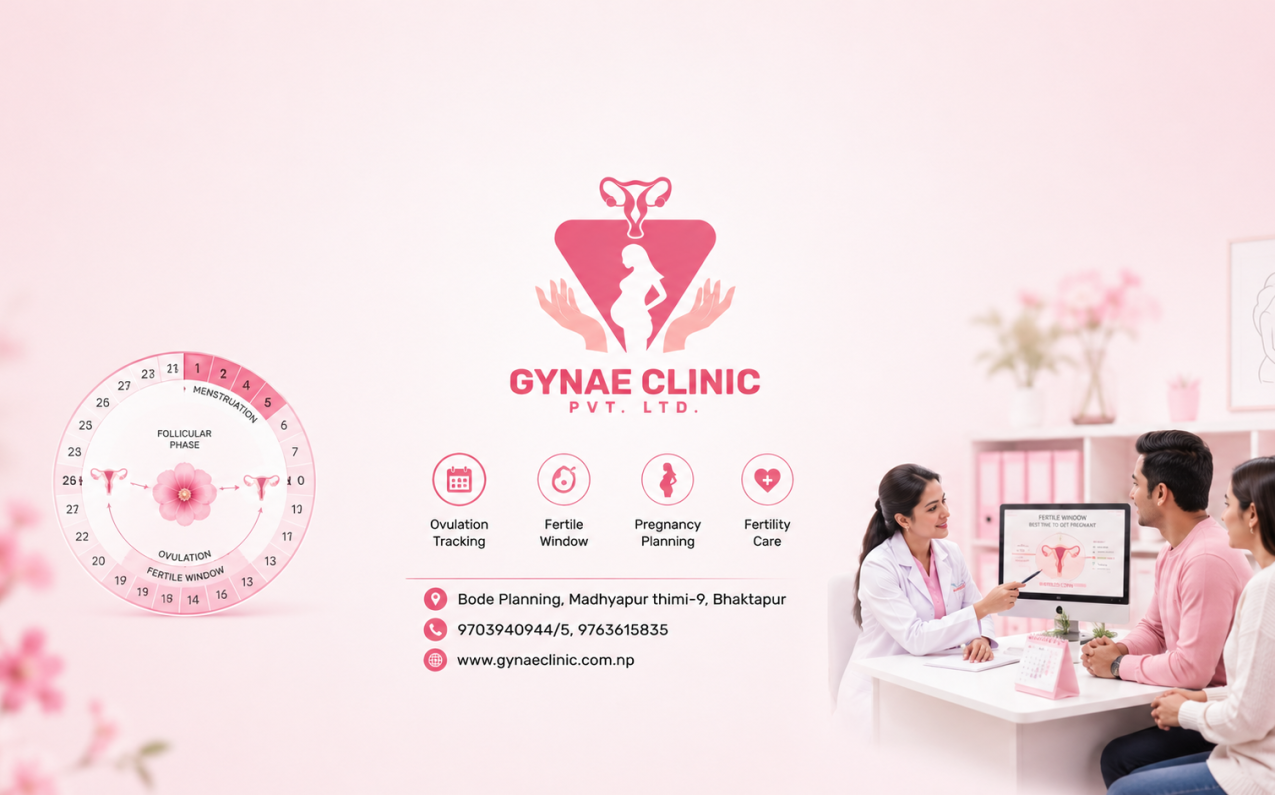
The fertile window is the period during the menstrual cycle when pregnancy is most likely to occur.
The fertile window is generally considered to include approximately:
- The five days before ovulation
- The day of ovulation
The chance of conception is generally highest when intercourse occurs in the days immediately before ovulation and around ovulation.
The exact fertile days can vary because ovulation timing is not identical in every woman or every menstrual cycle.
What Is the Best Time to Get Pregnant?
For couples trying to conceive, having regular intercourse during the fertile window is one practical way to maximize the opportunity for pregnancy.
If you can identify when ovulation is approaching, consider having intercourse:
Every 1–2 days during the fertile window.
You do not necessarily need to identify one exact “best day.” Because ovulation can shift, having intercourse across several fertile days can provide better coverage of the fertile window.
For women with regular cycles, menstrual tracking and ovulation prediction methods can help estimate this period.
How to Calculate Your Fertile Days
A menstrual calendar can provide an estimate of when ovulation may occur.
Step 1: Identify the First Day of Your Period
The first day of proper menstrual bleeding is considered Day 1 of the menstrual cycle.
Step 2: Track Your Cycle Length
Record the number of days from the first day of one period to the first day of the next period.
For example, if your cycles are usually around 28 days, ovulation may occur around the middle of the cycle.
However, this is only an estimate.
Step 3: Consider Ovulation Timing
Ovulation often occurs approximately 12–14 days before the next menstrual period, rather than necessarily occurring on Day 14 for every woman.
Therefore, a woman with a shorter or longer cycle may ovulate on a different day.
Step 4: Track Additional Ovulation Signs
Combining cycle tracking with cervical mucus changes or ovulation predictor kits may provide a better indication of the fertile period.
Ovulation Calculator: What You Should Know
An ovulation calculator can provide an estimated fertile window based on your menstrual cycle information.
However, a calculator cannot guarantee the exact day of ovulation.
This is especially important for women who have:
- Irregular periods
- PCOS
- Recent changes in menstrual cycles
- Thyroid problems
- Postpartum hormonal changes
- Significant stress or changes in body weight
If your cycles are irregular, a gynecologist may recommend additional methods such as hormone testing or ultrasound monitoring to assess ovulation.
Common Signs of Ovulation
Some women notice physical changes when ovulation is approaching.
Possible ovulation symptoms include:
1. Clear, Stretchy Cervical Mucus
Vaginal or cervical mucus may become clearer, wetter, and more stretchy around the fertile period.
This can be one useful natural sign that ovulation is approaching.
2. Mild Lower Abdominal Discomfort
Some women experience mild pelvic or lower abdominal discomfort around ovulation.
This is sometimes called ovulation pain.
3. Increased Sexual Desire
Some women notice an increase in sexual desire around the fertile period.
4. Basal Body Temperature Change
Basal body temperature may rise slightly after ovulation due to hormonal changes.
Tracking temperature over several cycles may help identify an ovulation pattern, although it generally confirms that ovulation has already occurred rather than predicting it in advance.
5. Positive Ovulation Predictor Kit
Ovulation predictor kits detect a rise in luteinizing hormone (LH), which usually occurs shortly before ovulation.
Not every woman experiences noticeable ovulation symptoms.
How Can You Track Ovulation?
There are several ways to monitor your fertile period.
Menstrual Calendar
Recording your menstrual cycle can help estimate when ovulation may occur.
Calendar tracking works best when cycles are relatively predictable.
Ovulation Predictor Kits
Ovulation predictor kits use urine to detect hormonal changes associated with approaching ovulation.
A positive result can indicate that ovulation may occur soon, although it does not guarantee that ovulation will definitely occur.
Cervical Mucus Tracking
Changes in cervical mucus can provide a natural indication that the fertile period is approaching.
Basal Body Temperature
Measuring your temperature every morning before getting out of bed can help identify patterns associated with ovulation.
Ultrasound Ovulation Monitoring
When more precise assessment is needed, a gynecologist may recommend ultrasound monitoring of the ovaries and follicles.
This may be particularly useful for women with irregular cycles, fertility concerns, or those undergoing fertility evaluation or treatment.
Can You Get Pregnant Immediately After Your Period?
Yes, pregnancy can be possible soon after a period, depending on the length and timing of your menstrual cycle.
Women with shorter cycles may ovulate relatively soon after menstruation ends.
Because sperm can survive for several days, intercourse shortly after a period may still result in pregnancy if ovulation occurs soon afterward.
Therefore, counting days alone is not always reliable for predicting fertility.
What If Your Periods Are Irregular?
Irregular periods can make it more difficult to predict ovulation.
Irregular cycles may be associated with conditions such as:
- PCOS
- Thyroid disorders
- Hormonal imbalance
- Changes in body weight
- Stress
- Certain reproductive health conditions
If your periods are frequently irregular, very infrequent, or absent, it may be helpful to consult a gynecologist rather than relying only on an ovulation calculator.
A doctor may recommend appropriate evaluation, which can include hormone testing and ultrasound when clinically indicated.
Factors That Can Affect Fertility
Timing intercourse around ovulation can improve the opportunity for conception, but pregnancy depends on more than timing alone.
Factors that can affect fertility include:
- Age
- Irregular or absent ovulation
- PCOS
- Endometriosis
- Thyroid disorders
- Problems involving the fallopian tubes
- Uterine conditions
- Previous pelvic infections
- Sperm count and sperm quality
- Lifestyle factors
- Certain medical conditions
Because fertility involves both partners, fertility evaluation may consider both the female and male reproductive factors.
Tips for Pregnancy Planning
If you are trying to conceive, consider the following general health measures:
Maintain a Healthy Lifestyle
A balanced diet, regular physical activity, adequate sleep, and a healthy weight can support overall reproductive health.
Have Regular Intercourse During the Fertile Window
Intercourse every 1–2 days during the fertile period can help maximize the chance of conception.
Avoid Smoking
Smoking can negatively affect reproductive health in both women and men.
Avoid Excessive Alcohol
Reducing or avoiding alcohol is advisable when planning pregnancy.
Take Folic Acid
Women planning pregnancy are generally advised to take folic acid before conception. Discuss the appropriate dose with a healthcare professional.
Review Your Medicines
If you regularly take medicines or have an existing health condition, discuss pregnancy planning with your doctor before conception.
Manage Existing Health Conditions
Conditions such as diabetes, thyroid disorders, PCOS, and other medical problems may require appropriate management before and during pregnancy.
When Should You Seek Fertility Advice?
Many couples conceive naturally within the first year of regular unprotected intercourse.
Consider consulting a gynecologist if:
- You are under 35 and have been trying to conceive for 12 months without pregnancy.
- You are 35 or older and have been trying for 6 months without pregnancy.
- Your periods are irregular or absent.
- You have known PCOS or endometriosis.
- You have severe pelvic pain.
- You have previously had pelvic infections or reproductive problems.
- You have concerns about fertility.
- Your partner has known or suspected fertility problems.
Earlier evaluation may be appropriate in some situations based on medical history.
Pregnancy Planning in Bhaktapur
If you are searching for pregnancy planning in Bhaktapur, fertility counselling, ovulation advice, or a female gynecologist in Bhaktapur, professional guidance can help you understand your menstrual cycle and reproductive health.
Gynae Clinic Pvt. Ltd.
Address:
Bode Planning, Madhyapur Thimi-9, Bhaktapur, Nepal
Contact:
9703940944 / 9703940945
9763615835
Website:
www.gynaeclinic.com.np
Our reproductive healthcare services include:
- Fertility consultation
- Pregnancy planning
- Ovulation assessment
- Hormone evaluation
- Ultrasound guidance
- PCOS management
- Menstrual cycle evaluation
- Women’s reproductive healthcare
If you are having difficulty identifying your fertile days or are concerned about delayed conception, a gynecological evaluation can help determine the appropriate next steps.
Frequently Asked Questions About Getting Pregnant
What is the best time to get pregnant?
The best time is during the fertile window, particularly the days immediately before ovulation and around the day of ovulation.
Because the exact day of ovulation can vary, having intercourse every 1–2 days during the fertile window is a practical approach.
How many days are women fertile?
The fertile window is generally about six days, consisting of the five days before ovulation and the day of ovulation.
The exact timing varies between women and between cycles.
Can I get pregnant before ovulation?
Yes.
Sperm can survive for several days in the female reproductive tract, so intercourse in the days before ovulation can result in pregnancy.
Can I get pregnant on the day of ovulation?
Yes. The day of ovulation is within the fertile window, and conception can occur when sperm and egg meet at the appropriate time.
Can I get pregnant after ovulation?
The chance of conception decreases significantly after ovulation because the egg has a short lifespan after being released.
However, because ovulation timing can be difficult to identify precisely, relying on a calendar alone may not accurately determine your fertile days.
Is Day 14 always the day of ovulation?
No.
Day 14 is often used as an example for a 28-day cycle, but ovulation does not occur on exactly the same day in every woman.
Ovulation timing depends on individual cycle length and can change from cycle to cycle.
What is the best way to know when I am ovulating?
Tracking your menstrual cycle, observing cervical mucus, using ovulation predictor kits, and monitoring basal body temperature can provide useful information.
If you need more precise evaluation, a gynecologist may recommend hormone testing or ultrasound monitoring.
What if I have irregular periods and want to get pregnant?
Irregular periods can make ovulation difficult to predict.
A gynecologist can evaluate possible causes and may recommend appropriate testing or ovulation monitoring.
How long should I try before seeing a fertility doctor?
Generally, women under 35 are advised to seek evaluation after 12 months of trying without pregnancy, while women aged 35 or older are generally advised to seek evaluation after 6 months.
Earlier evaluation may be appropriate when there are irregular periods, known reproductive conditions, or other fertility concerns.
Where can I get fertility advice in Bhaktapur?
For fertility counselling, pregnancy planning, ovulation assessment, and women’s reproductive healthcare, you can visit:
Gynae Clinic Pvt. Ltd.
Bode Planning, Madhyapur Thimi-9, Bhaktapur, Nepal
Conclusion
Understanding ovulation and the fertile window can make pregnancy planning more informed and practical.
For couples trying to conceive, the days leading up to ovulation and the day of ovulation are generally the most fertile part of the menstrual cycle. Tracking menstrual cycles, observing cervical mucus, using ovulation predictor kits, and, when appropriate, medical ultrasound monitoring can help identify ovulation patterns.
However, getting pregnant depends on many factors beyond timing.
If you have irregular periods, difficulty identifying ovulation, PCOS, pelvic pain, or delayed conception, professional fertility advice can help identify possible causes and guide the next steps.
If you are searching for the best time to get pregnant, ovulation advice, fertility clinic in Bhaktapur, pregnancy planning in Bhaktapur, or a female gynecologist in Bhaktapur, contact:
Gynae Clinic Pvt. Ltd.
Bode Planning, Madhyapur Thimi-9, Bhaktapur, Nepal
Contact: 9703940944 / 9703940945 / 9763615835
Website: www.gynaeclinic.com.np
Women’s Health | Fertility Care | Pregnancy Planning | Gynecology Services
Author:
Gynae Clinic Pvt. Ltd.
Bode Planning, Madhyapur Thimi-9, Bhaktapur, Nepal