


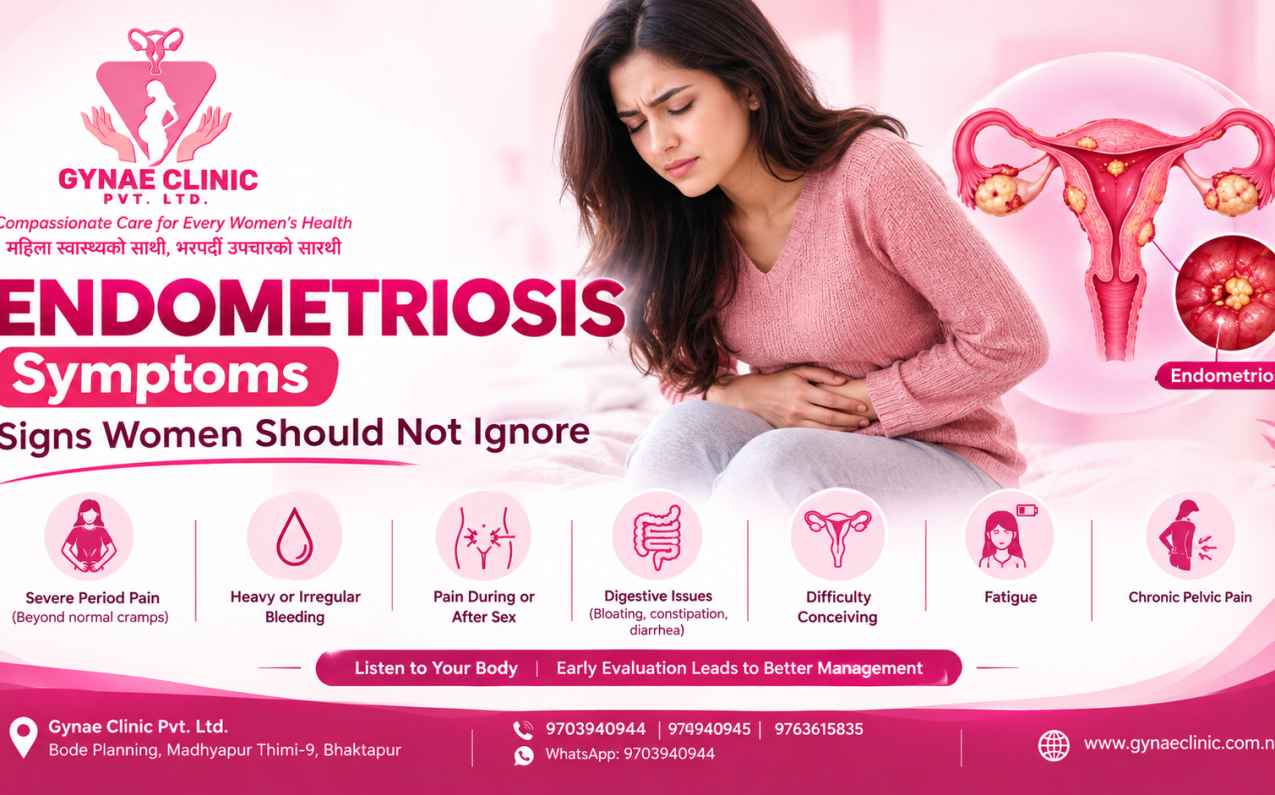
Severe period pain is not something you always have to “just live with.” Endometriosis can cause significant menstrual pain, pelvic pain, heavy bleeding, pain during sex, bowel or urinary symptoms, fatigue, and difficulty becoming pregnant. Because these symptoms can overlap with other gynecological conditions, persistent or worsening symptoms deserve proper evaluation.


4
What Is Endometriosis?
Endometriosis is a chronic condition in which tissue similar to the lining of the uterus grows outside the uterus, commonly around the ovaries, fallopian tubes and pelvic lining. It can cause inflammation and scar tissue and may affect the bowel, bladder and other areas in some women.
Endometriosis affects an estimated 10% of women of reproductive age worldwide, making awareness of its symptoms important.
Endometriosis Symptoms Women Should Not Ignore
Symptoms can vary greatly. Some women have severe symptoms, while others may have few or no obvious symptoms.
1. Severe Period Pain
One of the most recognized symptoms is painful menstruation that is more severe than ordinary menstrual cramps.
You should consider a gynecological evaluation if period pain:
- Makes it difficult to attend school or work
- Prevents you from doing normal activities
- Requires repeated pain medication
- Has become worse over time
- Continues for several days
- Is associated with pelvic or lower-back pain
Severe or worsening period pain should not automatically be dismissed as “normal periods.”
2. Chronic Pelvic Pain
Endometriosis can cause pelvic pain that occurs during or outside the menstrual period.
You may experience:
- Lower abdominal pain
- Deep pelvic pain
- Lower-back pain
- Aching or cramping
- Pain that comes and goes
- Persistent pelvic discomfort
Persistent pelvic pain has many possible causes, so it should not be self-diagnosed as endometriosis.
For more information, you can read our guide on pelvic pain in women.
3. Heavy or Unusually Painful Periods
Some women with endometriosis experience heavy menstrual bleeding.
Pay attention if your periods have become:
- Much heavier than before
- More painful than usual
- Difficult to manage
- Associated with significant fatigue
- Disruptive to daily life
Heavy or painful periods can have several causes, including endometriosis, adenomyosis and fibroids, so appropriate evaluation is important.
4. Pain During or After Sex
Pain during sexual intercourse, particularly deep pelvic pain, can occur with endometriosis.
Do not assume that repeated painful sex is something you simply have to tolerate.
Pain during or after sex can also have other causes, including infections, vaginal dryness, pelvic floor problems and ovarian conditions, so an appropriate gynecological assessment can help identify the cause.
5. Pain During Bowel Movements
Some women experience pain when passing stool, particularly around their menstrual period.
This may occur when endometriosis affects areas close to the bowel. Bowel symptoms can also have many other causes, so medical evaluation is important when they are persistent or cyclical.
6. Pain or Discomfort When Urinating
Endometriosis can sometimes involve areas around the urinary system.
Possible symptoms include:
- Pain while urinating
- Pelvic pressure
- Urinary discomfort that becomes worse around menstruation
Urinary symptoms can also be caused by infections and other conditions, so they should not automatically be attributed to endometriosis.
7. Bloating, Nausea and Digestive Symptoms
Some women with endometriosis experience digestive symptoms such as:
- Abdominal bloating
- Nausea
- Constipation
- Diarrhea
- Abdominal discomfort
- Pain associated with bowel movements
These symptoms can resemble gastrointestinal conditions such as irritable bowel syndrome, which is one reason endometriosis can sometimes be difficult to recognize.
8. Difficulty Getting Pregnant
Endometriosis can be associated with fertility problems.
Not every woman with endometriosis will experience infertility, and having endometriosis does not mean pregnancy is impossible. However, if you have painful periods, pelvic pain and difficulty conceiving, discussing these symptoms with a gynecologist is worthwhile.
9. Persistent Fatigue
Some women with endometriosis experience significant fatigue.
Fatigue may be related to chronic pain, inflammation, heavy menstrual bleeding or the overall effect of the condition on quality of life. Heavy bleeding can also contribute to iron deficiency and tiredness.
Can Endometriosis Cause Pain Every Day?
Yes. Although symptoms may become particularly noticeable during menstruation, some women experience chronic pelvic pain outside their periods.
The pattern can vary from woman to woman. Some experience pain mainly during menstruation, while others have symptoms throughout the month.
Is Severe Period Pain Always Endometriosis?
No.
Severe period pain can have several possible causes, including:
- Endometriosis
- Adenomyosis
- Fibroids
- Pelvic inflammatory disease
- Ovarian conditions
- Other gynecological problems
This is why an accurate medical history and appropriate evaluation are important.
Can You Have Endometriosis Without Severe Symptoms?
Yes.
Some women with endometriosis have few or no noticeable symptoms, while others experience debilitating pain. The severity of symptoms does not necessarily correspond directly to the amount or extent of endometriosis.
How Is Endometriosis Diagnosed?
There is no single symptom that confirms endometriosis.
A healthcare professional may consider:
Medical and Menstrual History
Your doctor may ask about:
- When your pain occurs
- How severe it is
- Your menstrual pattern
- Bleeding amount
- Pain during sex
- Bowel symptoms
- Urinary symptoms
- Previous treatments
- Fertility concerns
- Family history
Keeping a period and symptom diary can be useful because it helps show whether symptoms follow a menstrual pattern.
Physical Examination
Depending on your symptoms, a gynecological examination may be considered.
Ultrasound
Ultrasound can help evaluate the uterus, ovaries and pelvis and may identify some findings associated with endometriosis, including ovarian endometriomas. However, a normal ultrasound does not necessarily exclude endometriosis.
MRI
MRI may be useful in selected cases, particularly when deeper disease needs further assessment.
Laparoscopy
In selected situations, laparoscopic surgery may be used to directly visualize endometriosis and may also allow treatment of lesions or adhesions. Current guidance recognizes that surgery is not necessarily required before beginning treatment in every patient.
How Is Endometriosis Treated?
There is currently no definitive cure for endometriosis, but treatment can help control symptoms and reduce the impact on daily life. The appropriate approach depends on symptoms, disease severity, age, side effects, overall health and whether pregnancy is desired.
Treatment may include:
Pain Management
Pain-relieving medicines may be recommended depending on the individual situation.
Hormonal Treatment
Hormonal medicines can help reduce pain and menstrual symptoms in some women. However, some hormonal treatments are not appropriate when someone is actively trying to become pregnant.
Surgery
Surgery may be considered for selected women, particularly when symptoms are severe, medical treatment has not provided adequate relief, or endometriosis is affecting fertility or causing significant anatomical problems.
Fertility Treatment
Women experiencing difficulty conceiving may need individualized fertility assessment and, depending on the situation, fertility treatment.
When Should You See a Gynecologist?
Consider a gynecological consultation if you have:
- Severe or worsening period pain
- Pelvic pain that keeps returning
- Pain between periods
- Heavy menstrual bleeding
- Pain during or after sex
- Pain during bowel movements
- Pain when urinating
- Persistent bloating or digestive symptoms associated with your cycle
- Unexplained fatigue
- Difficulty becoming pregnant
- Symptoms that interfere with work, education, relationships or daily activities
You do not have to wait until the pain becomes unbearable before seeking help.
Endometriosis and Fertility
One of the most concerning issues for some women is the possibility of fertility problems.
Endometriosis can be associated with infertility, but a diagnosis does not mean that you cannot become pregnant.
If you are trying to conceive and also experience severe period pain, pelvic pain or pain during sex, tell your gynecologist about these symptoms. A fertility evaluation can help determine whether endometriosis or another condition may be contributing to difficulty conceiving.
You can also explore our information about fertility care and gynecological consultation in Bhaktapur.
Why Endometriosis Is Sometimes Diagnosed Late
Endometriosis can be difficult to recognize because its symptoms overlap with other conditions.
For example, pelvic pain may be attributed to:
- Normal period cramps
- IBS or other digestive problems
- Urinary problems
- Vaginal or pelvic infections
- Ovarian cysts
- Fibroids
- Adenomyosis
WHO notes that delays in diagnosis remain common worldwide.
This is why women should not feel that they are “overreacting” when persistent menstrual or pelvic symptoms interfere with their lives.
What Should You Tell Your Gynecologist?
Before your appointment, it can help to record:
Your period
- First day of each period
- Number of bleeding days
- Whether bleeding is light, moderate or heavy
Your pain
- Where it occurs
- When it starts
- How severe it becomes
- Whether it occurs before, during or after your period
- Whether it affects your daily activities
Other symptoms
- Pain during sex
- Bowel problems
- Urinary symptoms
- Bloating
- Fatigue
- Abnormal bleeding
Fertility
- How long you have been trying to conceive
- Previous pregnancies
- Previous fertility evaluation or treatment
This information can help your doctor understand the overall pattern.
Endometriosis Symptoms: The Important Takeaway
Severe period pain is not something every woman should simply accept as normal.
If menstrual pain, pelvic pain, heavy bleeding, painful sex, bowel or urinary symptoms, fatigue, or fertility problems are repeatedly affecting your life, it is worth discussing them with a gynecologist.
Endometriosis can be challenging to diagnose and manage, but appropriate evaluation and individualized treatment can help women manage symptoms and protect their quality of life.
For women searching for endometriosis consultation, pelvic pain evaluation or a gynecologist in Bhaktapur, Gynae Clinic Pvt. Ltd. is located in Bode Planning, Madhyapur Thimi-9, Pani Tanki, Bhaktapur. You can also read our guide to when you should visit a gynecologist.
Gynecology Consultation at Gynae Clinic Pvt. Ltd.
Gynae Clinic Pvt. Ltd.
Address: Bode Planning, Madhyapur Thimi-9, Pani Tanki, Bhaktapur, Nepal
Contact: 9703940944 | 9704940945 | 9763615835
WhatsApp: 9703940944
Website: www.gynaeclinic.com.np
Women from Madhyapur Thimi, Bode, Gatthaghar, Kausaltar, Lokanthali, Balkumari, Sallaghari, Radhe Radhe, Suryabinayak, Jagati, Jadibuti, Koteshwor and surrounding Bhaktapur and Kathmandu areas may seek gynecological consultation at the clinic.
Medical Disclaimer
This article is provided for general educational purposes and does not replace an individual consultation with a qualified healthcare professional. Symptoms can have different causes, and diagnosis and treatment should be based on appropriate medical evaluation.
Author: Gynae Clinic Pvt. Ltd. Medical Content Team
Last Updated: September 2026


