


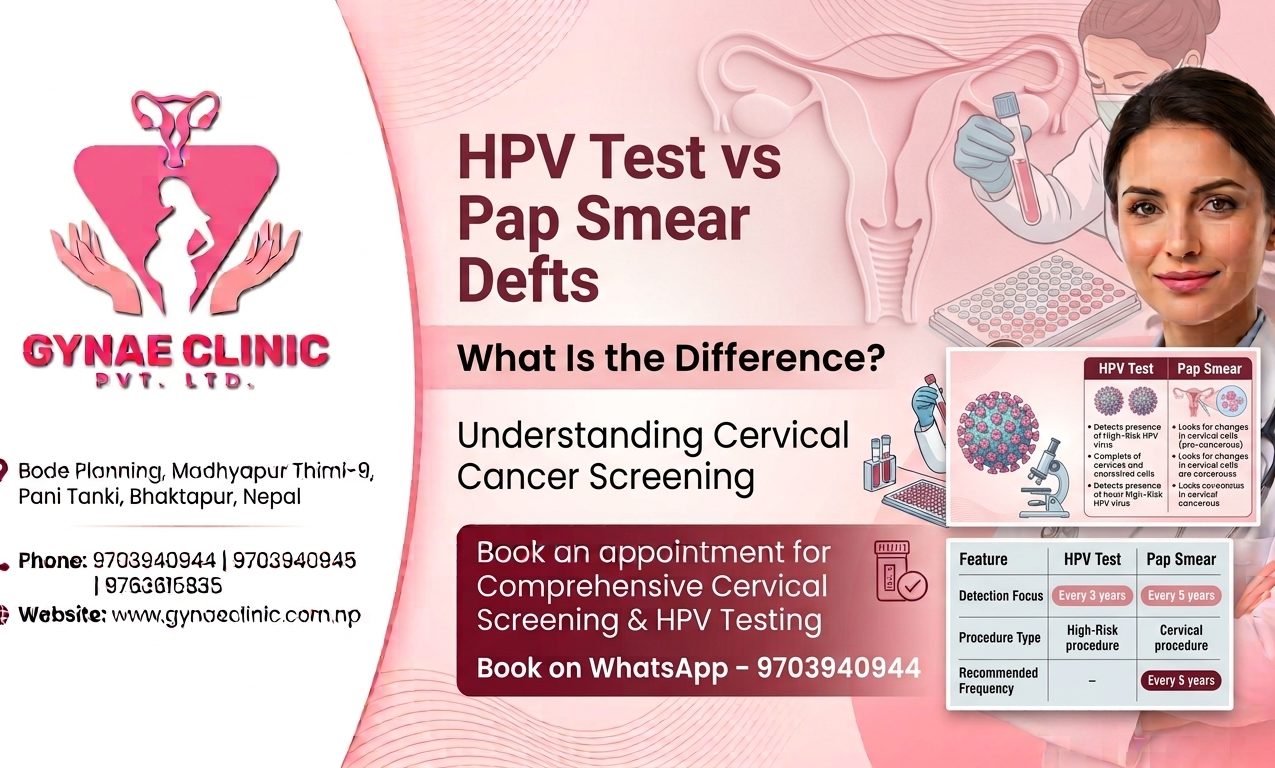
HPV Test vs Pap Smear is a common question for women who want to protect themselves from cervical cancer. Although both tests involve collecting cells from the cervix, they look for different things.
In simple terms:
HPV test looks for high-risk human papillomavirus (HPV).
Pap smear looks for abnormal changes in cervical cells.
Both can play an important role in cervical cancer prevention. The World Health Organization currently recommends HPV testing as the preferred primary cervical cancer screening method where HPV-based screening is available, while Pap/cytology remains an important screening method in settings where HPV-based screening is not yet operational.
If you are looking for HPV testing or Pap smear in Bhaktapur, understanding the difference can help you discuss the most appropriate screening option with a gynecologist.
HPV Test vs Pap Smear: The Quick Difference
| HPV Test | Pap Smear |
|---|---|
| Detects high-risk HPV infection | Detects abnormal cervical cells |
| Looks for the virus that can cause cervical cell changes | Looks for cell changes that may become precancerous |
| Can be used as a primary cervical screening test | Can be used as a cervical screening test |
| A positive result means HPV was detected | An abnormal result means cervical cells have changes |
| Does not mean you have cervical cancer | Does not automatically mean you have cancer |
| May be performed alone or with cytology depending on the screening approach | May be performed alone or together with HPV testing |
The CDC describes the distinction clearly: the HPV test looks for HPV, while the Pap test looks for precancers or abnormal cervical cell changes.
What Is an HPV Test?
An HPV test checks cervical cells for certain types of human papillomavirus associated with cervical cancer.
HPV is extremely common, and many HPV infections clear naturally. The concern in cervical cancer prevention is persistent infection with high-risk HPV types, because persistent infection can lead to cervical cell changes over time.
An HPV test can therefore identify an important risk factor before significant cervical cell abnormalities develop.
WHO’s 2026 guidance states that HPV testing is the preferred primary screening method for cervical cancer prevention where appropriate HPV-based screening programs are available.
What does an HPV-positive result mean?
An HPV-positive result means that a relevant HPV infection was detected.
It does not mean that you have cervical cancer.
Depending on the HPV type, screening history, age and local screening protocol, your healthcare provider may recommend additional testing or follow-up.
Some HPV tests can also provide genotype information, such as identifying HPV 16 or 18, which can help determine the appropriate follow-up strategy. WHO’s 2026 guidance includes risk-based approaches using HPV genotyping.
What Is a Pap Smear?
A Pap smear, also called a Pap test or cervical cytology, examines cells collected from the cervix.
Instead of looking primarily for the virus, the laboratory examines the cells for abnormalities.
These changes may include:
- Mild cellular changes
- Precancerous changes
- Other abnormal cervical-cell findings
Finding precancerous changes allows appropriate follow-up and treatment before cervical cancer develops.
The CDC explains that Pap testing looks for precancers—cell changes that could become cervical cancer if not appropriately managed.
HPV Test vs Pap Smear: How Are They Different?
The easiest way to understand the difference is:
HPV test asks:
“Is high-risk HPV present?”
Pap smear asks:
“Are the cervical cells showing abnormal changes?”
This means the tests provide different pieces of information.
For example, a woman may have:
HPV positive + Pap normal
This means HPV was detected, but the cervical cells do not currently show the abnormal changes being assessed by the Pap test.
Another woman could have:
HPV negative + abnormal Pap
This can also happen. An abnormal Pap result does not automatically mean that high-risk HPV is currently detected.
The appropriate follow-up depends on the specific result and the woman’s individual circumstances.
Can HPV Test and Pap Smear Be Done Together?
Yes.
HPV testing and Pap testing can sometimes be performed from cervical samples collected during the same examination. Testing both is commonly called co-testing.
Whether co-testing, HPV testing alone, or Pap testing alone is appropriate depends on factors such as:
- Age
- Previous screening results
- HPV status
- Medical history
- Risk factors
- Availability of HPV-based screening
- Local screening recommendations
For example, CDC guidance describes several cervical screening options depending on age and circumstances, including HPV testing alone, Pap testing alone, and HPV plus Pap testing together.
Which Is Better: HPV Test or Pap Smear?
This is not simply a matter of one test being “better” for every woman.
The appropriate screening method depends on the screening program and the individual woman.
WHO’s current guidance places HPV DNA testing as the preferred primary screening approach where HPV-based screening is available.
However, Pap smear remains clinically important and can be used as a screening method or as part of follow-up/triage depending on the situation.
Therefore, rather than choosing a test based only on internet information, it is better to discuss your age, previous results and screening history with a gynecologist.
Is an HPV Test the Same as an STI Test?
No.
An HPV test used for cervical screening is not the same as a complete STI screening panel.
Depending on the situation, separate tests may be needed for infections such as:
- Chlamydia
- Gonorrhea
- Syphilis
- HIV
- Trichomoniasis
- Other genital infections
If you are concerned about an STI following sexual exposure, ask about appropriate STI testing services rather than assuming that an HPV test or Pap smear checks for all STIs.
Does a Pap Smear Detect HPV?
A traditional Pap smear primarily evaluates cervical cells, not the HPV virus itself.
An HPV test specifically looks for HPV.
Sometimes both tests are performed from the same cervical examination, but they remain different laboratory tests.
That is why a woman may receive separate HPV and Pap results.
Does a Positive HPV Test Mean Cancer?
No.
An HPV-positive result does not mean that you have cervical cancer.
HPV infection is common, and many infections do not progress to cancer. The concern is persistent infection with cancer-causing HPV types and the development of cervical abnormalities over time.
Cervical cancer prevention therefore relies on appropriate screening and follow-up rather than treating every HPV-positive result as cancer. WHO notes that HPV vaccination and regular screening are important components of cervical cancer prevention.
Does an Abnormal Pap Smear Mean Cancer?
Not necessarily.
An abnormal Pap result can represent different degrees of cellular change.
Some abnormalities may be minor and may resolve, while others require closer evaluation.
Depending on the result, your gynecologist may recommend:
- Repeat cervical screening
- HPV testing
- Additional cervical evaluation
- Colposcopy
- Further testing or treatment when indicated
An abnormal screening result should therefore be followed appropriately rather than causing immediate panic.
Who Should Consider Cervical Cancer Screening?
Cervical screening recommendations vary between countries and programs.
WHO recommends periodic cervical cancer screening as part of cervical cancer prevention and emphasizes achieving high-performance screening coverage.
The appropriate age to begin screening, screening interval and test used can vary depending on the guideline being followed.
Your gynecologist can help determine which approach is appropriate based on your age, previous screening history and risk factors.
What Happens During HPV Testing or Pap Smear?
Both tests generally involve collecting a sample of cells from the cervix.
During the examination:
- You will usually lie on an examination table.
- A speculum is gently inserted into the vagina to allow the cervix to be seen.
- A healthcare professional collects cervical cells using an appropriate sampling device.
- The sample is sent for the relevant laboratory test.
- The result is interpreted together with your clinical and screening history.
The same cervical sample collection process can sometimes support HPV testing and cytology, depending on the laboratory method.
Is HPV Testing Painful?
Most women tolerate cervical sampling well.
You may experience:
- Pressure from the speculum
- Mild discomfort
- Brief cramping
- Temporary spotting in some cases
If you are anxious or uncomfortable, tell the healthcare professional. A gentle examination and communication can make the experience easier.
Can HPV Vaccination Replace HPV Testing or Pap Smear?
No.
HPV vaccination is an important prevention measure, but vaccination does not eliminate the need for appropriate cervical cancer screening.
The CDC specifically notes that people who receive HPV vaccination should still follow recommended cervical cancer screening.
HPV Test vs Pap Smear in Bhaktapur
Women living in and around Bhaktapur, Madhyapur Thimi, Pani Tanki, Sallaghari, Radhe Radhe, Gatthaghar, Kausaltar, Lokanthali, Jadibuti and Koteshwor may have questions about where to obtain cervical screening and which test is appropriate.
At Gynae Clinic Pvt. Ltd. in Bhaktapur, women can discuss their cervical-health concerns with a gynecologist and determine which screening or diagnostic evaluation is appropriate.
You can also learn more about:
- HPV Test and Pap Smear in Bhaktapur
- HPV Test in Bhaktapur
- Pap Smear Test in Bhaktapur
- When Should a Woman Get a Pap Smear?
- Confidential Gynecology Consultation in Bhaktapur
When Should You Talk to a Gynecologist?
Consider discussing cervical screening with a gynecologist if:
- You have never had cervical screening.
- You are unsure whether you need an HPV test or Pap smear.
- You previously had an abnormal Pap result.
- You have tested positive for high-risk HPV.
- You have missed recommended follow-up.
- You have unusual vaginal bleeding.
- You experience bleeding after sexual intercourse.
- You have persistent unusual vaginal discharge.
- You have pelvic pain or other concerning symptoms.
Remember that screening is for people who may not have symptoms, while symptoms may require diagnostic evaluation rather than simply waiting for routine screening.
Frequently Asked Questions
1. Is HPV testing better than Pap smear?
HPV testing and Pap smear look for different things. WHO currently recommends HPV testing as the preferred primary screening method where HPV-based screening is available, but the appropriate method depends on the screening program and individual circumstances.
2. Can I have an HPV test and Pap smear at the same time?
Yes. They can sometimes be performed from the same cervical sampling procedure.
3. What does HPV-positive mean?
It means the relevant HPV infection was detected. It does not automatically mean cervical cancer.
4. What does an abnormal Pap smear mean?
It means that abnormal cervical-cell changes were detected. The result requires interpretation and appropriate follow-up.
5. Does Pap smear test for STIs?
No. A Pap smear is primarily a cervical-cell test and should not be considered a complete STI screening test.
6. Can HPV go away on its own?
Many HPV infections clear naturally, but persistent high-risk HPV infection can lead to cervical abnormalities. Regular screening helps identify important changes.
7. Can vaccinated women still need screening?
Yes. HPV vaccination does not replace recommended cervical cancer screening.
8. Which test should I choose?
That depends on your age, screening history, previous results, risk factors and the screening method available. A gynecologist can help determine the appropriate approach.
HPV Test vs Pap Smear: The Bottom Line
HPV test and Pap smear are not the same test.
The simplest difference is:
HPV test → detects high-risk HPV.
Pap smear → detects abnormal cervical cells.
Both contribute to cervical cancer prevention, and in some situations they may be performed together. Current WHO guidance favors HPV-based primary screening where suitable HPV testing programs are available, while cytology/Pap testing continues to have an important role in screening and follow-up.
If you are unsure whether you need an HPV test, Pap smear, or both, a gynecological consultation can help determine the most appropriate next step.
Book a Confidential Consultation in Bhaktapur
Gynae Clinic Pvt. Ltd.
Bode Planning, Madhyapur Thimi-9, Pani Tanki, Bhaktapur, Nepal
Phone: 9703940944 | 9703940945 | 9763615835
WhatsApp Appointment: 9703940944
Website: www.gynaeclinic.com.np
Email: gynaeclinic1@gmail.com
Compassionate Care for Every Women’s Health
WhatsApp Appointment – 9703940944
Medical Disclaimer
This article is intended for general health education and does not replace an individual medical consultation or screening recommendation. Cervical screening decisions should be based on your age, medical history, previous screening results, risk factors and applicable clinical guidelines. Certain complex conditions may benefit from advanced specialist care.
Author Information
Author: Gynae Clinic Pvt. Ltd.
Location: Bhaktapur, Nepal
Specialty: Women’s Health & Gynecology
Website: www.gynaeclinic.com.np


