


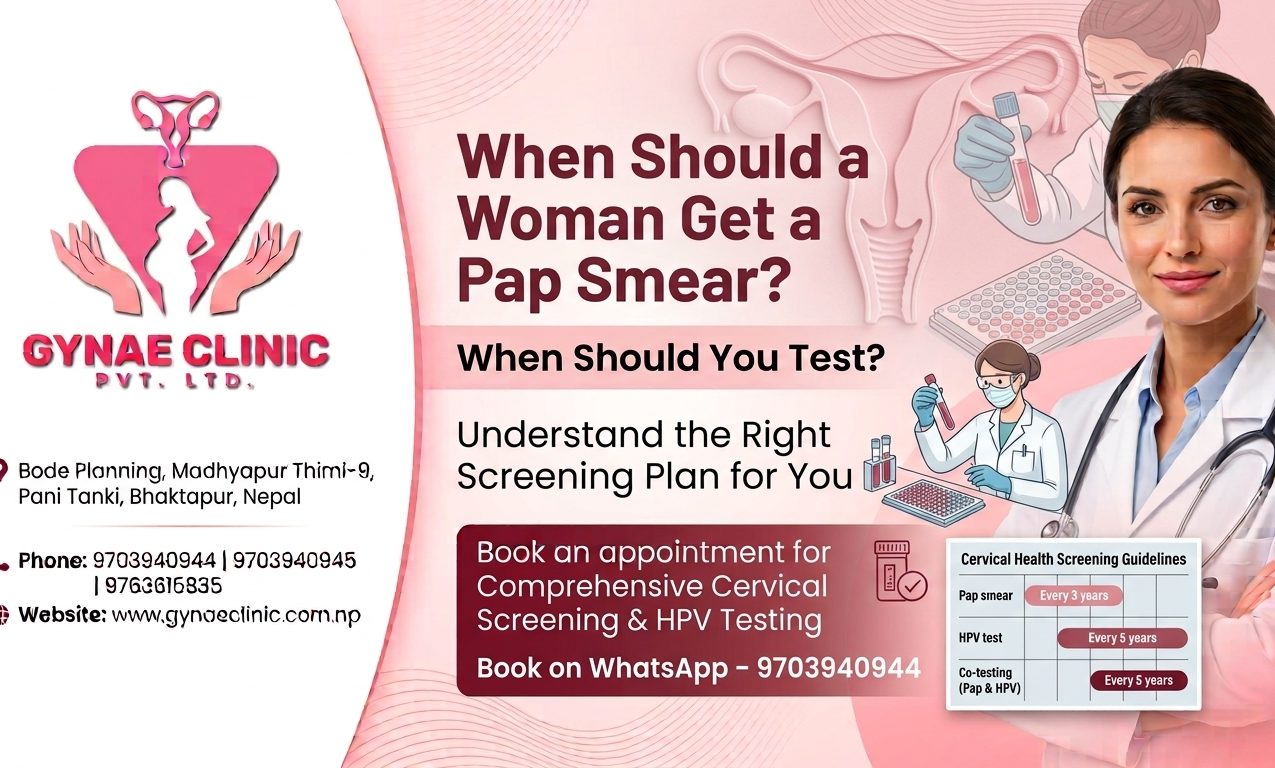
A Pap smear (Pap test) is a cervical screening test that checks cells from the cervix for abnormal changes that could potentially develop into cervical cancer.
The important thing to know is that the right age and interval for screening can vary depending on the screening method, country guidelines, age, previous results, HPV status, and medical history. Current WHO guidance increasingly recommends HPV DNA testing as the preferred primary screening method where it is available, while Pap/cytology remains an important screening option in many settings.
At What Age Should a Woman Start Cervical Screening?
There is no single universal age for a Pap smear for every woman worldwide.
For women at average risk, screening generally begins in adulthood rather than during the teenage years. The exact starting age and test interval should follow the screening program available in your country or the recommendation of your gynecologist.
If you are unsure whether you should start screening, don’t wait for symptoms. A gynecology consultation can determine which screening test is appropriate for you.
How Often Should a Woman Have a Pap Smear?
The interval depends on the test being used.
A woman may be offered:
- Primary HPV testing
- Pap smear/cytology
- HPV testing combined with Pap smear (co-testing)
These tests have different recommended intervals.
Your doctor may also recommend a different schedule if you have:
- A previous abnormal Pap smear
- Positive high-risk HPV
- Previous cervical precancer
- Previous cervical cancer
- A weakened immune system
- Previous treatment for cervical abnormalities
So, don’t automatically repeat a Pap smear every year unless your healthcare professional has specifically recommended it.
Does a Woman Need a Pap Smear If She Feels Healthy?
Yes, potentially.
Cervical precancer and early cervical cancer may not cause noticeable symptoms.
That’s why cervical screening is designed as a preventive test—you don’t have to feel sick to benefit from screening.
However, if you have symptoms such as abnormal bleeding, persistent unusual discharge or pelvic pain, you may need a diagnostic examination, not simply a routine Pap smear.
What If a Woman Has Never Had a Pap Smear?
If you are eligible for cervical screening but have never been screened, it is worth discussing screening with a gynecologist.
You don’t need to wait until you have symptoms.
The clinician can consider your age, medical history, previous screening, HPV vaccination and the screening options available to you.
What If She Has Received the HPV Vaccine?
HPV vaccination does not eliminate the need for cervical screening.
The vaccine protects against important HPV types but does not protect against every HPV type associated with cervical cancer.
Therefore, vaccinated women should still follow recommended cervical-screening guidance.
What If the HPV Test Is Positive?
A positive HPV test does not mean that you have cervical cancer.
It means a high-risk HPV infection has been detected.
Your follow-up depends on factors such as:
- The HPV type
- Whether HPV 16 or 18 is detected
- Pap/cytology results
- Previous screening results
- Your age and individual risk
For example, HPV-positive with a normal Pap smear can require surveillance rather than immediate treatment in many situations.
Can a Pap Smear Detect STIs?
Not generally.
A Pap smear is primarily used to examine cervical-cell changes. It is not a comprehensive STI test.
If you are concerned about chlamydia, gonorrhea, syphilis, HIV or another STI, you may need separate testing.
You can read more about STI testing for women.
When Should You See a Gynecologist Instead of Waiting for Routine Screening?
Arrange a gynecological evaluation if you experience:
- Bleeding after sex
- Bleeding between periods
- Unusual or persistent vaginal discharge
- Pelvic pain
- Pain during sex
- Bleeding after menopause
- A positive HPV test
- An abnormal Pap result
- A previous cervical abnormality
Do not wait for your next routine Pap smear if you have concerning symptoms.
Pap Smear in Bhaktapur
If you are looking for cervical screening or Pap smear services in Bhaktapur, Gynae Clinic Pvt. Ltd. is located at:
Gynae Clinic Pvt. Ltd.
Bode Planning, Madhyapur Thimi-9, Pani Tanki, Bhaktapur, Nepal
Contact: 9703940944 | 9703940945 | 9763615835
Website: www.gynaeclinic.com.np
You can also read the clinic’s detailed guide on Pap Smear Test in Bhaktapur and HPV Test and Pap Smear Test in Bhaktapur.
Book an Appointment on WhatsApp – 9703940944
Frequently Asked Questions
What age should a woman get her first Pap smear?
The starting age depends on the cervical-screening guidelines and testing method used in your setting. Your gynecologist can advise whether Pap testing or primary HPV testing is appropriate.
Does every woman need a Pap smear every year?
No. Routine screening intervals are not necessarily annual. They depend on the screening method, age and individual risk.
Can a 20-year-old woman need a Pap smear?
The answer depends on the applicable screening recommendations and her individual circumstances. Younger women are generally not screened simply because they are sexually active.
Should I get a Pap smear if I have no symptoms?
Yes, if you are within the recommended screening age/group. Cervical screening is preventive and is intended to detect abnormalities before symptoms develop.
Is Pap smear painful?
Most women experience some pressure or temporary discomfort. Tell the healthcare professional if you are anxious or have previously experienced painful pelvic examinations.
What if my Pap smear is abnormal?
Don’t panic. An abnormal Pap result does not automatically mean cancer. Depending on the result and your history, you may need repeat testing, HPV testing, colposcopy or another evaluation.
Final Takeaway
Women should have cervical screening according to their age, risk level, previous results and the screening method available—not simply whenever symptoms appear.
If you are unsure whether you are due for a Pap smear, HPV test or another form of cervical screening, a gynecologist can review your history and recommend the appropriate next step.
Medical Disclaimer
This article provides general health information and does not replace individualized medical advice, diagnosis or treatment. Cervical-screening recommendations can vary according to age, screening method, previous results and individual risk. Certain complex conditions may benefit from advanced specialist care.
Author: Gynae Clinic Pvt. Ltd.


