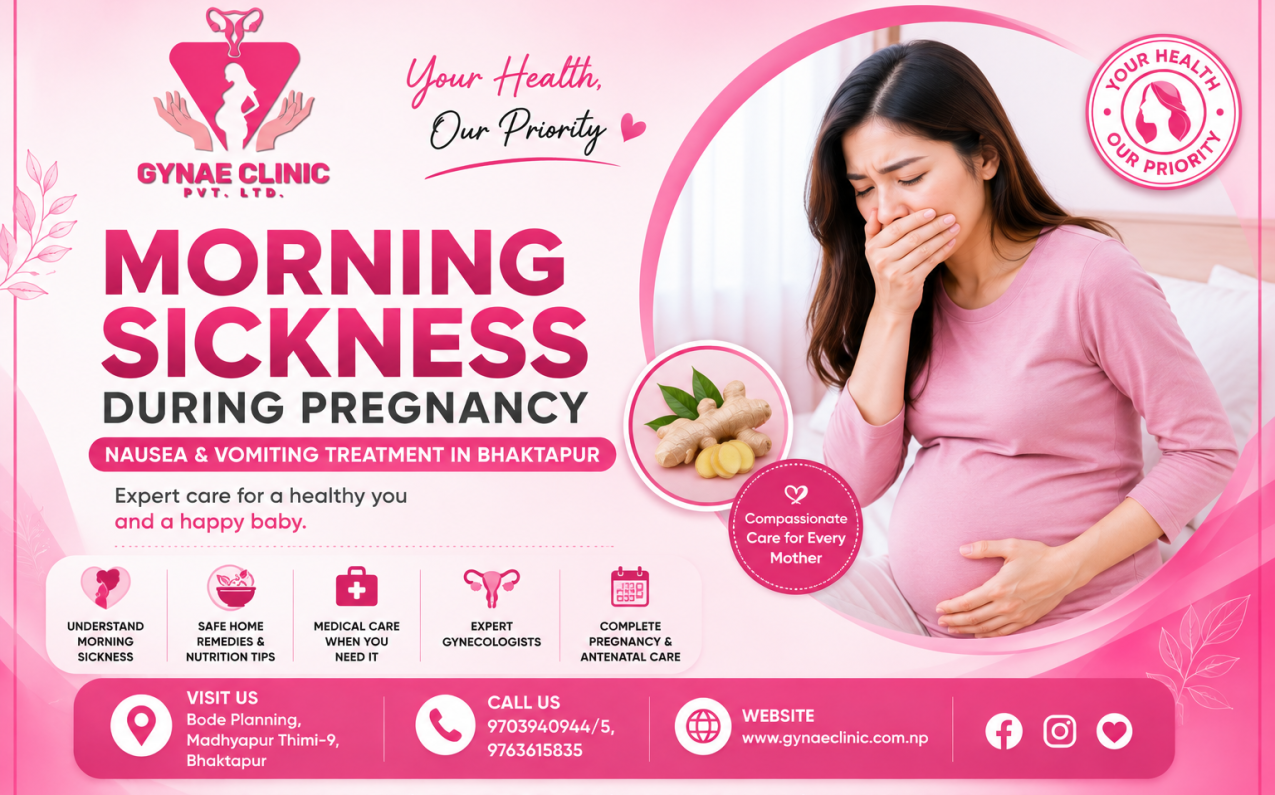
Morning sickness during pregnancy is extremely common, especially during early pregnancy. Despite its name, nausea and vomiting can happen at any time of the day or night. For many women, symptoms are mild and improve as pregnancy progresses. However, severe or persistent vomiting can lead to dehydration, weight loss, and nutritional problems and may require medical treatment.
If you are searching for pregnancy nausea treatment in Bhaktapur, morning sickness treatment, vomiting during pregnancy, pregnancy care in Bhaktapur, or a female gynecologist near you, this guide explains the symptoms, common causes, practical self-care measures, warning signs, and when professional pregnancy care is important.
Gynae Clinic Pvt. Ltd. provides pregnancy consultation, antenatal care, women’s healthcare, and gynecological services in Bode Planning, Madhyapur Thimi-9, Bhaktapur, Nepal.
What Is Morning Sickness During Pregnancy?
Morning sickness refers to nausea with or without vomiting during pregnancy.
It is particularly common during the first trimester. Symptoms often begin around the 4th to 7th week of pregnancy and commonly improve by approximately 16–20 weeks, although every pregnancy is different and some women may experience symptoms for longer.
The term “morning sickness” can be misleading because nausea and vomiting may occur:
- In the morning
- During the afternoon
- At night
- After meals
- When the stomach is empty
- After exposure to certain smells
So, nausea during pregnancy is not limited to the morning.
Is Morning Sickness Normal in Early Pregnancy?
Yes. Nausea and vomiting are common pregnancy symptoms.
WHO notes that nausea and vomiting are experienced by a large proportion of pregnant women, particularly during the first trimester.
Mild to moderate morning sickness is generally not a sign that something is wrong with the pregnancy.
However, very frequent vomiting, inability to drink or eat, dehydration, or significant weight loss should not be considered ordinary morning sickness and requires medical assessment.
What Causes Morning Sickness?
The exact cause of morning sickness is not completely understood.
Pregnancy-related hormonal changes are believed to play an important role. Increased sensitivity to smells, changes in digestion, and individual differences between pregnancies may also contribute.
Some women may notice that certain foods, smells, fatigue, or an empty stomach make their nausea worse.
Importantly, experiencing morning sickness does not mean you are doing anything wrong.
Common Symptoms of Morning Sickness
Morning sickness can vary considerably from one woman to another.
Common symptoms include:
- Nausea
- Vomiting
- Reduced appetite
- Food aversions
- Increased sensitivity to smells
- Feeling uncomfortable around certain foods
- Increased salivation in some women
- Feeling tired or weak after repeated vomiting
Some women experience nausea without vomiting, while others may vomit several times a day.
Morning Sickness and Early Pregnancy Symptoms
Nausea and vomiting can be among the symptoms of early pregnancy, but morning sickness alone cannot confirm pregnancy.
Other early pregnancy symptoms may include:
- A missed or lighter period
- Breast tenderness
- Tiredness
- Increased urination
- Food cravings or aversions
- Increased sensitivity to smells
A pregnancy test is a more appropriate way to determine whether you are pregnant.
If you have a positive pregnancy test, arranging appropriate antenatal care is important.
How to Reduce Morning Sickness During Pregnancy
Many women can manage mild pregnancy nausea with simple changes to eating, hydration, and daily routines.
1. Eat Small, Frequent Meals
Instead of eating a few large meals, try smaller meals throughout the day.
An empty stomach can make nausea worse for some women.
The NHS recommends trying several small meals during the day.
2. Keep a Simple Snack Nearby
Some women find it helpful to keep plain crackers, dry toast, or another tolerated snack near the bed and eat a small amount before getting up.
Plain foods such as toast, rice, pasta, potatoes, or simple biscuits may be easier to tolerate when nausea is strong.
3. Stay Hydrated
Vomiting can cause fluid loss.
Try taking fluids regularly in amounts that you can tolerate.
If drinking a large amount at once makes nausea worse, smaller amounts more frequently may be easier.
If you cannot keep fluids down, contact your healthcare provider promptly.
4. Identify Your Triggers
Certain smells and foods can make pregnancy nausea worse.
Common triggers may include:
- Strong cooking smells
- Greasy foods
- Spicy foods
- Perfumes
- Certain textures
- Foods that previously caused nausea
Avoiding known triggers can make daily symptoms easier to manage.
5. Get Adequate Rest
Fatigue can make pregnancy symptoms feel more difficult to manage.
Try to maintain regular rest and sleep whenever possible.
6. Consider Ginger if Appropriate
Some women find ginger helpful for pregnancy-related nausea.
WHO includes ginger among non-pharmacological options that may be used for relief of nausea in early pregnancy, depending on the woman’s preferences and available options.
If you are considering concentrated ginger products or supplements, discuss them with your healthcare provider, particularly if you take other medicines or have other medical conditions.
What About Medicines for Morning Sickness?
If lifestyle measures are not enough and nausea or vomiting is significantly affecting your daily life, a healthcare professional may recommend medication that is considered appropriate during pregnancy.
WHO guidance notes that medicines such as doxylamine and metoclopramide may be considered for distressing symptoms that do not improve with non-pharmacological measures, under medical supervision.
Do not start anti-vomiting medicines, antibiotics, herbal remedies, or other medicines during pregnancy without discussing them with a qualified healthcare professional.
The appropriate treatment depends on your pregnancy, symptoms, medical history, and other medicines you may be taking.
What Is Hyperemesis Gravidarum?
Most pregnancy nausea is manageable, but some women develop a much more severe condition called hyperemesis gravidarum (HG).
HG involves severe nausea and vomiting that can make it difficult or impossible to keep food and fluids down.
It can lead to:
- Dehydration
- Significant weight loss
- Nutritional problems
- Severe weakness
- Dizziness or lightheadedness
- Reduced urination
Severe pregnancy vomiting may require medical treatment, and some women need hospital-based care.
Warning Signs: When Should You See a Doctor?
Contact a healthcare professional if you:
- Cannot keep fluids down
- Are vomiting repeatedly throughout the day
- Have very dark urine
- Are urinating much less than usual
- Feel dizzy or lightheaded
- Are losing weight
- Feel extremely weak
- Vomit blood
- Have severe abdominal pain
- Have fever
- Are concerned that your symptoms are becoming severe
These symptoms may indicate dehydration, hyperemesis gravidarum, or another medical problem that needs evaluation.
Do not wait for symptoms to become severe.
Early medical assessment can help prevent complications from dehydration and prolonged vomiting.
Can Morning Sickness Harm the Baby?
Typical mild or moderate morning sickness generally does not harm the baby.
The concern is severe vomiting that causes dehydration, inadequate nutrition, or significant weight loss. Severe hyperemesis gravidarum can require treatment to protect the health of the mother and support the pregnancy.
If you are unable to keep food or fluids down, contact your pregnancy care provider rather than trying to manage severe vomiting alone.
How Is Severe Vomiting During Pregnancy Evaluated?
When vomiting is severe, your healthcare provider may assess:
Hydration
The provider may look for signs of dehydration and assess your ability to drink and keep fluids down.
Weight and Nutrition
Weight changes and nutritional intake may be reviewed.
Pregnancy and Medical History
Your symptoms, pregnancy stage, medications, previous medical conditions, and other symptoms may be discussed.
Other Possible Causes
Not every episode of vomiting during pregnancy is caused by morning sickness. A healthcare professional may consider other possible causes when symptoms are severe, unusual, or associated with additional symptoms.
Treatment
Depending on your condition, treatment may include:
- Advice on food and fluid intake
- Pregnancy-appropriate anti-nausea medication
- Monitoring
- Treatment for dehydration
- Intravenous fluids when necessary
- Further medical evaluation when indicated
The treatment should be individualized according to your clinical condition.
Pregnancy Care in Bhaktapur
Pregnancy is an important time for regular healthcare and antenatal monitoring.
If you are experiencing morning sickness or other early pregnancy symptoms, professional guidance can help you understand what is expected and when additional evaluation is necessary.
Gynae Clinic Pvt. Ltd. in Bhaktapur provides pregnancy and women’s healthcare services including:
- Pregnancy consultation
- Antenatal care
- Pregnancy symptom evaluation
- Ultrasound guidance
- Nutrition counselling
- Gynecological consultation
- Reproductive healthcare
- Women’s health services
Gynae Clinic Pvt. Ltd.
Bode Planning, Madhyapur Thimi-9, Bhaktapur, Nepal
Contact: 9703940944/5, 9763615835
Website: www.gynaeclinic.com.np
When Should You Book a Pregnancy Consultation?
Consider arranging a pregnancy consultation if you:
- Have a positive pregnancy test
- Are experiencing persistent pregnancy nausea
- Are vomiting frequently
- Are unable to maintain adequate fluid intake
- Have questions about pregnancy nutrition
- Need antenatal care
- Need pregnancy-related ultrasound guidance
- Have concerns about your pregnancy symptoms
Regular antenatal care provides opportunities for pregnancy monitoring, health education, screening, and timely management of complications. WHO emphasizes antenatal care as an important platform for maternal and fetal assessment, health promotion, screening, diagnosis, and disease prevention.
Frequently Asked Questions About Morning Sickness
Is morning sickness normal during pregnancy?
Yes. Nausea and vomiting are common during pregnancy, particularly in early pregnancy. However, severe or persistent vomiting requires medical assessment.
Does morning sickness happen only in the morning?
No. Despite its name, morning sickness can occur at any time of the day or night.
When does morning sickness usually start?
Pregnancy nausea commonly begins around the 4th to 7th week of pregnancy, although timing varies.
When does morning sickness usually get better?
For many women, symptoms improve by around 16–20 weeks, although some women experience nausea for longer.
What can I eat when I feel nauseated during pregnancy?
Many women tolerate simple foods such as toast, crackers, rice, potatoes, pasta, or other bland foods more easily. Eating smaller meals more frequently may also help.
Choose foods that you can tolerate while continuing to aim for a balanced pregnancy diet.
Can I drink water when I have morning sickness?
Yes. Maintaining hydration is important. If you find large amounts difficult to tolerate, try smaller amounts more frequently.
If you cannot keep fluids down, seek medical advice.
Can ginger help pregnancy nausea?
Some women find ginger helpful. WHO lists ginger among non-pharmacological options for nausea in early pregnancy.
Discuss concentrated supplements or herbal products with your healthcare provider before using them during pregnancy.
When is vomiting during pregnancy dangerous?
Vomiting becomes concerning when you cannot keep fluids or food down, become dehydrated, lose weight, urinate very little, feel dizzy or weak, vomit blood, or develop other concerning symptoms. Severe pregnancy vomiting may be hyperemesis gravidarum and can require medical treatment.
Can I take medicine for morning sickness?
Some medicines can be used during pregnancy when clinically appropriate, but you should not self-medicate. A doctor can determine which treatment is appropriate for your symptoms and pregnancy.
Where can I get pregnancy nausea treatment in Bhaktapur?
For pregnancy consultation, antenatal care, and evaluation of pregnancy-related nausea and vomiting, visit Gynae Clinic Pvt. Ltd., Bode Planning, Madhyapur Thimi-9, Bhaktapur, Nepal.
Why Choose Gynae Clinic for Pregnancy Care in Bhaktapur?
Pregnancy symptoms can be exciting, uncomfortable, and sometimes worrying. Having access to professional pregnancy care can help you understand which symptoms are expected and which require evaluation.
At Gynae Clinic Pvt. Ltd., women can receive pregnancy and gynecology consultation in a professional and confidential clinical environment.
Our areas of care include:
Pregnancy Care | Antenatal Care | Women’s Health | Gynecology | Reproductive Healthcare
If you are searching for a pregnancy clinic in Bhaktapur, pregnancy nausea treatment, female gynecologist in Bhaktapur, or antenatal care, Gynae Clinic Pvt. Ltd. is available for consultation.
Conclusion
Morning sickness is one of the most common symptoms of early pregnancy. Nausea and vomiting can happen at any time of day and often improve as pregnancy progresses.
Small frequent meals, adequate hydration, avoiding individual triggers, rest, and other appropriate self-care measures may help manage mild symptoms. Some women may also benefit from ginger.
However, persistent vomiting, inability to keep fluids down, dehydration, significant weight loss, blood in vomit, severe abdominal pain, or other concerning symptoms require medical evaluation.
Do not feel that you have to suffer through severe pregnancy vomiting. Appropriate medical treatment can help manage symptoms and protect maternal health.
If you are searching for morning sickness treatment in Bhaktapur, pregnancy nausea treatment, vomiting during pregnancy, pregnancy care in Bhaktapur, or a female gynecologist near you, contact:
Gynae Clinic Pvt. Ltd.
Bode Planning, Madhyapur Thimi-9, Bhaktapur, Nepal
Contact: 9703940944/5, 9763615835
Website: www.gynaeclinic.com.np
Women’s Health | Pregnancy Care | Antenatal Care | Gynecology Services
Related Pregnancy & Women’s Health Articles
- Early Signs of Pregnancy
- Pregnancy Test: When and How to Take One
- Pregnancy Nutrition Guide
- High-Risk Pregnancy Care
- Best Gynecologist in Bhaktapur
- White Vaginal Discharge During Pregnancy
- Contact Gynae Clinic
Author:
Gynae Clinic Pvt. Ltd.
Bode Planning, Madhyapur Thimi-9, Bhaktapur, Nepal