

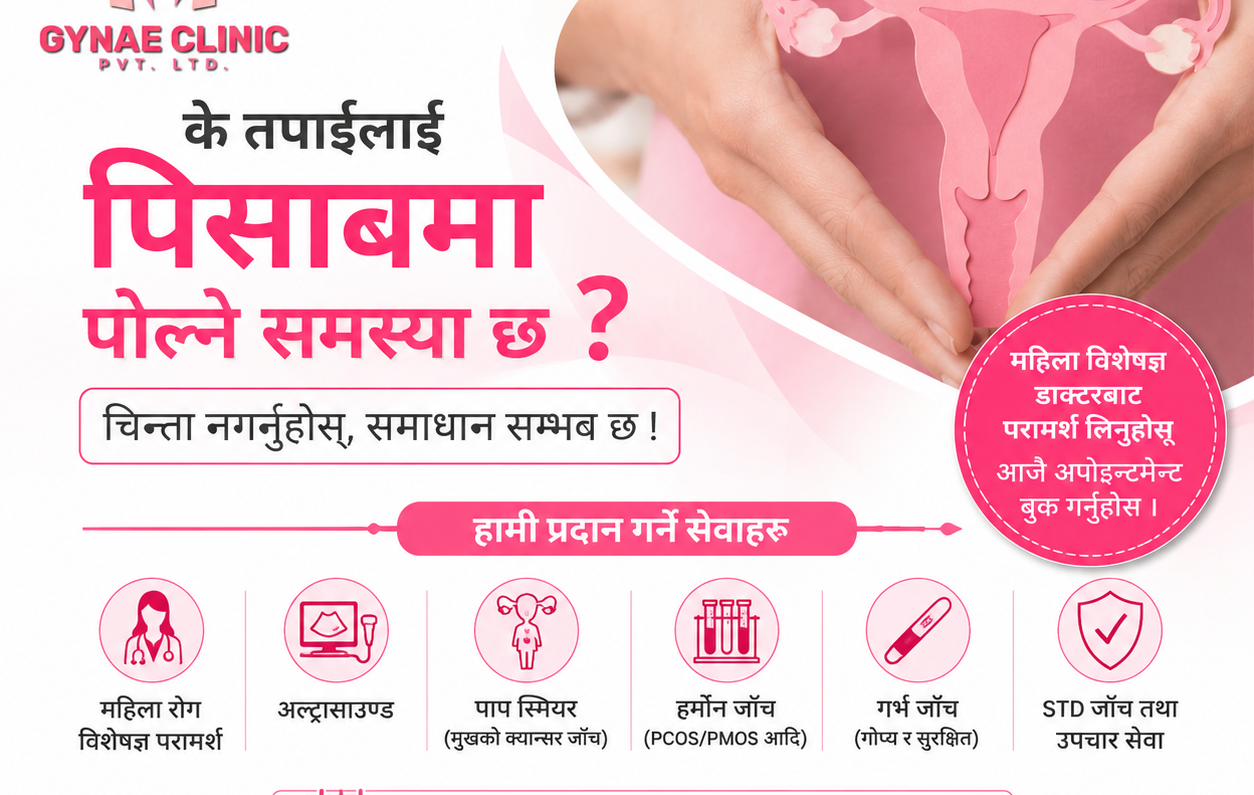
Urinary tract infections (UTIs) are common in women and can cause burning while urinating, frequent urination, pelvic discomfort, and an urgent need to pass urine. Most UTIs can be successfully treated when diagnosed appropriately, but untreated infections can sometimes spread to the kidneys and become more serious.
If you are searching for UTI treatment in Bhaktapur, burning urination treatment, painful urination, frequent urination, female urine infection treatment, or a female gynecologist in Bhaktapur, this guide explains the symptoms, causes, diagnosis, treatment, prevention, and warning signs that should not be ignored.
Gynae Clinic Pvt. Ltd. provides confidential women’s health consultation and evaluation of urinary symptoms at Bode Planning, Madhyapur Thimi-9, Bhaktapur, Nepal.
What Is a Urinary Tract Infection?
A urinary tract infection (UTI) occurs when microorganisms, most commonly bacteria, enter the urinary tract and multiply.
The urinary system includes the:
- Urethra – the tube through which urine leaves the body
- Bladder – stores urine
- Ureters – carry urine from the kidneys to the bladder
- Kidneys – filter the blood and produce urine
A UTI can affect different parts of the urinary tract.
Lower urinary tract infections
These commonly involve the bladder or urethra and may cause:
- Burning during urination
- Frequent urination
- Urinary urgency
- Lower abdominal discomfort
Kidney infection
When infection reaches the kidneys, symptoms may become more severe and can include fever, chills, nausea, vomiting, and pain in the back or side.
A suspected kidney infection requires prompt medical evaluation.
Why Are UTIs More Common in Women?
Women are more likely to develop UTIs partly because the female urethra is shorter and closer to the anus, making it easier for bacteria to enter the urinary tract.
Other factors can also increase the risk of developing a UTI.
These include:
- Sexual activity
- Previous UTIs
- Pregnancy
- Menopause
- Diabetes
- Certain urinary tract abnormalities
- Difficulty completely emptying the bladder
- Use of urinary catheters
- Some contraceptive methods
Having one UTI does not necessarily mean you will develop recurrent infections, but repeated symptoms should be discussed with a healthcare professional.
Common UTI Symptoms in Women
UTI symptoms can vary depending on which part of the urinary tract is affected.
Common symptoms include:
1. Burning During Urination
A burning or stinging sensation while passing urine is one of the most recognizable symptoms of a bladder infection.
2. Frequent Urination
You may feel that you need to urinate more often than usual, even when only a small amount of urine comes out.
3. Urinary Urgency
You may suddenly feel a strong need to urinate that is difficult to postpone.
4. Lower Abdominal Discomfort
Some women experience pressure, discomfort, or pain in the lower abdomen.
5. Cloudy Urine
Urine may appear cloudy during some urinary infections.
6. Blood in the Urine
Blood may sometimes occur with a UTI. However, visible blood in urine should be medically evaluated rather than automatically assumed to be a simple infection.
7. Strong-Smelling Urine
Urine can sometimes develop a stronger or unusual smell, although odor alone does not necessarily mean you have a UTI.
UTI Symptoms That May Indicate a Kidney Infection
A urinary infection can sometimes spread from the bladder to the kidneys.
Seek prompt medical attention if urinary symptoms are accompanied by:
- Fever
- Chills
- Pain in the back or side
- Nausea
- Vomiting
- Significant weakness
- Feeling seriously unwell
Kidney infections can become serious if not treated appropriately.
What Causes Urinary Tract Infections?
Most UTIs occur when bacteria enter the urinary tract and multiply.
The bacteria often originate from the digestive tract and can enter through the urethra.
Factors that may increase the risk include:
Sexual Activity
Sexual activity can sometimes move bacteria toward the urethra and increase the risk of infection.
Pregnancy
Pregnancy can increase the risk of urinary infections and makes appropriate evaluation particularly important.
Menopause
Changes associated with menopause can affect the urinary and vaginal environment and may increase susceptibility to UTIs in some women.
Diabetes
High blood glucose and changes in immune function can increase infection risk.
Previous UTIs
Women who have experienced UTIs previously may be more likely to experience another infection.
Urinary Tract Problems
Conditions that interfere with normal urine flow or bladder emptying can increase the risk of infection.
UTI or Vaginal Infection: How Can You Tell the Difference?
Burning or discomfort around urination does not always mean that you have a UTI.
Similar symptoms can occur with:
- Vaginal infections
- Yeast infections
- Sexually transmitted infections
- Vaginal irritation
- Certain gynecological conditions
For example, abnormal vaginal discharge, itching, vaginal irritation, or genital odor may point toward a vaginal condition rather than an isolated bladder infection.
This is why persistent symptoms should be evaluated rather than treated based only on symptoms.
How Is a UTI Diagnosed?
A healthcare professional may use your symptoms, medical history, examination, and urine testing to determine whether a UTI is likely.
Medical History
Your healthcare provider may ask about:
- Burning during urination
- Urinary frequency
- Urgency
- Abdominal or pelvic pain
- Fever
- Previous UTIs
- Pregnancy status
- Current medications
- Other medical conditions
Urine Testing
Depending on your symptoms and clinical situation, testing may include:
- Urinalysis
- Urine microscopy
- Urine culture
A urine culture may be particularly useful in certain situations, including recurrent, complicated, or persistent infections.
Additional Evaluation
If infections repeatedly return or symptoms do not match a straightforward UTI, your healthcare provider may recommend additional investigations.
UTI Treatment in Women
Treatment depends on the cause and severity of the infection.
For a confirmed bacterial UTI, a healthcare professional may prescribe an appropriate antibiotic.
The choice of antibiotic can depend on factors such as:
- The location and severity of infection
- Pregnancy status
- Previous antibiotic use
- Allergies
- Medical history
- Local resistance patterns
- Urine culture results when available
Important: Do Not Self-Medicate
Do not start leftover antibiotics or take antibiotics prescribed for someone else.
Using an inappropriate antibiotic may fail to treat the infection and can contribute to antibiotic resistance.
If an antibiotic is prescribed, take it exactly as directed and follow your healthcare professional’s advice about completing treatment.
How to Feel More Comfortable While Recovering
Depending on your medical situation, supportive measures may include:
- Drinking adequate fluids
- Resting
- Urinating when you feel the need
- Following your prescribed treatment
- Avoiding unnecessary products that irritate the genital area
Drinking fluids can support hydration, but water alone should not be relied upon to treat a confirmed bacterial UTI.
Can a UTI Go Away Without Antibiotics?
Some urinary symptoms can have causes other than bacterial infection, and not every episode of burning urination requires antibiotics.
However, a bacterial UTI may require antibiotic treatment, and delaying appropriate treatment can allow an infection to worsen or spread.
If you have persistent urinary symptoms, especially fever, back pain, blood in the urine, vomiting, or symptoms during pregnancy, seek medical evaluation rather than waiting for the problem to resolve on its own.
UTIs During Pregnancy
UTIs deserve particular attention during pregnancy.
Pregnancy can increase the risk of urinary infections, and a pregnant woman with urinary symptoms should contact her healthcare provider for appropriate assessment.
Possible symptoms include:
- Burning urination
- Frequent urination
- Urinary urgency
- Lower abdominal discomfort
- Blood in urine
Fever, chills, back or side pain, nausea, or vomiting can indicate a more serious infection.
Do not self-treat a suspected UTI during pregnancy. Medicines should be selected with pregnancy safety in mind.
Recurrent UTIs in Women
Some women experience UTIs repeatedly.
Recurrent urinary symptoms should be assessed to determine whether infections are genuinely recurring and whether an underlying risk factor is present.
Your healthcare provider may consider:
- Previous urine culture results
- Frequency of infections
- Sexual activity
- Pregnancy
- Menopause
- Diabetes
- Urinary tract abnormalities
- Previous antibiotic treatment
Depending on the situation, further testing or preventive strategies may be recommended.
How to Help Prevent UTIs
There is no single method that prevents every UTI, but several healthy habits may help reduce risk.
Stay Hydrated
Drink enough fluids according to your individual needs.
Do Not Hold Urine for Long Periods
Use the toilet when you feel the need to urinate.
Wipe From Front to Back
After using the toilet, wiping from front to back can help reduce the movement of bacteria toward the urethra.
Urinate After Sexual Activity
Some women find that urinating after sexual activity is a useful hygiene practice.
Avoid Unnecessary Irritating Products
Avoid unnecessary vaginal douching and products that cause genital irritation.
Manage Underlying Conditions
Conditions such as diabetes should be appropriately managed with professional healthcare.
When Should You See a Doctor for a UTI?
Arrange a medical consultation if you have:
- Burning while urinating
- Frequent urination
- Urinary urgency
- Persistent lower abdominal discomfort
- Blood in your urine
- Repeated urinary infections
- Symptoms that do not improve
- Symptoms that return after treatment
A healthcare professional can determine whether the symptoms are caused by a UTI or another condition.
When Is a UTI an Emergency?
Seek prompt medical attention if urinary symptoms occur with:
- High fever
- Chills
- Severe back or side pain
- Repeated vomiting
- Significant weakness
- Confusion or feeling severely unwell
- Blood in the urine
- Pregnancy with suspected UTI symptoms
These symptoms can indicate a kidney infection or another condition requiring urgent assessment.
UTI Treatment in Bhaktapur
If you are searching online for:
- UTI treatment in Bhaktapur
- Burning urination treatment
- Painful urination doctor
- Female urine infection treatment
- Frequent urination treatment
- Women’s health clinic in Bhaktapur
- Female gynecologist in Bhaktapur
you can consult Gynae Clinic Pvt. Ltd.
Women’s Health Services
Gynae Clinic provides consultation and evaluation for:
✓ Urinary symptoms in women
✓ Women’s health concerns
✓ Vaginal and reproductive health conditions
✓ Pregnancy-related urinary symptoms
✓ Laboratory testing guidance
✓ Gynecological consultation
✓ Reproductive healthcare
Gynae Clinic Pvt. Ltd.
Bode Planning, Madhyapur Thimi-9, Bhaktapur, Nepal
Contact: 9703940944/5, 9763615835
Website: www.gynaeclinic.com.np
Frequently Asked Questions About UTI in Women
What are the most common symptoms of a UTI?
The most common symptoms include burning during urination, frequent urination, urinary urgency, and lower abdominal discomfort. Some women may also notice cloudy or bloody urine.
Is burning urination always a UTI?
No. Burning during urination can also occur with vaginal infections, sexually transmitted infections, irritation, and other conditions. If symptoms persist, proper evaluation can help identify the cause.
Are UTIs common in women?
Yes. UTIs are particularly common in women, and some women experience recurrent infections.
Can a UTI cause frequent urination?
Yes. A bladder infection can cause frequent urination and a strong or urgent need to urinate, sometimes with only a small amount of urine passed each time.
Can a UTI cause blood in urine?
Yes, blood can occur with a UTI, but visible blood in urine should always be evaluated by a healthcare professional because there are other possible causes.
Are UTIs dangerous during pregnancy?
A UTI during pregnancy should be evaluated promptly. Untreated urinary infections can become more serious, so pregnant women with symptoms should contact their healthcare provider.
Should I drink more water if I have a UTI?
Maintaining adequate hydration is important, but drinking water does not replace appropriate medical evaluation or antibiotic treatment when a bacterial UTI requires it.
Can I take antibiotics without seeing a doctor?
It is best not to self-medicate with antibiotics. The appropriate medicine depends on the suspected infection, pregnancy status, allergies, medical history, and sometimes urine testing.
Why do I keep getting UTIs?
Recurrent UTIs can have several contributing factors. A healthcare provider can review your history and determine whether further evaluation or preventive measures are appropriate.
Where can I get UTI treatment in Bhaktapur?
For women’s urinary symptoms and gynecological consultation, you can visit Gynae Clinic Pvt. Ltd., Bode Planning, Madhyapur Thimi-9, Bhaktapur, Nepal.
Why Choose Gynae Clinic for Women’s Health Care in Bhaktapur?
Urinary symptoms can sometimes be embarrassing or uncomfortable to discuss. Professional and confidential healthcare can make it easier to receive appropriate evaluation.
Gynae Clinic Pvt. Ltd. provides women’s health and gynecological consultation in Bhaktapur, including evaluation of urinary symptoms, reproductive health concerns, pregnancy-related conditions, and other gynecological problems.
If you are looking for a women’s health clinic in Bhaktapur or a female gynecologist in Bhaktapur, professional evaluation can help identify the underlying cause of your symptoms and guide appropriate treatment.
Conclusion
Urinary tract infections are common in women and are usually manageable when diagnosed and treated appropriately.
Burning while urinating, frequent urination, urinary urgency, lower abdominal discomfort, cloudy urine, or blood in the urine can be signs of a UTI. However, similar symptoms can occur with other urinary or gynecological conditions, so persistent symptoms should not be ignored.
Fever, chills, severe back or side pain, vomiting, blood in the urine, or UTI symptoms during pregnancy require prompt medical attention.
If you are searching for UTI treatment in Bhaktapur, burning urination treatment, painful urination treatment, female urine infection care, or a women’s health clinic in Bhaktapur, contact:
Gynae Clinic Pvt. Ltd.
Bode Planning, Madhyapur Thimi-9, Bhaktapur, Nepal
Contact: 9703940944/5, 9763615835
Website: www.gynaeclinic.com.np
Women’s Health | Urinary Health | UTI Care | Pregnancy Care | Gynecology Services
Author ; Gynae Clinic Pvt. Ltd.