
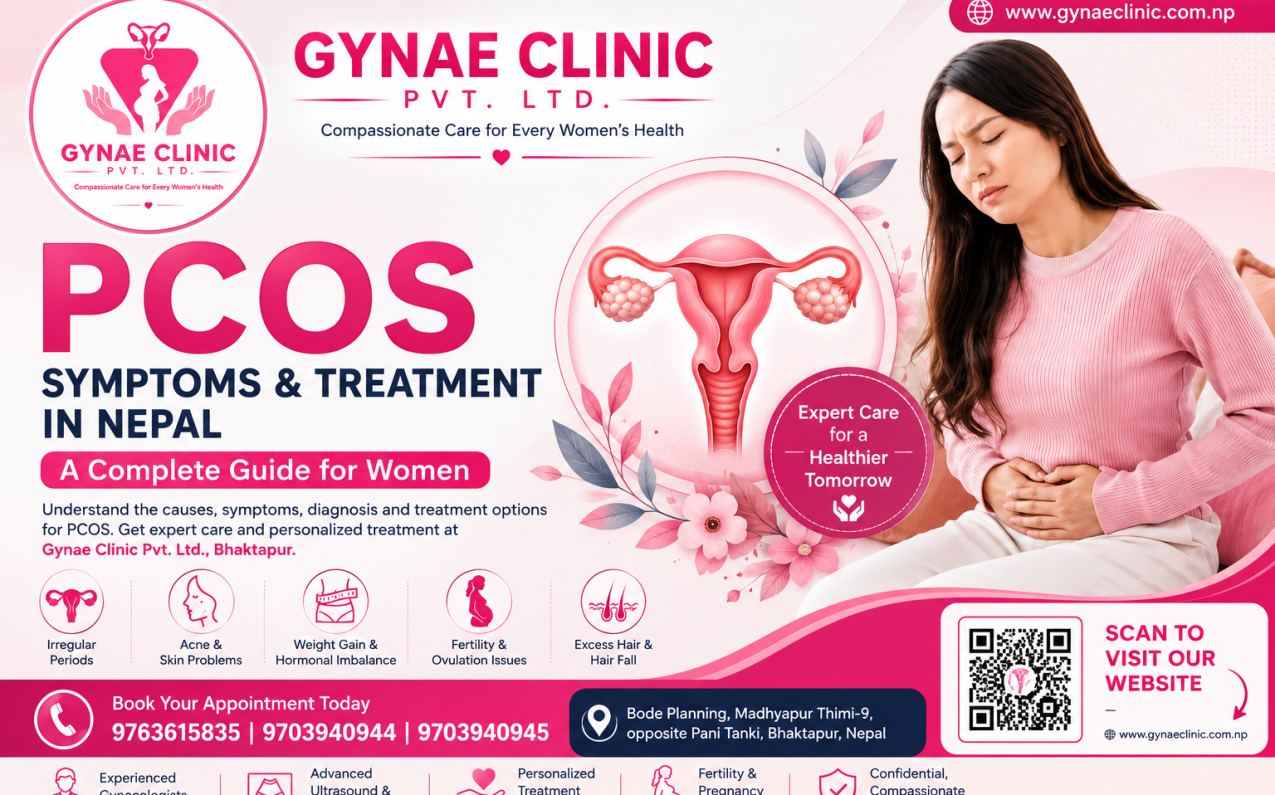
Are you experiencing irregular periods, acne, unwanted facial hair, hair fall, weight changes, or difficulty becoming pregnant?
These symptoms may sometimes be related to Polycystic Ovary Syndrome (PCOS), one of the most common hormonal conditions affecting women during their reproductive years.
PCOS can affect every woman differently. Some women experience irregular periods, while others may have acne, excessive hair growth, hair thinning, weight changes, difficulty conceiving, or insulin resistance.
Importantly, PCOS should not be diagnosed based only on your weight, menstrual cycle, or an ultrasound report. Proper medical evaluation is important for an accurate diagnosis and personalized treatment plan.
What Is PCOS?
Polycystic Ovary Syndrome (PCOS) is a common hormonal and metabolic condition that can affect:
- Menstrual cycles
- Ovulation
- Fertility
- Hormone levels
- Skin and hair
- Weight and metabolism
- Long-term health
The World Health Organization estimates that PCOS affects approximately 10–13% of women of reproductive age worldwide, and many women may remain undiagnosed.
Despite its name, you do not need to have ovarian cysts to have PCOS. This is one of the most common misconceptions about the condition.
What Are the Common Symptoms of PCOS?
PCOS symptoms can vary significantly from woman to woman.
1. Irregular Periods
Irregular periods are one of the most common signs of PCOS.
You may experience:
- Periods that come very late
- Long gaps between periods
- Very few periods in a year
- Unpredictable menstrual cycles
- Heavy or prolonged bleeding in some cases
Irregular ovulation is often the reason menstrual cycles become irregular.
2. Difficulty Becoming Pregnant
PCOS can affect ovulation. If ovulation does not occur regularly, it may become more difficult to conceive naturally.
However, having PCOS does not mean you cannot become pregnant. Many women with PCOS conceive successfully with appropriate medical guidance and treatment.
3. Acne and Oily Skin
Increased androgen activity may contribute to:
- Persistent acne
- Adult acne
- Oily skin
- Acne that does not improve easily with routine skincare
If acne occurs together with irregular periods or unwanted hair growth, hormonal evaluation may be helpful.
4. Excess Facial or Body Hair
Some women with PCOS may develop increased hair growth on the:
- Face
- Chin
- Upper lip
- Chest
- Abdomen
This may occur because of increased androgen activity.
5. Hair Thinning or Hair Fall
Some women may experience:
- Hair thinning at the scalp
- Increased hair fall
- A widening hair part
- Female-pattern hair loss
Hormonal imbalance can be one of several possible causes of hair loss.
6. Weight Gain or Difficulty Losing Weight
Some women with PCOS experience weight gain, increased abdominal fat, or difficulty losing weight despite lifestyle efforts.
However, PCOS can also occur in women who are not overweight. Body weight alone cannot confirm or exclude PCOS.
7. Insulin Resistance and Metabolic Changes
PCOS may be associated with insulin resistance and an increased risk of metabolic problems, including type 2 diabetes.
For this reason, PCOS care should focus on overall health, not only periods or fertility.
What Causes PCOS?
There is no single cause of PCOS.
The condition may be influenced by a combination of:
- Genetic factors
- Hormonal imbalance
- Insulin resistance
- Family history
- Metabolic factors
Women with a family history of PCOS or type 2 diabetes may have a higher risk.
Researchers continue to study the complex relationship between genetics, hormones, and metabolism.
How Is PCOS Diagnosed?
A proper PCOS diagnosis requires medical evaluation.
A gynecologist may assess:
- Menstrual cycle
- Symptoms
- Medical history
- Family history
- Physical signs
- Hormone levels
- Metabolic health
- Ultrasound findings when appropriate
In adults, PCOS is generally diagnosed after other possible causes have been excluded and when at least two key features are present:
- Evidence of increased androgen activity
- Irregular or absent ovulation
- Polycystic ovarian morphology on appropriate imaging
An ultrasound alone does not diagnose PCOS. Similarly, irregular periods alone do not automatically mean that you have PCOS.
Conditions such as thyroid disorders, elevated prolactin, and other hormonal conditions can cause similar symptoms. Proper evaluation is therefore important.
What Tests May Be Recommended for PCOS?
The tests recommended for PCOS depend on your symptoms and medical history.
Hormonal Tests
These may include tests related to:
- Testosterone and other androgens
- Thyroid function
- Prolactin
- Other reproductive hormones when clinically appropriate
Blood Sugar and Metabolic Tests
These may include:
- Blood glucose testing
- HbA1c
- Other metabolic assessments when indicated
Pelvic Ultrasound
A pelvic ultrasound may help assess the ovaries and uterus when clinically appropriate.
However, an ultrasound finding alone is not enough to diagnose PCOS.
AMH Test
In some adult patients, AMH may be considered as part of the diagnostic assessment under current international guidance. However, it should not be interpreted in isolation.
The right tests depend on the individual patient.
PCOS Treatment in Nepal
Is There a Cure for PCOS?
PCOS is generally considered a long-term condition, but its symptoms and associated health risks can be managed.
There is no single treatment that works for every woman.
The appropriate treatment plan may depend on:
- Age
- Symptoms
- Menstrual pattern
- Fertility goals
- Hormone levels
- Weight and metabolic health
- Other medical conditions
The goal is not simply to “treat PCOS.” The goal is to understand how PCOS affects you and develop an individualized treatment plan.
1. Lifestyle Changes
Healthy lifestyle habits are an important part of PCOS management.
These may include:
- Regular physical activity
- Balanced nutrition
- Adequate sleep
- Stress management
- Maintaining a healthy weight where appropriate
You do not need an extreme diet or unrealistic exercise routine. Sustainable lifestyle habits that you can maintain over time may be more useful than temporary restrictive plans.
2. Medicines for Irregular Periods
Depending on your situation, a gynecologist may recommend medication to:
- Regulate menstrual bleeding
- Protect the lining of the uterus
- Manage hormonal symptoms
The appropriate medicine depends on your medical history and reproductive goals.
Do not start hormonal medication without medical advice.
3. Treatment for Acne and Excess Hair
Treatment may be considered for:
- Acne
- Unwanted facial or body hair
- Hormonal hair loss
Treatment may involve medical and dermatological approaches depending on the cause and severity.
4. PCOS and Weight Management
If weight management is relevant to your health, even modest and sustainable improvements may help some metabolic and reproductive outcomes.
However, PCOS is not simply a weight problem. Women with normal body weight can also have PCOS.
The focus should be on overall health rather than shame, blame, or unrealistic expectations.
5. PCOS Treatment for Pregnancy and Fertility
Many women discover they have PCOS when they begin trying to conceive.
PCOS can cause irregular ovulation, but it does not mean pregnancy is impossible.
Depending on the individual situation, treatment may include:
- Lifestyle support
- Ovulation-induction treatment
- Fertility monitoring
- Other fertility treatments when appropriate
Treatment should be based on the individual woman’s health and fertility goals rather than a generic internet treatment plan.
Can PCOS Cause Infertility?
PCOS can make pregnancy more difficult because ovulation may not occur regularly.
However, PCOS-related infertility is often treatable.
Many women with PCOS become pregnant after receiving appropriate medical care.
If you have irregular periods and are trying to conceive, an early consultation may help identify the reason for irregular ovulation and guide appropriate treatment.
PCOS and Pregnancy
Women with PCOS can become pregnant, but some pregnancy-related risks may be higher.
For this reason, women with PCOS may benefit from appropriate preconception counselling and pregnancy monitoring.
If you are planning pregnancy and have PCOS, it can be helpful to discuss:
- Your menstrual cycle
- Current medications
- Blood sugar and metabolic health
- Folic acid
- Fertility goals
- Pre-existing health conditions
Can PCOS Cause Long-Term Health Problems?
PCOS can affect more than reproductive health.
Some women with PCOS may have increased risks related to:
- Insulin resistance
- Type 2 diabetes
- Obesity
- Mental health
- Sleep-related problems
- Endometrial health
The level of risk is different for every woman.
Regular medical follow-up can help identify potential health concerns early and guide appropriate management.
PCOS and Mental Health
Living with irregular periods, acne, unwanted hair growth, hair loss, weight changes, or fertility concerns can affect emotional well-being.
Some women with PCOS may experience:
- Anxiety
- Low mood
- Stress
- Reduced confidence
- Concerns about body image
These concerns are real and deserve attention.
PCOS care should consider the whole person, not only hormone reports and ultrasound findings.
Common PCOS Myths
Myth 1: “I have PCOS because I have ovarian cysts.”
Not necessarily.
Ovarian cysts are not required for a PCOS diagnosis.
Myth 2: “Only overweight women get PCOS.”
False.
PCOS can affect women of different body sizes.
Myth 3: “If I have PCOS, I cannot become pregnant.”
False.
Many women with PCOS become pregnant with appropriate medical care.
Myth 4: “One ultrasound can diagnose PCOS.”
Not always.
Diagnosis requires proper clinical assessment and exclusion of other possible causes.
Myth 5: “PCOS is only a period problem.”
False.
PCOS can affect reproductive, hormonal, metabolic, skin, hair, and emotional health.
When Should You See a Gynecologist for PCOS?
Consider seeking medical evaluation if you have:
- Very irregular periods
- No period for several months
- Persistent acne with irregular periods
- Excess facial or body hair
- Unexplained hair thinning
- Difficulty becoming pregnant
- Sudden or unexplained hormonal symptoms
- Concerns about PCOS or insulin resistance
You do not need to wait until your symptoms become severe before seeking professional medical advice.
PCOS Treatment in Bhaktapur and Madhyapur Thimi
If you are looking for PCOS treatment in Bhaktapur, a PCOS doctor in Bhaktapur, PCOS consultation in Madhyapur Thimi, or professional care for hormonal and reproductive health concerns in Kathmandu Valley, proper evaluation is an important first step.
At Gynae Clinic Pvt. Ltd., women can seek professional gynecology consultation for concerns related to:
- PCOS and hormonal imbalance
- Irregular periods
- Acne and unwanted hair growth
- Fertility concerns
- Pregnancy planning
- Hormonal evaluation
- Ultrasound and relevant investigations
- Women’s reproductive health
Visit Gynae Clinic Pvt. Ltd.
Gynae Clinic Pvt. Ltd.
Bode Planning, Madhyapur Thimi-9, opposite Pani Tanki, Bhaktapur, Nepal
Appointments & Inquiries:
9763615835 | 9703940944 / 9703940945
If you are experiencing symptoms associated with PCOS or have concerns about your menstrual cycle, fertility, or hormonal health, consult a qualified gynecology professional for an individualized evaluation.
Frequently Asked Questions About PCOS
Can PCOS be completely cured?
PCOS is generally considered a long-term condition, but its symptoms and associated health risks can often be effectively managed.
Can I get pregnant if I have PCOS?
Yes. Many women with PCOS become pregnant. Treatment may help improve ovulation when needed.
Do I need an ultrasound to diagnose PCOS?
Not necessarily. Diagnosis depends on the overall clinical picture, symptoms, examination, and appropriate investigations.
Can thin women have PCOS?
Yes. PCOS can occur in women of different body sizes.
Is irregular menstruation always PCOS?
No. Irregular periods can have many possible causes. A proper medical evaluation is needed.
Is PCOS dangerous?
PCOS can be managed, but it should not be ignored. Some women may have increased long-term metabolic and reproductive health risks.
What is the best treatment for PCOS?
There is no single best treatment for every woman. Treatment should be personalized according to symptoms, health status, and pregnancy goals.
The Most Important Message About PCOS
PCOS is not your fault.
It is not simply a problem of weight, periods, or ovarian cysts. PCOS is a complex condition that can affect different women in different ways.
You do not need to ignore unexplained irregular periods, persistent acne, unwanted hair growth, or fertility concerns.
The right first step is proper evaluation, accurate diagnosis, and a personalized treatment plan.
Your symptoms deserve to be heard. Your questions deserve clear answers. And your health deserves care designed for you.
Book Your Gynecology Consultation
Gynae Clinic Pvt. Ltd.
Location: Bode Planning, Madhyapur Thimi-9, opposite Pani Tanki, Bhaktapur, Nepal
Call for appointments:
9763615835 | 9703940944 / 9703940945
Medical Disclaimer
This article is intended for general educational purposes and does not replace a consultation with a qualified healthcare professional. PCOS symptoms can overlap with other medical conditions. Diagnosis and treatment should be based on an individual medical evaluation.
Author: Gynae Clinic Pvt. Ltd. / Qualified Medical Professional
Last Updated: July 2026