
Sexual intimacy should not leave you regularly dealing with pain, burning, soreness, irritation, unusual discharge, bleeding, or pelvic discomfort.
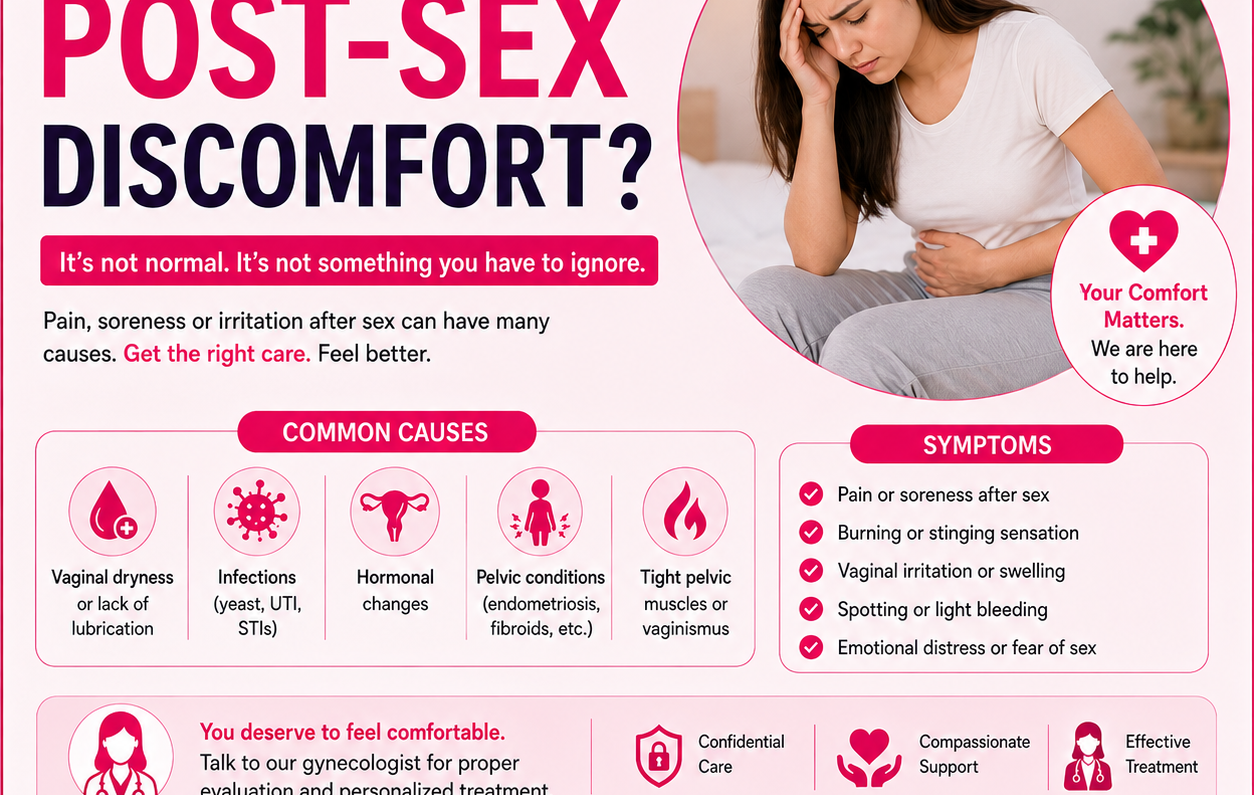
A little temporary sensitivity can sometimes occur after vigorous sexual activity, especially when there has been friction or insufficient lubrication. However, recurrent, significant, or unexplained discomfort after sex should not simply be ignored. Pain during or after intercourse can have several possible causes, including vaginal dryness, infections, sexually transmitted infections (STIs), pelvic floor problems, endometriosis and other gynecological conditions.
If you regularly experience discomfort after sex, a gynecological evaluation can help identify the underlying cause and guide appropriate treatment.
What Does Post-Sex Discomfort Feel Like?
Post-sex discomfort can mean different things for different women. You may experience:
- Burning or stinging around the vagina
- Vaginal soreness or tenderness
- Pain at the vaginal opening
- Deep pelvic or lower abdominal pain
- Cramping after intercourse
- Itching or irritation
- Pain or burning while urinating
- Vaginal dryness
- Unusual vaginal discharge
- Spotting or bleeding after sex
- A feeling of pressure or discomfort in the pelvis
Pain may occur immediately after intercourse or continue for several hours. Some women experience discomfort even when intercourse itself was not particularly painful.
Is Discomfort After Sex Normal?
Occasional mild soreness can happen, particularly after prolonged or vigorous intercourse, friction, or inadequate lubrication.
But repeated or persistent post-sex discomfort is not something you should simply accept as normal.
Pain during or after sex is known medically as dyspareunia. It can occur at the vaginal opening, within the vagina, around the vulva or urethra, or deeper in the pelvis. There can be physical, hormonal, infectious, pelvic or psychological contributors, and sometimes more than one factor is involved.
If the discomfort keeps returning, becomes worse, affects your relationship or sexual wellbeing, or occurs together with other symptoms, it is worth discussing with a gynecologist.
Common Causes of Discomfort After Sex
1. Vaginal Dryness
One of the most common reasons sex may cause soreness or burning is insufficient vaginal lubrication.
Dryness can increase friction during intercourse and may leave the vaginal tissues feeling irritated or sore afterward.
Vaginal dryness can occur at different stages of life and may be associated with hormonal changes, including menopause, pregnancy or breastfeeding. Certain medications and other factors can also contribute.
You may notice:
- Burning after sex
- Soreness
- Irritation
- Pain during penetration
- Small amounts of spotting
- Discomfort that continues after intercourse
If dryness happens repeatedly, don’t assume it is simply a normal part of sexual activity. Finding the reason for the dryness can be important.
2. Friction or Minor Irritation
Sexual activity can sometimes cause irritation because of increased friction.
This may happen when:
- There is insufficient lubrication
- Intercourse is prolonged or vigorous
- The vaginal tissues are already irritated
- Certain soaps or intimate products irritate the skin
- A condom, lubricant or spermicide causes sensitivity in an individual
Irritated tissues may feel sore, burning or tender afterward.
If symptoms repeatedly occur after using a particular product, discuss this with a healthcare professional rather than repeatedly treating the symptoms yourself.
3. Vaginal Infections
Vaginal infections can cause discomfort during or after sex.
For example, vaginitis may cause soreness, itching, unusual discharge, dryness, pain during intercourse and discomfort when urinating. Different causes can produce different symptoms.
You may also notice:
- Unusual vaginal odor
- White, yellow or green discharge
- Itching
- Redness
- Burning
- Swelling
- Pain during sex
Because several vaginal conditions can produce similar symptoms, it is not always possible to determine the cause based only on appearance or discharge.
4. Sexually Transmitted Infections (STIs)
An STI can sometimes cause pain, irritation, discharge, urinary symptoms or pelvic discomfort after sex.
However, an important point is that many STIs can have no symptoms at all. A woman may have an infection without knowing it.
STIs that may be associated with genital or pelvic symptoms include:
- Chlamydia
- Gonorrhea
- Trichomoniasis
- Genital herpes
- Syphilis
- Other sexually transmitted infections
If you have had sex with a new partner, had unprotected sex, are concerned about a partner’s sexual health, or have symptoms suggestive of an infection, appropriate STI testing may be recommended.
You can learn more about [STI testing for women] through Gynae Clinic’s women’s sexual-health information. STI Testing for Women
5. Urinary Tract Infection (UTI)
Some women experience urinary discomfort after sexual activity.
A UTI can cause symptoms such as:
- Burning when urinating
- Frequent urination
- Urgency to urinate
- Lower abdominal discomfort
- Urinary irritation
Pelvic discomfort can have several possible causes, including urinary infections and STIs, so persistent symptoms should be evaluated rather than automatically assuming that sex itself is responsible.
6. Pelvic Inflammatory Disease (PID)
Pelvic inflammatory disease is an infection involving the female reproductive organs and can sometimes develop following certain untreated infections.
Possible symptoms can include:
- Lower abdominal or pelvic pain
- Pain during sex
- Abnormal vaginal discharge
- Bleeding between periods
- Fever or feeling unwell
Because untreated pelvic infections can have important reproductive-health consequences, persistent pelvic pain associated with sexual activity deserves medical attention.
7. Endometriosis
Endometriosis is another possible cause of pain associated with sex.
It can cause pelvic pain and may be associated with painful periods, pain during or after sex, and discomfort with bowel movements or urination.
If post-sex pelvic pain repeatedly occurs together with:
- Very painful periods
- Heavy periods
- Chronic pelvic pain
- Pain with bowel movements
- Pain with urination around menstruation
- Difficulty becoming pregnant
a gynecological assessment may be appropriate.
8. Ovarian Cysts and Other Pelvic Conditions
Pain deep in the pelvis after intercourse can sometimes be associated with conditions affecting the reproductive organs.
Possible causes include ovarian cysts, fibroids, endometriosis and other pelvic conditions. Fibroids, for example, can sometimes be associated with pelvic symptoms and pain during sex.
The location, severity and timing of the pain can help a gynecologist decide what evaluation may be appropriate.
9. Pelvic Floor Muscle Problems
The pelvic floor muscles play an important role in sexual function.
If these muscles become excessively tight or do not relax properly, penetration may become painful and discomfort can continue afterward.
Pelvic floor dysfunction can contribute to pain at the vaginal opening, during penetration or after sex.
This is an important cause because repeatedly experiencing pain can itself lead to muscle tightening, potentially creating a cycle of pain and discomfort.
10. Hormonal Changes
Changes in estrogen and other hormones can affect vaginal tissues and lubrication.
This can happen during:
- Perimenopause and menopause
- Pregnancy
- Breastfeeding
- Certain hormonal changes or treatments
Vaginal dryness and tissue sensitivity can make sexual activity uncomfortable.
If discomfort begins during a period of significant hormonal change, mention this during your gynecological consultation.
Pain After Sex Should Not Be Something You Have to Tolerate
Many women hesitate to discuss sexual pain because they feel embarrassed or believe it is simply part of having sex.
It isn’t something you should feel forced to tolerate.
There are many possible causes of pain during or after intercourse, and the correct approach depends on the underlying reason.
A proper assessment can help distinguish between dryness, irritation, infection, STI-related problems, pelvic conditions, hormonal factors and pelvic floor problems.
When Should You See a Gynecologist?
Consider seeing a gynecologist if:
- Pain happens repeatedly after sex
- Pain is becoming more severe
- You experience burning or itching
- You have unusual vaginal discharge
- There is a new or unpleasant vaginal odor
- You experience bleeding after sex
- You have pelvic or lower abdominal pain
- Urination becomes painful
- You have concerns about an STI
- Sex has become consistently painful
- You are avoiding intimacy because of pain
- You have been trying to manage the symptoms yourself without improvement
You can also read Gynae Clinic’s guide on [when you should visit a gynecologist] for more information about symptoms that deserve professional evaluation. When Should You Visit a Gynecologist?
When Is Post-Sex Pain an Urgent Concern?
Seek prompt medical attention if post-sex discomfort is accompanied by:
- Severe or rapidly worsening pelvic pain
- Heavy vaginal bleeding
- Fever or chills
- Fainting or significant weakness
- Severe abdominal pain
- Vomiting with significant pelvic pain
- Severe pain when pregnancy is possible
Pelvic pain has many causes, and some require urgent assessment.
What Happens During a Gynecological Consultation?
Many women worry about what will happen when they seek help for sexual discomfort.
A gynecologist will generally begin by asking about your symptoms.
You may be asked:
- Where exactly does the pain occur?
- Does it happen during penetration, afterward, or both?
- How long does the discomfort last?
- Is it burning, aching, cramping or sharp?
- Do you have vaginal discharge or odor?
- Do you experience itching?
- Do you have pain while urinating?
- Have you noticed bleeding?
- Is the pain associated with your menstrual cycle?
- Could you be pregnant?
- Are there concerns about an STI?
Depending on your symptoms, an examination or testing may be recommended.
Possible investigations may include vaginal or cervical testing, STI testing, urine testing, pregnancy testing or imaging such as ultrasound when clinically appropriate.
The purpose is not simply to treat the pain, but to understand why it is happening.
Do You Need STI Testing If You Have No Symptoms?
Sometimes, yes.
The absence of symptoms does not necessarily mean that an STI is absent. Many STIs can cause few or no noticeable symptoms. Testing decisions depend on factors such as sexual history, symptoms, pregnancy status and individual risk.
If you are concerned about sexual exposure, speak confidentially with a healthcare professional about which tests may be appropriate.
For more information, see Gynae Clinic’s guide to [confidential STI testing and treatment in Bhaktapur]. Confidential STI Testing in Bhaktapur
What Can You Do Until You Are Evaluated?
If sex is causing pain or irritation:
- Do not force sexual activity through significant pain.
- Give irritated tissues time to recover.
- Avoid harsh soaps or fragranced products around the genital area.
- Pay attention to when the symptoms occur.
- Note any associated discharge, odor, bleeding or urinary symptoms.
- If an STI is possible, seek appropriate testing and medical advice.
- Avoid repeatedly using medicines without knowing the cause.
Most importantly, don’t assume recurring discomfort is simply part of sexual activity.
Post-Sex Discomfort: Questions Women Commonly Ask
Is it normal to feel sore after sex?
Mild, temporary soreness can occasionally occur because of friction or vigorous sexual activity. However, recurring, significant or unexplained soreness should be evaluated to identify the cause.
Why does it burn after sex?
Burning may be associated with friction, vaginal dryness, irritation, vaginitis, urinary problems or an STI. The exact cause cannot be determined from burning alone.
Why does my lower stomach hurt after sex?
Deep pelvic or lower abdominal pain can have several causes, including pelvic infections, endometriosis, ovarian or uterine conditions and other pelvic problems. Persistent or severe pain should be assessed by a healthcare professional.
Can an STI cause pain after sex?
Yes. Some STIs can cause genital or pelvic symptoms, although many STIs produce no symptoms. Testing may therefore be important when there is a possible exposure.
Can vaginal dryness cause pain after intercourse?
Yes. Reduced lubrication can increase friction and lead to soreness or discomfort during or after sex. Hormonal changes are one possible contributor to vaginal dryness.
Should I see a gynecologist if pain happens every time I have sex?
Yes. Repeated pain during or after sex deserves evaluation. There may be a treatable cause, and you should not have to continue experiencing pain without understanding why.
Can endometriosis cause pain after sex?
Yes. Endometriosis can be associated with pelvic pain and pain during or after sex.
Your Comfort Matters
Post-sex discomfort is not something women should simply learn to live with.
Sometimes the cause is straightforward, such as dryness or irritation. In other cases, it may be related to infection, an STI, hormonal changes, pelvic floor dysfunction, endometriosis or another gynecological condition.
The important step is to listen to your body and seek appropriate medical evaluation when symptoms persist or recur.
If you are looking for a gynecologist in Bhaktapur, Gynae Clinic Pvt. Ltd. provides women-focused gynecological care with an emphasis on privacy, compassionate communication and individualized evaluation.
Book a Gynecological Consultation in Bhaktapur
Gynae Clinic Pvt. Ltd.
Bode Planning, Madhyapur Thimi-9, Pani Tanki, Bhaktapur, Nepal
Appointments:
📞 9703940944
📞 9703940945
📞 9763615835
Email: gynaeclinic1@gmail.com
Whether the discomfort is related to dryness, infection, pelvic pain, sexual health concerns or another gynecological issue, getting the right assessment is an important step toward better women’s health.
Medical Disclaimer
This article is intended for general educational purposes and should not be considered a diagnosis or a substitute for an in-person medical consultation. Post-sex discomfort can have many different causes, and appropriate examination or testing may be necessary. Certain complex conditions may benefit from advanced specialist care.
Author: Gynae Clinic Pvt. Ltd. — Women’s Health & Gynecology Care, Bhaktapur, Nepal