
Is an HIV test included in an STD test? This is one of the most common questions people ask when considering sexual health testing.
The important answer is: sometimes, but not always.
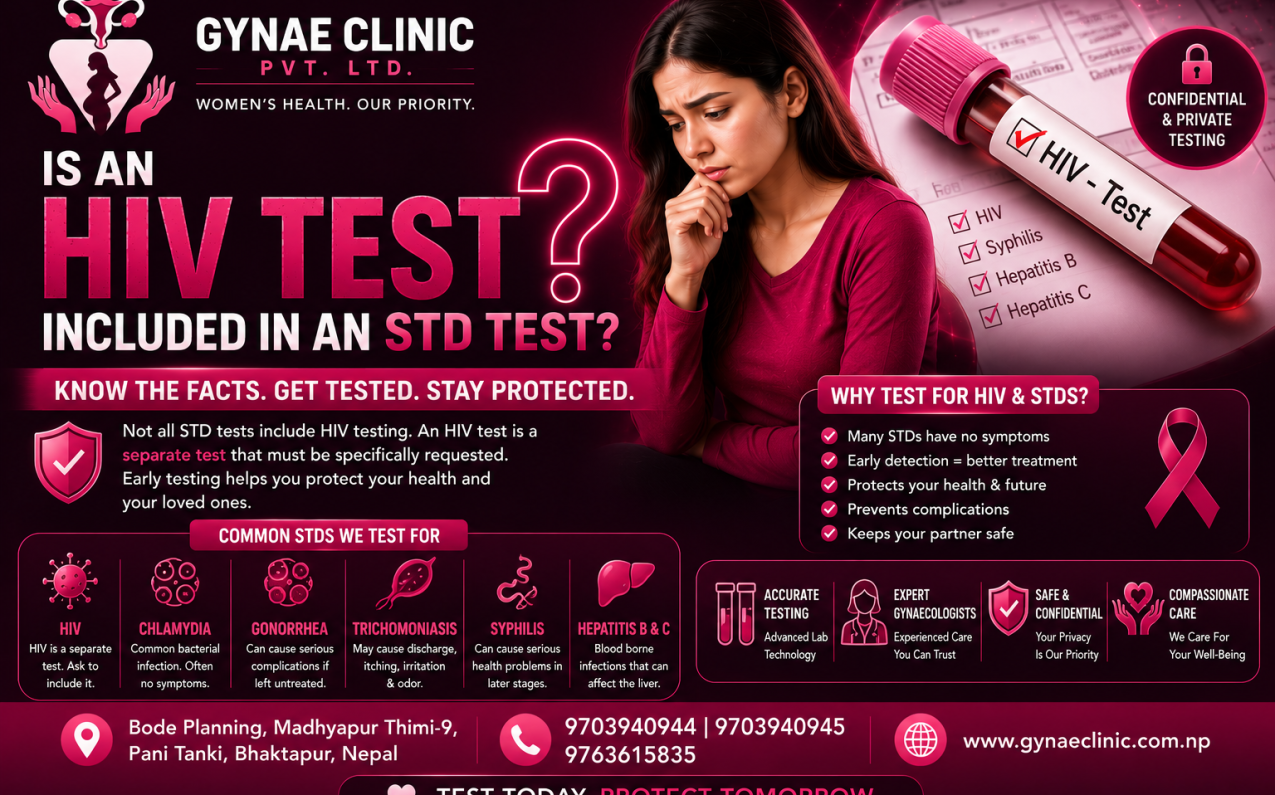
There is no single universal “STD test” that automatically checks for every sexually transmitted infection. An STI/STD testing panel can include different tests depending on the clinic, laboratory, symptoms, sexual exposure, age, pregnancy status and individual risk factors.
HIV is a sexually transmitted infection, but an HIV test is a specific test for HIV. Therefore, you should not assume that an HIV test was performed simply because you requested an “STD test.” Always ask the healthcare provider or laboratory exactly which infections are included.
When someone is being evaluated for an STI, HIV testing is commonly recommended. The CDC recommends HIV testing for people seeking STI evaluation who are not already known to have HIV.
Is HIV Included in a Standard STD Test?
It depends on what the healthcare provider or laboratory means by “STD test.”
Some clinics offer a combined sexual health or STI panel that includes:
- HIV
- Syphilis
- Chlamydia
- Gonorrhea
- Hepatitis B
- Hepatitis C
- Trichomoniasis, when appropriate
But another clinic may offer an STD panel that includes only selected infections.
Therefore, never assume that “STD test” automatically means HIV testing.
Before testing, ask:
“Which infections are included in my STD/STI test?”
This simple question can prevent confusion about your results.
Is HIV an STD?
HIV is a sexually transmissible infection, but the preferred medical term is HIV infection rather than simply calling it an STD.
HIV can be transmitted through certain sexual exposures as well as through other routes such as sharing contaminated injection equipment and from mother to baby during pregnancy, childbirth or breastfeeding.
Because HIV can be sexually transmitted, HIV testing is an important part of sexual health evaluation.
Does an STD Test Automatically Include HIV?
No, not automatically.
The term STD test does not refer to one standardized laboratory test.
Different laboratories and clinics may offer different combinations of tests.
For example:
Basic STI panel
May include:
- Chlamydia
- Gonorrhea
- Syphilis
Expanded sexual health panel
May include:
- HIV
- Syphilis
- Chlamydia
- Gonorrhea
- Hepatitis B
- Hepatitis C
Individual testing
You may also be tested for one specific infection, such as:
- HIV only
- Chlamydia only
- Gonorrhea only
- Syphilis only
Always confirm what is actually being tested.
Why Is HIV Testing Recommended During STI Evaluation?
STIs and HIV can occur together, and having an STI can be an important marker of sexual exposure and HIV risk.
For people seeking evaluation or treatment for an STI, CDC guidance recommends HIV testing when the person is not already known to have HIV.
This does not mean that having another STI means you have HIV.
It means that an STI evaluation can be an appropriate opportunity to check HIV status.
What Is Included in an STD Test?
There is no single universal STD panel.
Depending on your situation, testing may include different infections.
1. HIV
HIV testing specifically looks for evidence of HIV infection.
Modern laboratory testing commonly uses an HIV antigen/antibody combination test as an initial laboratory test.
2. Chlamydia
Chlamydia is a common bacterial STI.
Testing may involve:
- Urine
- Vaginal sample
- Cervical sample
- Other site-specific samples when appropriate
Chlamydia can occur without noticeable symptoms.
3. Gonorrhea
Gonorrhea is another bacterial STI that may be tested using urine or appropriate genital samples.
Depending on sexual exposure, testing from other anatomical sites may also be considered.
4. Syphilis
Syphilis is generally evaluated using blood tests.
Depending on the clinical situation, more than one type of blood test may be used to establish whether infection is present.
5. Trichomoniasis
Trichomoniasis can cause:
- Vaginal discharge
- Odor
- Itching
- Irritation
- Burning
- Discomfort during sex
Specific testing may be recommended based on symptoms and individual risk.
6. Hepatitis B
Hepatitis B can be sexually transmitted and can also be transmitted through blood exposure.
Blood tests can determine whether a person has current infection, previous exposure or immunity, depending on the tests performed.
7. Hepatitis C
Hepatitis C is primarily blood-borne, although sexual transmission can occur in certain circumstances.
Testing involves blood tests.
8. HPV
HPV is sexually transmitted, but HPV testing is different from most routine STI testing.
For women, HPV testing is primarily used as part of cervical cancer screening according to the appropriate screening strategy.
A Pap smear and HPV test are also not the same thing.
HIV Test vs STD Test: What Is the Difference?
| HIV Test | STD/STI Testing |
|---|---|
| Specifically tests for HIV | May test for one or several STIs |
| Usually a separate HIV-specific test | Can involve blood, urine or swab tests |
| Does not diagnose chlamydia | Chlamydia requires its own test |
| Does not diagnose gonorrhea | Gonorrhea requires its own test |
| Does not diagnose syphilis | Syphilis requires specific testing |
| Can be part of a broader STI panel | The exact panel varies |
The key point is simple:
HIV testing and STI testing are related, but they are not automatically the same test.
Can a Blood Test Detect All STDs?
No.
Different infections require different tests.
Some STIs are commonly tested using blood:
- HIV
- Syphilis
- Hepatitis B
- Hepatitis C
Other infections may require:
- Urine
- Vaginal swabs
- Cervical samples
- Throat swabs
- Rectal samples
The appropriate sample depends on the infection and the site of possible exposure.
CDC guidance notes that STI testing can involve blood, urine and swabs from the vagina, throat or rectum, depending on the infection and circumstances.
Can an HIV Test Detect Other STDs?
No.
An HIV test is specifically designed to detect HIV.
A negative HIV test does not mean you are negative for:
- Chlamydia
- Gonorrhea
- Syphilis
- Trichomoniasis
- Hepatitis B
- Hepatitis C
- Other STIs
Likewise, a negative chlamydia test does not tell you whether you have HIV.
Each infection requires the appropriate test.
Can an STD Test Be Negative but HIV Positive?
Yes, depending on which tests were included.
For example, if a person receives only:
- Chlamydia testing
- Gonorrhea testing
and both are negative, this does not provide information about HIV status.
If HIV testing was not included, an HIV-specific test would still be required.
This is why it is important to know exactly what was tested rather than simply looking at the phrase “STD test.”
Can You Have HIV Without Symptoms?
Yes.
One of the most important facts about HIV is that a person can have HIV without obvious symptoms.
That is why symptoms alone cannot determine HIV status.
CDC notes that STIs often have no symptoms, and recommends appropriate testing based on individual circumstances.
If you have had a possible HIV exposure, testing is more reliable than trying to judge your risk based on how you feel.
When Should You Get an HIV Test?
HIV testing may be appropriate if:
- You had sex without a condom
- A condom broke or slipped
- You have a new sexual partner
- Your partner’s HIV status is unknown
- Your partner has HIV
- You have been diagnosed with another STI
- You have had multiple sexual partners
- You have shared injection equipment
- You are pregnant
- A healthcare professional recommends testing
- You are worried about a possible HIV exposure
The exact timing of testing after an exposure matters because tests cannot detect infection immediately after transmission.
If you are concerned about a very recent exposure, speak with a healthcare professional promptly rather than waiting for symptoms.
How Soon Can HIV Be Detected After Sex?
There is no single detection time for every HIV test.
Different HIV tests have different window periods, meaning the time between infection and when a test can reliably detect it.
For example, laboratory antigen/antibody tests can detect infection earlier than some antibody-only tests.
If the test is performed too soon after exposure, a negative result may not completely rule out a recent infection.
Your healthcare professional can advise you on:
- Which HIV test is appropriate
- When to test
- Whether repeat testing is needed
If the exposure was recent, tell the provider the exact date of the possible exposure.
What If You Had a Recent High-Risk HIV Exposure?
If you think you may have been exposed to HIV within the previous 72 hours, seek urgent medical advice.
HIV post-exposure prophylaxis (PEP) may be appropriate for some people and works best when started as soon as possible.
CDC guidance specifically recommends assessing people seeking STI services for HIV prevention options, including PEP when a substantial-risk exposure occurred less than 72 hours earlier.
Do not wait for symptoms before seeking advice about a recent possible exposure.
Does an HIV Test Need to Be Requested Separately?
Sometimes yes, sometimes no.
If your clinic offers a comprehensive STI panel that includes HIV, the HIV test may be performed as part of that panel.
But if the clinic’s STD panel does not include HIV, you may need a separate HIV test.
The safest approach is to ask:
“Does this STD panel include HIV testing?”
Also ask:
“Which other infections are included?”
What Should an STD Panel Include?
There is no universal list that applies to everyone.
A healthcare professional may select tests based on:
- Your symptoms
- Sexual history
- Type of sexual exposure
- Number of partners
- Partner’s STI status
- Pregnancy
- Previous STI history
- Local prevalence
- Your age and other health factors
CDC guidance emphasizes that STI testing should be tailored to the individual’s circumstances rather than assuming everyone needs exactly the same tests.
Can Women Get HIV and STI Testing Together?
Yes.
Women can sometimes have several sexual health tests during the same healthcare visit.
Depending on the situation, evaluation may include:
- HIV testing
- Syphilis testing
- Chlamydia testing
- Gonorrhea testing
- Hepatitis testing
- Trichomoniasis testing
- Other tests when clinically appropriate
This does not mean every woman needs every test.
A qualified healthcare professional can determine which tests are appropriate.
HIV & STI Testing During Pregnancy
HIV testing is particularly important during pregnancy.
CDC guidance recommends HIV testing during the first prenatal visit, alongside other recommended prenatal infection screening.
Pregnant women may also need testing for:
- Syphilis
- Hepatitis B
- Hepatitis C
- Chlamydia
- Gonorrhea
depending on guidelines and individual circumstances.
Early diagnosis allows appropriate medical care and helps reduce the risk of transmission to the baby.
Does a Negative STD Test Mean You Are Negative for HIV?
Only if an HIV test was actually performed and the timing was appropriate.
For example:
Chlamydia negative + gonorrhea negative ≠ HIV negative
But:
Appropriate HIV test negative + appropriate testing window = reassuring HIV result
If you are unsure whether HIV was included in your previous testing, check the laboratory report or ask the healthcare provider.
Does a Positive STD Test Mean You Have HIV?
No.
A positive result for chlamydia, gonorrhea or another STI does not automatically mean a person has HIV.
However, because STI diagnosis can indicate sexual exposure risk, HIV testing may be recommended as part of STI evaluation.
Why STI Testing Is Important Even Without Symptoms
Many STIs can be present without obvious symptoms.
You may feel completely healthy and still have an infection.
Testing can help:
- Identify an infection
- Start appropriate treatment
- Reduce transmission to partners
- Prevent complications
- Protect reproductive health
CDC states that STI testing is an important part of sexual health because many infections do not cause symptoms.
HIV & STD Testing in Bhaktapur
If you are searching for HIV testing in Bhaktapur, STD testing in Bhaktapur, STI testing in Bhaktapur, or a women’s health clinic in Bhaktapur, it is important to understand exactly which tests you need.
At Gynae Clinic Pvt. Ltd., women can seek professional consultation for sexual and reproductive health concerns, including:
- HIV testing concerns
- STD/STI testing
- Chlamydia
- Gonorrhea
- Syphilis
- Trichomoniasis
- Hepatitis-related concerns
- Vaginal discharge
- Pelvic pain
- Bleeding after sex
- Burning while urinating
- Sexual health concerns
- Pregnancy-related infection screening
Gynae Clinic Pvt. Ltd.
Address:
Bode Planning, Madhyapur Thimi-9, Pani Tanki, Bhaktapur, Nepal
Website:
www.gynaeclinic.com.np
Contact:
9703940944 | 9703940945 | 9763615835
If you are unsure whether your previous STD test included HIV, bring your test report to a healthcare professional or ask exactly which infections were tested.
Frequently Asked Questions
Is HIV included in an STD test?
Sometimes, but not always. There is no universal STD panel. HIV testing may be included in some STI panels, while other panels may require a separate HIV test.
Is HIV considered an STD?
HIV is a sexually transmissible infection, although healthcare professionals commonly use the term HIV infection rather than simply calling it an STD.
Does an STD blood test test for HIV?
Not necessarily. A blood sample can be used to test for HIV, syphilis and hepatitis, but each infection requires its own specific laboratory test.
Does a negative STD test mean I don’t have HIV?
Only if an appropriate HIV test was included and performed at the appropriate time after exposure.
Can HIV be detected without symptoms?
Yes. A person can have HIV without obvious symptoms, which is why appropriate testing is important.
Should I get an HIV test after an STD diagnosis?
It is generally appropriate to discuss HIV testing when being evaluated or treated for an STI. CDC recommends HIV testing for people seeking STI evaluation who are not already known to have HIV.
Can I get HIV and STD tests on the same day?
Yes. Different STI and HIV tests can often be performed during the same healthcare visit, depending on the available services and your clinical situation.
What infections are commonly tested in an STI evaluation?
Depending on individual circumstances, testing may include HIV, syphilis, chlamydia, gonorrhea, hepatitis B, hepatitis C and trichomoniasis. Not everyone requires every test.
How soon after sex should I get an HIV test?
The appropriate timing depends on the type of HIV test and when the exposure occurred. If the exposure was very recent, speak with a healthcare professional promptly about testing and whether PEP may be appropriate.
What if I was exposed to HIV less than 72 hours ago?
Seek urgent medical advice. PEP may be an option for some exposures and should be started as soon as possible when indicated.
Final Takeaway
Is an HIV test included in an STD test? Sometimes—but you should never assume it is.
There is no single universal STD test or STD panel. Different clinics and laboratories offer different combinations of tests.
If you want a complete sexual health evaluation, ask:
“Does my STI/STD test include HIV, and what other infections are being tested?”
HIV testing is an important part of STI evaluation, and CDC recommends HIV testing for people seeking STI evaluation who are not already known to have HIV.
If you have had a possible sexual exposure, have symptoms, have been diagnosed with another STI, or simply want to know your HIV status, appropriate testing is more reliable than waiting for symptoms.
Gynae Clinic Pvt. Ltd.
Bode Planning, Madhyapur Thimi-9, Pani Tanki, Bhaktapur, Nepal
9703940944 | 9703940945 | 9763615835
www.gynaeclinic.com.np
Medical Disclaimer
This blog is for general health information only and does not replace professional medical advice, diagnosis or treatment. If you have concerns about HIV or STI exposure, consult a qualified healthcare professional for appropriate testing and advice.