
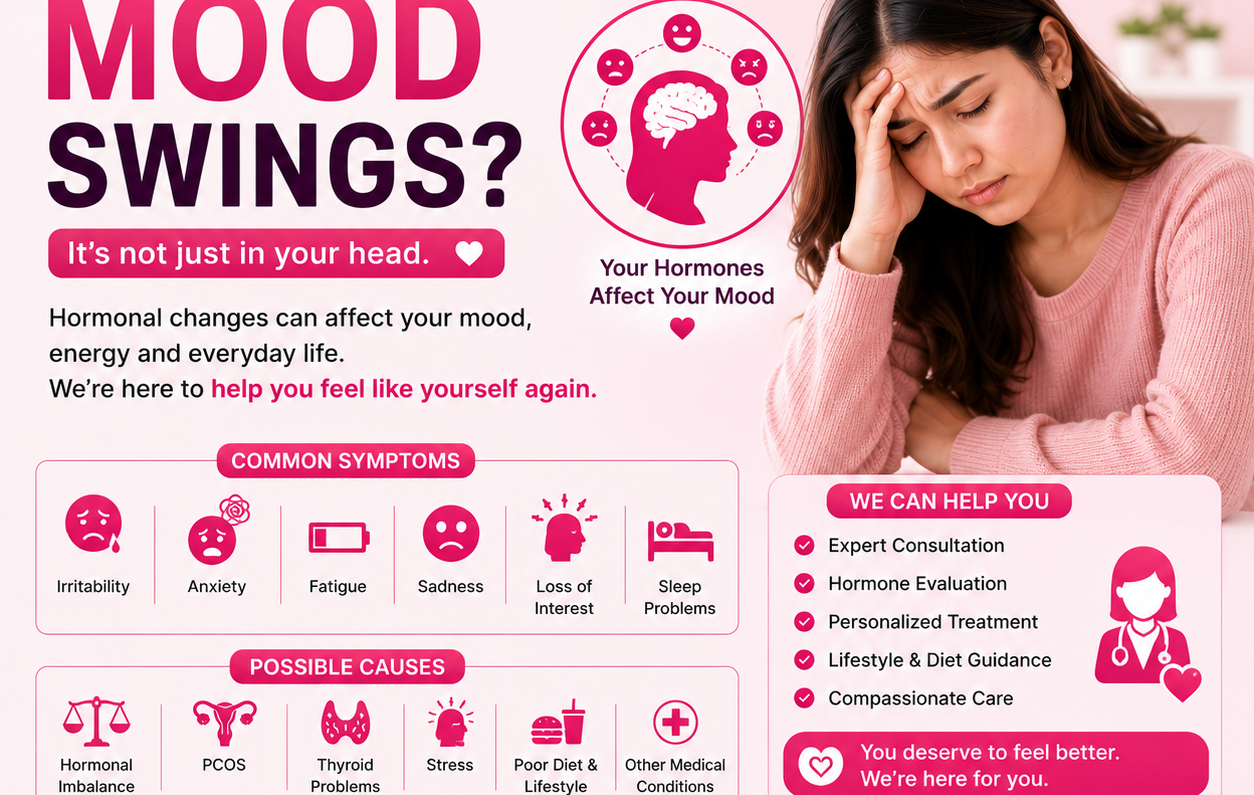
Mood swings are often dismissed with comments like, “You are just overthinking,” “It is all in your head,” or “You are being too emotional.”
But for many women, sudden changes in mood are real, noticeable and sometimes closely connected to hormonal changes, menstrual cycles, pregnancy, reproductive health, stress or other medical conditions.
Feeling unusually irritable, emotional, anxious, tearful or overwhelmed does not mean you are weak or imagining things. Your physical and emotional health are closely connected, and hormonal fluctuations can influence how you feel.
If mood changes are frequent, severe, interfere with daily life, or occur alongside changes in your menstrual cycle or other symptoms, it is worth talking to a healthcare professional.
If you are searching for a gynecologist in Bhaktapur to discuss hormonal changes, menstrual symptoms, PCOS, PMS, reproductive health or other women’s health concerns, Gynae Clinic Pvt. Ltd. provides women-focused gynecological consultation in Madhyapur Thimi, Bhaktapur.
Mood Swings Are Real — And They Can Have Physical Causes
Everyone experiences changes in mood. Feeling irritated after a difficult day or emotional during a stressful situation is normal.
However, repeated or intense mood changes can sometimes have an underlying cause.
For women, one important factor is hormonal fluctuation.
Hormones can change naturally throughout the menstrual cycle and during major reproductive stages such as:
- Before and during menstruation
- Around ovulation
- During pregnancy
- After childbirth
- During perimenopause
- During menopause
Other factors can also contribute to mood changes, including:
- Poor sleep
- Chronic stress
- Anxiety or depression
- Thyroid problems
- Certain medications
- Nutritional problems
- Relationship or work stress
- Major life changes
- Some chronic health conditions
That means mood swings should not automatically be labelled as “just emotional.”
What Are Mood Swings?
Mood swings are noticeable changes in emotional state that may happen over a short period or repeatedly over time.
A woman may experience:
- Irritability
- Anger
- Sadness
- Tearfulness
- Anxiety
- Feeling overwhelmed
- Emotional sensitivity
- Restlessness
- Low mood
- Sudden frustration
- Difficulty concentrating
- Feeling unusually impatient
The severity can vary greatly from one woman to another.
Some women notice mild emotional changes before their period, while others experience mood symptoms that significantly affect relationships, work, studies or everyday activities.
How Do Hormones Affect Mood?
Hormones act as chemical messengers throughout the body. They influence many processes, including reproductive function, metabolism, sleep and brain activity.
During the menstrual cycle, reproductive hormones such as estrogen and progesterone fluctuate.
Some women are particularly sensitive to these changes.
This can contribute to emotional symptoms around certain phases of the menstrual cycle.
This is one reason why a woman may notice:
“I feel completely different before my period.”
The experience is not necessarily imaginary. However, hormones are only one possible explanation, and persistent mood symptoms should not automatically be blamed on hormones.
Mood Swings Before Your Period
One of the most common patterns is mood change in the days before menstruation.
This can occur as part of premenstrual syndrome (PMS).
PMS can include emotional and physical symptoms such as:
- Irritability
- Mood changes
- Anxiety
- Sadness
- Fatigue
- Breast tenderness
- Bloating
- Headaches
- Food cravings
- Changes in appetite
- Sleep changes
Symptoms usually occur during the premenstrual part of the cycle and improve after menstruation begins.
Keeping track of symptoms for several menstrual cycles can help identify whether your mood changes follow a consistent pattern.
When Mood Swings May Be More Than PMS
Some women experience emotional symptoms that are much more severe than typical PMS.
A condition called premenstrual dysphoric disorder (PMDD) can cause significant mood-related symptoms during the premenstrual phase.
Symptoms may include:
- Severe irritability
- Marked mood swings
- Significant sadness
- Anxiety
- Feeling emotionally overwhelmed
- Difficulty concentrating
- Reduced interest in normal activities
- Feeling out of control
- Relationship difficulties
PMDD can substantially interfere with daily life.
If emotional symptoms repeatedly become severe before menstruation and improve afterward, it is worth discussing the pattern with a healthcare professional.
You do not have to simply “put up with it” every month.
Mood Swings and Irregular Periods
Mood changes can sometimes occur alongside menstrual irregularities.
If your periods have become:
- Irregular
- Very frequent
- Very delayed
- unusually heavy
- unusually light
- Absent for several months
and you are also experiencing mood changes, hormonal or other medical factors may need to be considered.
Conditions such as PCOS can be associated with menstrual irregularity and a range of symptoms that affect a woman’s physical and emotional wellbeing.
Our guide on Irregular Periods Treatment in Bhaktapur explains why persistent menstrual changes should be evaluated rather than ignored.
Can PCOS Cause Mood Changes?
PCOS, or polycystic ovary syndrome, is a common hormonal and metabolic condition.
Women with PCOS may experience:
- Irregular periods
- Difficulty with ovulation
- Acne
- Increased facial or body hair
- Weight-related concerns
- Difficulty conceiving
Mood-related symptoms may also occur in women with PCOS.
However, it is important not to assume that every mood change is caused by PCOS.
A proper assessment considers menstrual history, symptoms, medical history and other possible causes.
Learn more about PCOS Symptoms and Treatment in Nepal if you are experiencing both menstrual and hormonal symptoms.
Mood Swings During Pregnancy
Pregnancy brings significant physical and hormonal changes.
Some women experience:
- Increased emotional sensitivity
- Irritability
- Tearfulness
- Anxiety
- Mood changes
- Feeling overwhelmed
Pregnancy can also bring major emotional changes because of uncertainty, physical discomfort, changing responsibilities and concerns about the future.
Occasional emotional changes can be normal.
However, persistent sadness, severe anxiety, hopelessness or difficulty functioning should not be dismissed as simply “pregnancy hormones.”
Mental wellbeing is an important part of pregnancy care.
If you think you may be pregnant and are experiencing significant emotional or physical changes, appropriate pregnancy and gynecological care can help determine what support you need.
Mood Swings After Childbirth
The period after giving birth can bring enormous physical and emotional changes.
Hormonal changes, sleep deprivation, breastfeeding challenges, physical recovery and the demands of caring for a newborn can all affect how a woman feels.
Some emotional changes are temporary, but persistent or severe symptoms may require professional support.
Postpartum depression and anxiety are real health conditions and should not be dismissed as a woman simply being tired or emotional.
If you or someone close to you develops severe emotional symptoms after childbirth, seeking professional help is important.
Mood Swings During Perimenopause
Mood changes can become noticeable during perimenopause, the transitional period before menopause.
Hormonal fluctuations during this stage can occur alongside:
- Irregular periods
- Hot flashes
- Night sweats
- Sleep difficulties
- Vaginal dryness
- Changes in sexual comfort
- Fatigue
- Irritability
- Mood changes
A woman may suddenly feel more emotionally sensitive or find that her usual stress tolerance has changed.
These symptoms deserve attention, particularly when they begin affecting daily life.
Mood Swings During Menopause
Menopause is more than the end of menstrual periods.
The hormonal transition can be accompanied by physical, sexual, sleep-related and emotional symptoms.
Some women experience:
- Irritability
- Anxiety
- Low mood
- Sleep disturbance
- Difficulty concentrating
- Fatigue
- Reduced emotional wellbeing
However, not every emotional symptom during menopause is caused by hormones.
A healthcare professional can help distinguish menopausal symptoms from other conditions that may need attention.
Is Stress Causing Your Mood Swings?
Not every mood swing is hormonal.
Stress is a major contributor to emotional changes.
Work pressure, financial concerns, relationship difficulties, family responsibilities, lack of sleep and major life events can all affect mood.
The important question is not:
“Is it hormones or stress?”
Sometimes it can be both.
Hormonal changes may influence emotional sensitivity while stress, poor sleep or other circumstances make symptoms more noticeable.
That is why looking at the complete picture is more useful than blaming everything on one cause.
Can Thyroid Problems Affect Mood?
The thyroid gland plays an important role in metabolism and many body functions.
Thyroid disorders can sometimes be associated with symptoms such as:
- Changes in mood
- Fatigue
- Changes in weight
- Sleep problems
- Changes in heart rate
- Temperature sensitivity
- Menstrual changes
If mood changes occur together with unexplained physical symptoms or menstrual irregularities, your healthcare provider may consider whether thyroid or other medical conditions need evaluation.
Testing should be based on your symptoms and clinical assessment rather than automatically ordering every hormone test.
When Should You See a Gynecologist for Mood Swings?
You should consider discussing your symptoms with a healthcare professional when mood changes are:
- Frequent
- Severe
- New or unusual for you
- Closely connected to your menstrual cycle
- Affecting your relationships
- Interfering with work or studies
- Affecting sleep
- Occurring with irregular periods
- Occurring with other hormonal symptoms
- Continuing for a prolonged period
- Getting progressively worse
A gynecological consultation may be especially useful when mood changes occur alongside menstrual, reproductive or hormonal symptoms.
What Will a Gynecologist Ask About Mood Swings?
Talking about emotional symptoms during a gynecology appointment can feel uncomfortable, but this information can be clinically useful.
Your doctor may ask about:
Your menstrual cycle
- When was your last period?
- Are your cycles regular?
- How long do they usually last?
- Do symptoms occur before menstruation?
Your mood symptoms
- What changes are you experiencing?
- How severe are they?
- How long do they last?
- Do they interfere with daily life?
Other symptoms
You may also be asked about:
- Sleep
- Appetite
- Weight changes
- Acne
- Hair growth
- Pelvic symptoms
- Vaginal symptoms
- Hot flashes
- Fatigue
- Pregnancy possibility
Your medical history
Your healthcare provider may also consider medications, previous conditions, pregnancy history and other relevant health information.
How Are Hormonal Mood Swings Evaluated?
There is no single blood test that can diagnose every cause of mood swings.
Evaluation depends on the pattern of symptoms.
Your healthcare provider may recommend:
- Detailed menstrual history
- Symptom tracking
- Physical examination when appropriate
- Pregnancy testing when relevant
- Selected blood tests when clinically indicated
- Thyroid evaluation when appropriate
- Assessment for PCOS or other hormonal conditions
- Mental health assessment when needed
Not every woman with mood swings needs extensive hormone testing.
The right evaluation depends on the individual situation.
Why Tracking Your Menstrual Cycle Can Help
One of the simplest ways to understand recurring mood symptoms is to keep a record.
For several menstrual cycles, note:
- First day of your period
- Days when mood changes begin
- Type of mood symptoms
- Severity
- Sleep quality
- Physical symptoms
- Stress levels
- When symptoms improve
This can help reveal whether your symptoms consistently occur during a particular phase of the cycle.
It can also give your gynecologist useful information during your consultation.
What Can You Do About Mood Swings?
Treatment depends on the underlying cause.
Helpful general measures may include:
Prioritize sleep
Poor sleep can make irritability, anxiety and emotional sensitivity worse.
Try to maintain a consistent sleep routine whenever possible.
Stay physically active
Regular physical activity can support overall physical and emotional wellbeing.
Eat regularly
Skipping meals and significant changes in eating patterns may affect energy and how you feel.
Track your cycle
Understanding when symptoms occur can help identify patterns.
Manage stress
Relaxation, social support, mindfulness, breathing exercises and healthy routines may help some women manage stress-related symptoms.
Talk to someone
You do not have to deal with persistent emotional symptoms alone.
Talking with a trusted person or healthcare professional can be an important step.
Seek medical evaluation when symptoms persist
Lifestyle measures can be helpful, but they should not replace professional evaluation when symptoms are severe or persistent.
Don’t Self-Diagnose a “Hormonal Imbalance”
Searching online can make it tempting to blame every symptom on “hormonal imbalance.”
But mood changes can have many causes.
For example, similar symptoms may occur with:
- PMS
- PMDD
- PCOS
- Pregnancy
- Perimenopause
- Thyroid disorders
- Sleep problems
- Stress
- Anxiety or depression
- Medication effects
- Other health conditions
The goal should not simply be to find a hormone test.
The goal is to understand why the symptoms are happening.
When Mood Changes Need Urgent Help
Most mood swings are not an emergency.
But severe emotional symptoms should always be taken seriously.
If you experience thoughts of harming yourself, suicide, or feeling that you cannot keep yourself safe, seek urgent emergency mental-health or medical assistance immediately and stay with someone you trust if possible.
You deserve support, and you do not need to handle a mental health crisis alone.
Mood Swings Are Not a Character Flaw
One of the most harmful things a woman can hear is that her emotional symptoms are simply because she is “too sensitive.”
Mood is influenced by a complex interaction between the brain, hormones, sleep, stress, physical health and life circumstances.
That does not mean every mood change is caused by hormones.
It means your experience deserves to be taken seriously.
If your mood changes are repeatedly affecting your quality of life, there is a reason to talk about them.
Gynecologist in Bhaktapur for Hormonal and Women’s Health Concerns
If you are experiencing mood swings with irregular periods, PMS symptoms, PCOS symptoms, pregnancy-related changes, perimenopausal symptoms or other women’s health concerns, a gynecological consultation can help you understand whether there may be an underlying reproductive or hormonal issue.
At Gynae Clinic Pvt. Ltd., women can discuss sensitive gynecological and reproductive health concerns in a private and supportive setting.
The clinic is located at:
Gynae Clinic Pvt. Ltd.
Bode Planning, Madhyapur Thimi-9, Pani Tanki, Bhaktapur, Nepal
Women from Madhyapur Thimi, Bode, Sanothimi, Kausaltar, Lokanthali, Gatthaghar, Radhe Radhe, Sallaghari, Suryabinayak, Jadibuti and nearby Kathmandu areas can access women-focused gynecological care at the clinic.
For information about available women’s health services, visit Gynae Clinic Pvt. Ltd. – Our Services.
You can also learn more about choosing appropriate gynecological care through our Complete Women’s Health Guide to Finding a Gynecologist in Bhaktapur.
Frequently Asked Questions About Mood Swings in Women
Are mood swings normal for women?
Occasional mood changes are normal. However, frequent, severe or disruptive mood swings deserve attention, particularly when they follow a consistent menstrual pattern or occur alongside other symptoms.
Are mood swings always caused by hormones?
No. Hormonal changes are one possible factor, but stress, sleep problems, anxiety, depression, thyroid conditions, medications and other health factors can also influence mood.
Why do I get mood swings before my period?
Hormonal changes during the menstrual cycle can contribute to PMS symptoms, including irritability and mood changes. If symptoms are severe or significantly interfere with your life, PMDD or another condition may need to be considered.
Can PCOS cause mood swings?
Women with PCOS may experience mood-related symptoms, but mood swings can have many causes. A proper assessment is needed rather than assuming PCOS is responsible.
Can irregular periods and mood swings be connected?
They can occur together in some hormonal and reproductive conditions. Persistent irregular periods combined with mood changes should be discussed with a healthcare professional.
Can menopause cause mood swings?
Mood changes can occur during perimenopause and menopause, along with symptoms such as hot flashes, sleep problems and menstrual changes. Other causes should also be considered when symptoms are significant.
Should I get a hormone test for mood swings?
Not necessarily. The appropriate tests depend on your symptoms, menstrual history and medical assessment. There is no single hormone test that explains every mood change.
How can I know whether my mood swings are related to my period?
Track your symptoms and menstrual cycle for several months. If mood changes consistently occur during the same phase of your cycle, share the record with your healthcare provider.
When should I see a gynecologist for mood swings?
Consider an appointment when mood changes are persistent, severe, recurrent, interfere with daily life, or occur alongside irregular periods, PCOS symptoms, pregnancy-related changes or other reproductive health concerns.
Are mood swings “all in my head”?
Mood is influenced by the brain, but that does not mean symptoms are imaginary. Hormones, sleep, stress, physical health and mental health can all interact to influence how you feel. Your symptoms deserve to be taken seriously.
Final Thoughts: Your Feelings Deserve to Be Heard
Mood swings are not something you should automatically dismiss.
Sometimes they are a normal response to life, stress, lack of sleep or the menstrual cycle. Sometimes they are connected to hormonal changes such as PMS, PMDD, PCOS, pregnancy or menopause. In other cases, they may be related to thyroid problems, mental health conditions, medications or other health issues.
The important thing is to look at the pattern, severity and accompanying symptoms.
If your mood has changed and you do not feel like yourself anymore, you deserve to talk about it.
You are not “too emotional.”
You are not necessarily imagining it.
And you do not have to simply live with symptoms that are affecting your quality of life.
Gynae Clinic Pvt. Ltd.
Bode Planning, Madhyapur Thimi-9, Pani Tanki, Bhaktapur, Nepal
9703940944 | 9703940945 | 9763615835
gynaeclinic1@gmail.com
www.gynaeclinic.com.np
Compassionate care for every women’s health.
Medical Disclaimer
This article is intended for general educational purposes and does not replace an individual medical consultation or diagnosis. Mood changes can have hormonal, psychological, lifestyle-related or other medical causes, and appropriate evaluation depends on the individual. Seek urgent medical help if you experience thoughts of self-harm or suicide or feel unable to keep yourself safe. Certain complex conditions may benefit from advanced specialist care.
Author: Gynae Clinic Pvt. Ltd. Medical Content Team
Last Updated: September 2026