
Finding out that you are pregnant is an exciting moment, but it also brings an important question: What tests do I need during the first trimester?
The first trimester covers approximately 0–12 weeks of pregnancy. During this period, pregnancy care focuses on confirming and dating the pregnancy, checking the mother’s health, identifying infections or medical conditions that may affect pregnancy, and offering appropriate screening for the baby.
WHO recommends routine blood tests at the first antenatal contact, including hemoglobin, blood group/Rh status, HIV, syphilis and hepatitis B screening, along with pregnancy assessment and appropriate ultrasound.
Not every pregnant woman needs exactly the same tests. Your gynecologist should choose investigations according to your pregnancy stage, medical history, symptoms and risk factors.


6
What Tests Are Done in the First Trimester?
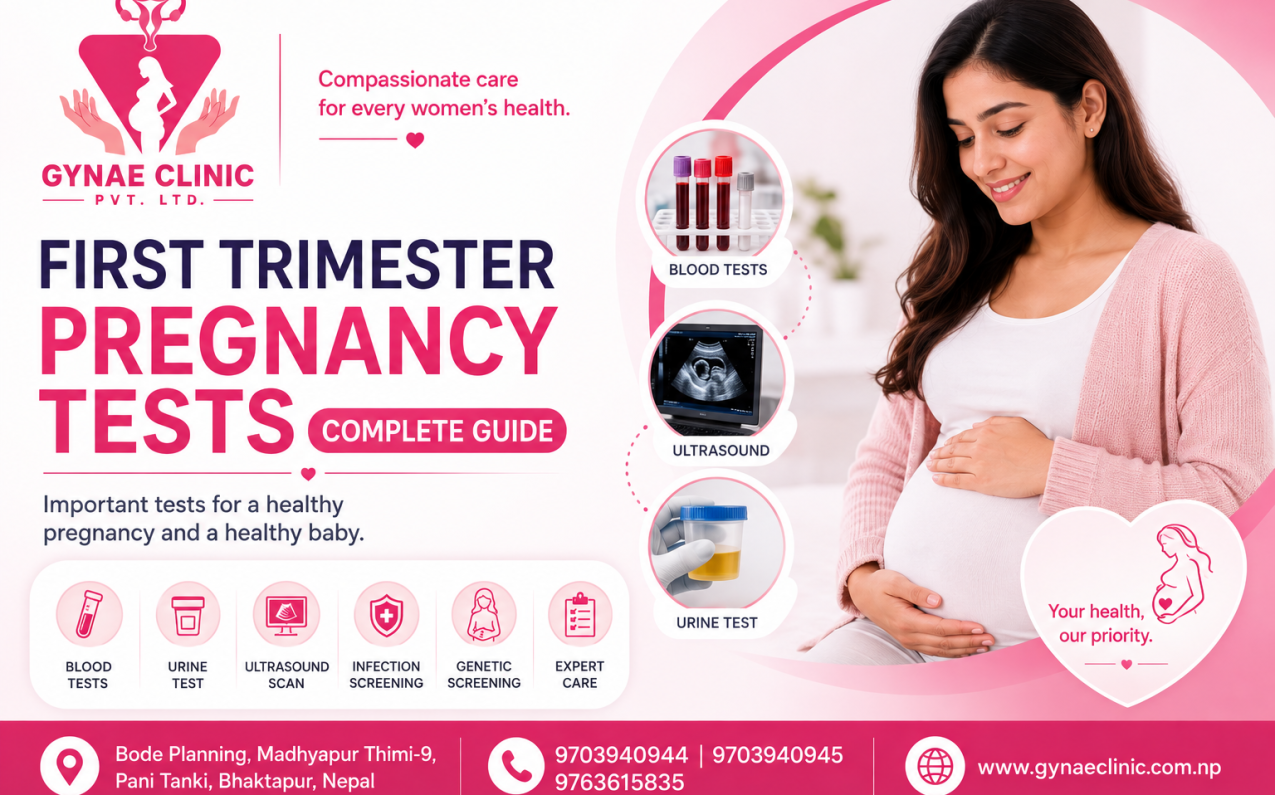
Common first-trimester pregnancy tests and assessments may include:
- Pregnancy confirmation
- Pregnancy dating
- CBC/hemoglobin
- Blood group and Rh typing
- Urine examination
- HIV screening
- Syphilis screening
- Hepatitis B screening
- Blood glucose testing when indicated
- Ultrasound
- Genetic or chromosomal screening when appropriate
- Additional tests based on medical history and risk factors
WHO recommends HIV, syphilis and hepatitis B screening as early as possible in pregnancy, preferably during the first trimester.
1. Pregnancy Confirmation Test
If you have already received a positive home pregnancy test, your gynecologist may review the result and determine whether further testing is necessary.
Pregnancy tests detect human chorionic gonadotropin (hCG).
Depending on the situation, pregnancy confirmation may involve:
- Urine pregnancy test
- Blood beta-hCG test
- Clinical assessment
- Ultrasound when appropriate
A blood beta-hCG test may be particularly useful when the pregnancy is very early or when there are symptoms such as bleeding or abdominal pain.
What to Do After a Positive Pregnancy Test
2. First Pregnancy Checkup
The first pregnancy appointment is more than simply doing an ultrasound.
Your gynecologist may ask about:
- First day of your last menstrual period
- Menstrual-cycle pattern
- Previous pregnancies
- Previous miscarriages
- Previous ectopic pregnancy
- Previous deliveries
- Existing medical conditions
- Current medicines
- Supplements
- Allergies
- Pregnancy symptoms
- Family medical history
Blood pressure, weight and urine testing are also commonly included in antenatal care.
Early antenatal care provides an opportunity to identify conditions that may require additional monitoring.
First Pregnancy Checkup: When Should You See a Gynecologist?
3. CBC and Hemoglobin Test
A complete blood count (CBC) is commonly performed during pregnancy.
Hemoglobin is particularly important because it helps identify anemia.
Anemia during pregnancy can occur because the body needs more iron to support increased blood volume and fetal development.
A CBC may provide information about:
- Hemoglobin
- Red blood cells
- White blood cells
- Platelets
- Other blood-cell measurements
WHO includes hemoglobin testing among routine first-contact antenatal investigations.
If anemia is identified, your doctor can recommend appropriate dietary changes, iron supplementation or further evaluation.
4. Blood Group and Rh Factor
Your blood group and Rh status are important parts of pregnancy care.
Blood groups include:
- A
- B
- AB
- O
You may also be:
- Rh-positive
- Rh-negative
Knowing your Rh status helps your healthcare provider identify whether additional pregnancy management may be needed.
WHO recommends blood-group and Rh-status testing as part of routine antenatal blood investigations.
5. Urine Test During Pregnancy
Urine testing is another important part of early pregnancy care.
It may help identify:
- Urinary tract infection
- Protein in urine
- Glucose in urine
- Other urinary abnormalities
Some urinary infections may cause few or no symptoms, which is one reason urine assessment is useful during pregnancy.
Routine antenatal care includes urine testing and blood-pressure monitoring.
If you have burning during urination, frequent urination, fever or lower abdominal discomfort, tell your doctor rather than waiting for a routine test.
6. HIV Test in Pregnancy
HIV screening is an important part of antenatal care.
WHO recommends HIV testing during pregnancy, preferably as early as possible. Early diagnosis allows appropriate medical care and interventions that can substantially reduce the risk of transmission to the baby.
HIV screening is recommended even when a woman feels completely healthy because HIV may not cause obvious symptoms.
A positive screening result does not by itself mean a final diagnosis; appropriate confirmatory testing is required according to the testing algorithm.
7. Syphilis Test During Pregnancy
Syphilis screening is another important first-trimester or early pregnancy investigation.
Syphilis can be transmitted from a pregnant woman to her baby, but early detection and appropriate treatment can prevent serious complications.
WHO recommends syphilis screening as early as possible during pregnancy.
Testing may involve blood tests such as:
- RPR
- VDRL
- Treponemal tests
The exact testing approach depends on the laboratory and clinical setting.
A positive screening result requires appropriate medical interpretation and confirmatory testing where indicated.
8. Hepatitis B Test
Pregnancy care commonly includes screening for hepatitis B surface antigen (HBsAg).
The purpose is to identify mothers who have hepatitis B infection so appropriate measures can be planned to reduce the risk of transmission to the baby.
WHO recommends hepatitis B screening during pregnancy, preferably early.
Current CDC guidance also recommends HBsAg screening during each pregnancy, regardless of previous vaccination or previous negative testing.
If the result is positive, your gynecologist can arrange appropriate follow-up and pregnancy management.
9. Blood Sugar Testing
Blood glucose testing during pregnancy is important, but the timing is not the same for every woman.
Routine gestational diabetes screening is generally performed later in pregnancy, commonly around 24–28 weeks. WHO lists blood glucose testing for gestational diabetes at this stage.
However, your doctor may recommend glucose testing earlier if you have risk factors such as:
- Previous gestational diabetes
- Obesity
- Strong family history of diabetes
- Previous large baby
- Known diabetes or prediabetes
- Other clinical risk factors
So, a woman should not assume that glucose testing must always wait until the second trimester.
10. Early Pregnancy Ultrasound
An ultrasound is an important part of pregnancy assessment.
A first-trimester ultrasound may help assess:
- Whether the pregnancy is located inside the uterus
- Gestational age
- Fetal number
- Cardiac activity when visible
- Pregnancy development
- Certain early abnormalities
- Pregnancy complications
WHO recommends ultrasound in the first trimester to help estimate gestational age and notes that first-trimester ultrasound is particularly accurate for dating pregnancy.
However, the timing of an ultrasound matters.
An ultrasound performed very early may not yet show all expected structures.
Your doctor may recommend an early scan if you have:
- Abdominal pain
- Vaginal bleeding
- Uncertain pregnancy dates
- Previous ectopic pregnancy
- Previous pregnancy complications
- Other clinical concerns
For routine dating, the appropriate timing may be later in the first trimester.
11. Dating Scan
A dating scan is used to help establish how far the pregnancy has progressed and estimate the expected due date.
It can also assess:
- Number of babies
- Pregnancy development
- Fetal cardiac activity when appropriate
- Pregnancy location
- Gestational age
Many pregnancy-care systems perform a dating scan around 11–14 weeks, although timing can vary depending on local practice and individual circumstances.
If your menstrual cycles are irregular, ultrasound can be particularly useful for establishing pregnancy dates.
12. First-Trimester Genetic Screening
Genetic or chromosomal screening is different from routine maternal blood tests.
Depending on availability, gestational age and your preferences, screening may include:
Combined first-trimester screening
This may combine:
- Ultrasound findings
- Nuchal translucency measurement
- Maternal blood tests
It can estimate the chance of certain chromosomal conditions.
Cell-free DNA screening
Cell-free DNA testing, also called NIPT, uses a maternal blood sample to screen for certain chromosomal conditions.
It is a screening test, not a diagnostic test.
If a screening result indicates a higher chance of a condition, your doctor may recommend genetic counseling and, when appropriate, a diagnostic test.
Screening tests can estimate risk but cannot confirm with certainty that a baby does or does not have a particular condition.
13. Thalassemia and Other Inherited Blood-Disorder Screening
Depending on your family history, ancestry, local screening practices and previous results, screening for inherited blood disorders may be considered.
Examples include:
- Thalassemia
- Sickle cell disorders
- Other hemoglobin disorders
Some screening programs perform these tests very early in pregnancy.
This can be particularly important if:
- You have a family history of thalassemia
- Your CBC suggests a possible hemoglobin disorder
- Your partner is a known carrier
- You or your partner previously had abnormal hemoglobin testing
Your doctor can determine which tests are appropriate.
14. Thyroid Testing
Thyroid testing is not necessarily identical for every pregnant woman.
Your doctor may recommend thyroid-function testing based on:
- Previous thyroid disease
- Symptoms
- Goiter
- Autoimmune disease
- Previous pregnancy complications
- Certain fertility or pregnancy histories
- Other risk factors
Tests may include:
- TSH
- Free T4
- Thyroid antibodies in selected situations
If you already take thyroid medication, tell your gynecologist as soon as pregnancy is confirmed because pregnancy can change thyroid-management requirements.
15. Rubella and Other Immunity Testing
Your healthcare provider may assess immunity to certain infections depending on your medical history and local pregnancy-care protocols.
Rubella is particularly important because infection during pregnancy can affect the developing baby.
If you are found to be non-immune, your doctor can advise you about prevention during pregnancy and vaccination after pregnancy when appropriate.
Do not take or receive vaccines during pregnancy without discussing them with your healthcare provider.
16. Hepatitis C Testing
Hepatitis C screening depends on the healthcare setting, national recommendations and individual risk factors.
Your doctor may recommend hepatitis C testing based on:
- Previous infection
- Injection-drug exposure
- Previous blood transfusion or medical exposure
- Other risk factors
- Local screening policy
Tell your doctor if you have ever been diagnosed with hepatitis or believe you may have been exposed.
17. STI Testing During Pregnancy
Additional sexually transmitted infection testing may be recommended according to symptoms, medical history or risk.
Possible tests can include:
- Chlamydia
- Gonorrhea
- Trichomoniasis
- Other STI investigations
Not every pregnant woman requires every STI test.
If you have unusual vaginal discharge, genital sores, pelvic pain, burning urination or a partner with an STI, tell your doctor.
Early diagnosis and treatment can help protect both maternal and pregnancy health.
18. Cervical Screening During Pregnancy
A Pap smear or HPV test is not automatically a first-trimester pregnancy test.
If you are due for cervical cancer screening or have an abnormal previous result, your gynecologist will decide whether screening should be performed during pregnancy or scheduled according to your individual circumstances.
Pregnancy does not mean that all cervical screening is automatically cancelled.
19. Blood Pressure and Weight
Although these are not laboratory tests, they are important parts of pregnancy assessment.
Your healthcare provider may monitor:
- Blood pressure
- Weight
- BMI
- General health
WHO recommends blood-pressure, weight and BMI assessment during antenatal contacts.
These measurements provide a baseline for monitoring your health throughout pregnancy.
First Trimester Pregnancy Tests by Week
| Pregnancy stage | Common assessment |
|---|---|
| Positive pregnancy test | Pregnancy confirmation and consultation |
| Around 4–8 weeks | Pregnancy assessment and ultrasound when clinically indicated |
| Early pregnancy | CBC/hemoglobin, blood group/Rh, urine testing |
| Early pregnancy | HIV, syphilis and hepatitis B screening |
| First trimester | Medical history, blood pressure and weight |
| First trimester | Additional tests based on medical conditions and risk factors |
| Around 11–14 weeks | Dating/first-trimester ultrasound |
| Around 11–14 weeks | Certain chromosomal screening options |
| Before/through first trimester | Folic acid and nutritional guidance |
The exact schedule varies according to gestational age, local practice, available tests and individual medical needs. WHO recommends routine blood testing and ultrasound during the first trimester, while screening programs may have specific timing windows.
Which First-Trimester Tests Are Usually Most Important?
For many pregnancies, the core early assessment includes:
1. Pregnancy confirmation and dating
2. CBC/hemoglobin
3. Blood group and Rh status
4. Urine examination
5. HIV screening
6. Syphilis screening
7. Hepatitis B screening
8. Appropriate ultrasound
9. Additional testing based on risk factors
10. Appropriate genetic/chromosomal screening when desired and available
WHO specifically identifies hemoglobin, blood group/Rh, HIV, syphilis and hepatitis B among routine first-contact investigations.
Do You Need Every Pregnancy Test?
No.
A common mistake is assuming that every pregnant woman needs every available test.
Your gynecologist may recommend additional tests based on:
- Age
- Previous pregnancies
- Family history
- Medical conditions
- Medicines
- Symptoms
- Menstrual history
- Previous laboratory results
- Previous pregnancy complications
- Genetic risk
- Local screening recommendations
Some tests are routine, some are risk-based, and some are optional screening tests.
Screening Test vs Diagnostic Test: What’s the Difference?
This is an important distinction.
Screening test
A screening test estimates the chance or risk of a condition.
Examples include:
- NIPT/cell-free DNA screening
- Combined first-trimester screening
- Some infection screening tests
A high-risk screening result does not automatically mean the baby has the condition.
Diagnostic test
A diagnostic test is designed to determine whether a particular condition is actually present.
Some diagnostic procedures are invasive and carry their own risks, so they are not automatically performed on every pregnancy.
Your gynecologist or genetic counselor can explain the benefits, limitations and possible next steps.
What If a First-Trimester Test Is Abnormal?
An abnormal or positive screening result does not automatically mean something is seriously wrong.
The next step depends on which test is abnormal.
Your doctor may recommend:
- Repeat testing
- Confirmatory testing
- Additional blood tests
- Ultrasound
- Specialist consultation
- Genetic counseling
- Further diagnostic testing
Do not panic based on a single abnormal screening result.
Ask your healthcare provider what the result actually means and whether it requires confirmation.
What If You Have No Pregnancy Symptoms?
That does not mean that pregnancy tests are unnecessary.
Some women have:
- Very little nausea
- No vomiting
- Minimal breast tenderness
- No cramps
- Few noticeable symptoms
Pregnancy assessment is based on clinical evaluation and appropriate investigations—not simply on the presence or absence of symptoms.
First Trimester Tests After IVF or Fertility Treatment
Women who become pregnant after:
- IVF
- IUI
- Ovulation induction
- Fertility medication
may require individualized early monitoring.
Your doctor may pay particular attention to:
- Pregnancy location
- Number of pregnancies
- Pregnancy development
- Gestational age
- Medication use
- Previous fertility-treatment history
Tell your gynecologist exactly which fertility treatment was used.
First Trimester Tests With Previous Miscarriage
If you have experienced a previous miscarriage, tell your gynecologist during your first pregnancy appointment.
You may require additional monitoring depending on:
- Number of previous miscarriages
- Cause or suspected cause
- Current symptoms
- Pregnancy history
- Medical conditions
A previous miscarriage does not mean that your current pregnancy will necessarily have complications.
First Trimester Tests With Previous Ectopic Pregnancy
A previous ectopic pregnancy is important information.
If you have a positive pregnancy test and a history of ectopic pregnancy, contact your gynecologist early.
An early assessment may be appropriate to confirm the location of the pregnancy.
Seek urgent medical care if pregnancy is accompanied by severe or one-sided abdominal pain, bleeding, dizziness, fainting or shoulder-tip pain.
When Should You See a Gynecologist?
Ideally, start pregnancy care early rather than waiting until the end of the first trimester.
WHO recommends the first antenatal contact early in pregnancy, with routine investigations and pregnancy assessment beginning at the first contact.
You should arrange an appointment particularly promptly if you:
- Have a positive pregnancy test
- Have irregular periods
- Take regular medicines
- Have diabetes
- Have thyroid disease
- Have high blood pressure
- Have had an ectopic pregnancy
- Have had previous pregnancy complications
- Have vaginal bleeding
- Have abdominal pain
What to Do After a Positive Pregnancy Test
First Trimester Pregnancy Tests in Bhaktapur
If you are looking for first trimester pregnancy tests in Bhaktapur, Gynae Clinic Pvt. Ltd. provides gynecological and pregnancy-care consultations in:
Bode Planning, Madhyapur Thimi-9, Pani Tanki, Bhaktapur, Nepal
Pregnancy assessment can help determine which tests are appropriate for your pregnancy stage and individual health needs.
The clinic is accessible for women from:
Bode, Madhyapur Thimi, Sallaghari, Radhe Radhe, Gatthaghar, Lokanthali, Kaushaltar, Sanothimi, Jadibuti, Koteshwor, Pepsicola, Tinkune, Baneshwor, Suryabinayak, Jagati, Banepa and Dhulikhel.
Gynae Clinic Pvt. Ltd.
Address: Bode Planning, Madhyapur Thimi-9, Pani Tanki, Bhaktapur, Nepal
Contact:
9703940944
9703940945
9763615835
Website: www.gynaeclinic.com.np
Frequently Asked Questions
What blood tests are done in the first trimester?
Common early pregnancy blood tests include CBC/hemoglobin, blood group and Rh status, HIV, syphilis and hepatitis B screening. Additional tests may be recommended according to your medical history and risk factors.
Is CBC necessary during early pregnancy?
CBC or hemoglobin testing is commonly included in early antenatal care to identify anemia and other blood abnormalities.
Is urine testing necessary during pregnancy?
Urine testing is commonly part of antenatal care and can help identify urinary abnormalities and infections.
Is HIV testing necessary during pregnancy?
HIV screening is recommended during pregnancy, preferably early, because early diagnosis allows appropriate care and prevention of mother-to-child transmission.
Why is syphilis testing done during pregnancy?
Syphilis can be transmitted to the baby. Early screening and appropriate treatment can reduce the risk of serious complications.
Why is hepatitis B tested during pregnancy?
Identifying hepatitis B infection allows appropriate planning to reduce the risk of transmission to the newborn. HBsAg screening is recommended during each pregnancy.
When is the first pregnancy ultrasound done?
The timing depends on the pregnancy and clinical circumstances. A routine dating scan is often performed around 11–14 weeks, while an earlier ultrasound may be recommended for pain, bleeding, uncertain dates or other concerns.
Do I need a glucose test in the first trimester?
Not every woman needs routine gestational diabetes testing in the first trimester. Standard gestational diabetes screening is commonly performed at 24–28 weeks, but earlier testing may be appropriate for women with risk factors.
Is NIPT a diagnostic test?
No. NIPT/cell-free DNA is a screening test. A higher-chance result generally requires appropriate follow-up and, when indicated, diagnostic testing.
Can I skip pregnancy tests if I feel healthy?
No. Many pregnancy-related conditions and infections may have no obvious symptoms. Routine antenatal screening is designed to identify problems that may not be noticeable.
Final Takeaway
The first trimester is an important period for establishing a healthy pregnancy care plan.
The most commonly considered early investigations include:
Pregnancy assessment → CBC/hemoglobin → blood group & Rh → urine testing → HIV → syphilis → hepatitis B → appropriate ultrasound → additional tests based on individual risk.
Genetic screening, thyroid testing, glucose testing, STI testing and other investigations may be recommended depending on your personal circumstances.
The goal is not to order every available test. The goal is to choose the right tests at the right time for you and your pregnancy.
If you have recently received a positive pregnancy test, arrange an early consultation with a gynecologist and discuss your pregnancy history, medicines, supplements, symptoms and appropriate testing schedule.
Early testing + appropriate follow-up = better-informed pregnancy care.
Medical Disclaimer
This article is for general educational purposes and does not replace an individual medical consultation. First-trimester tests vary according to pregnancy stage, medical history, symptoms, risk factors, local guidelines and available services. Test results should be interpreted by a qualified healthcare professional.
Author: Gynae Clinic Pvt. Ltd. Medical Content Team